
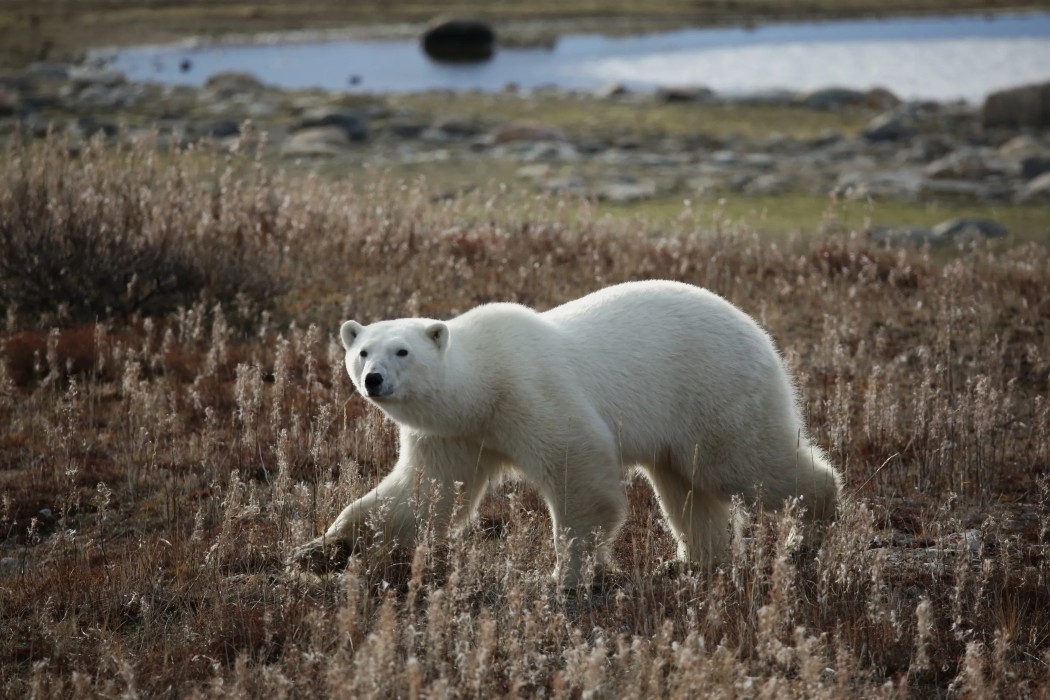
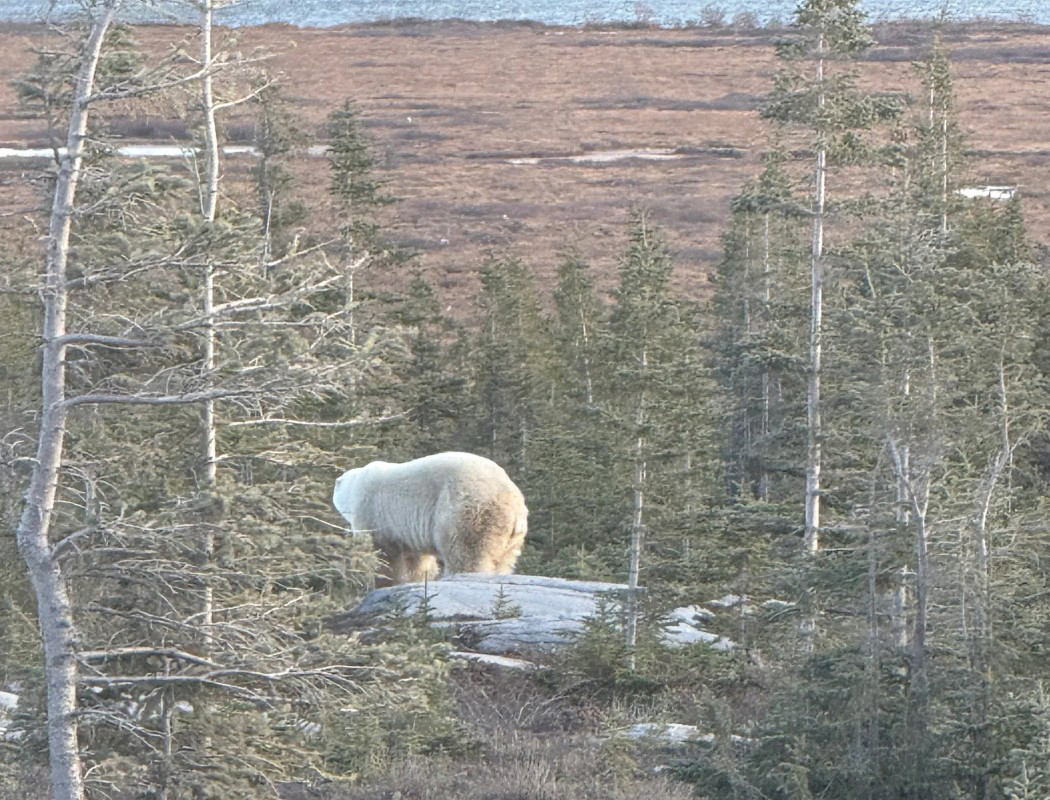
We hadn’t even reached the tundra when we saw our first bear. He was resting on a rock on the edge of the boreal forest just outside Churchill, surrounded by golden brush and evergreens. Someone in the van spotted him first, and in an instant, everyone was pressed to the windows, cameras ready. The bear lifted his head, looked around slowly, then sat up for a moment, surveying the quiet forest before making his way down the far side of the rock. We were overjoyed…our first polar bear sighting of the trip! The van filled with soft gasps, wide smiles, and that quiet excitement that only happens when you realize you’re witnessing something rare and wild.
We spent three days on the tundra as part of our polar bear expedition in Churchill, Manitoba; the first, a late afternoon and evening ride, and the next two, full days from sunrise to just before sunset. Each outing was different, the light and landscape shifting every hour.
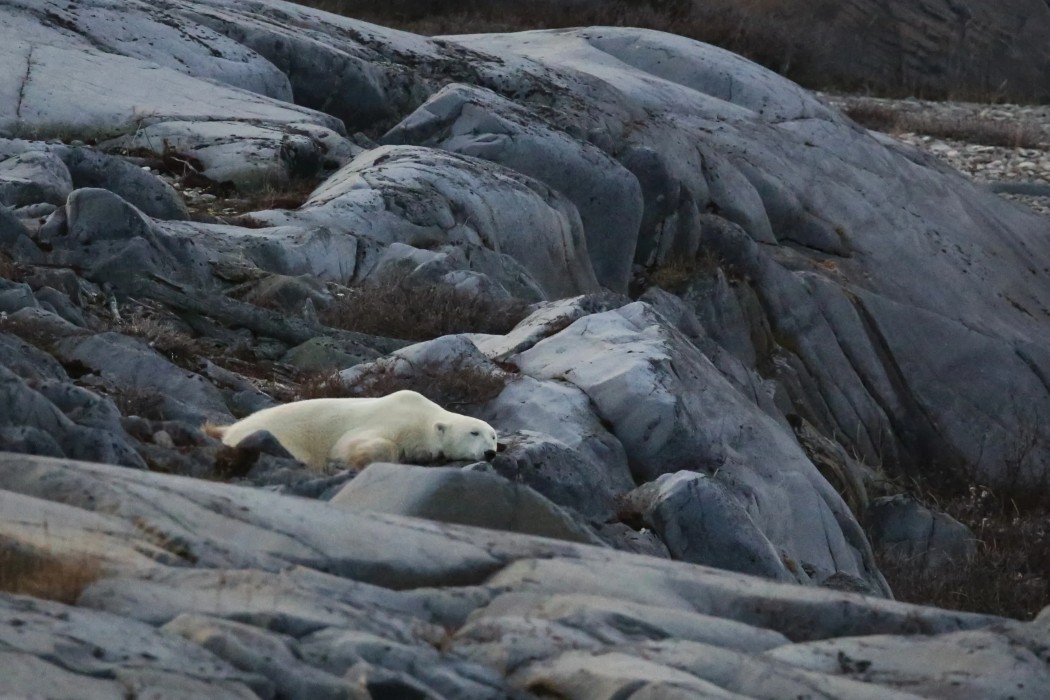
On that first evening, we saw a bear resting on the rocks, then another tucked behind the brush. Just as we spotted him, he popped his head up as if to say, “I see you too.” As the sun dropped lower, the sky turned shades of lavender and gray, the land stretching endlessly in every direction
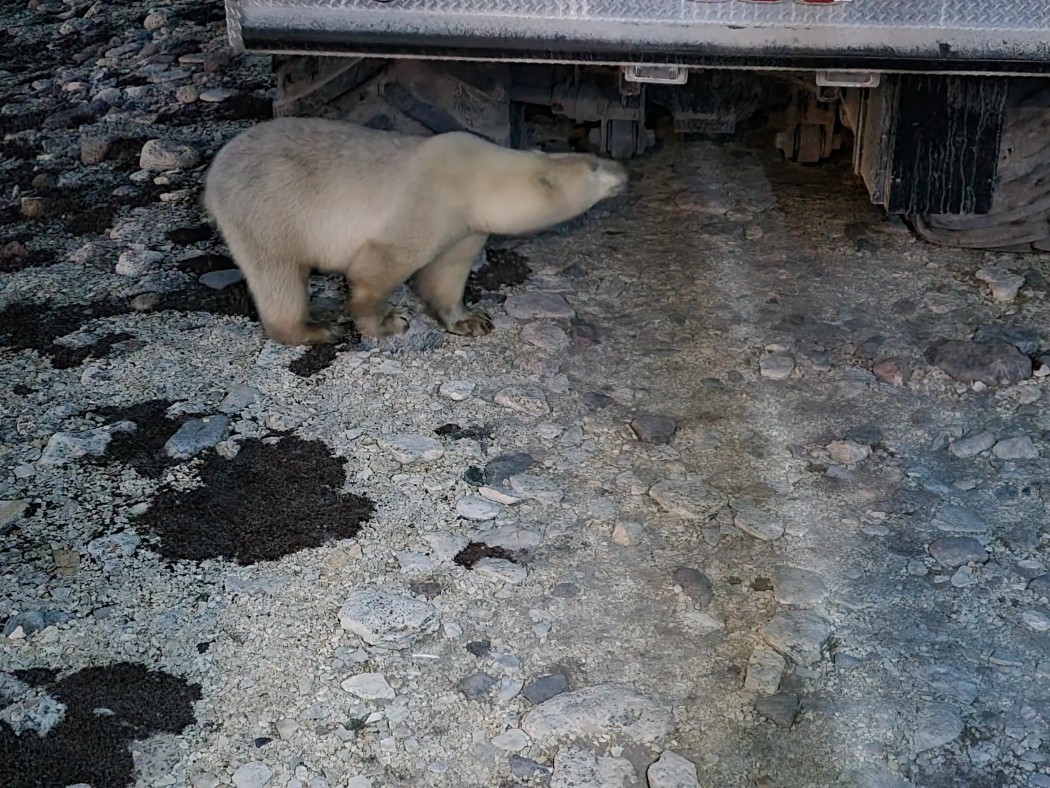
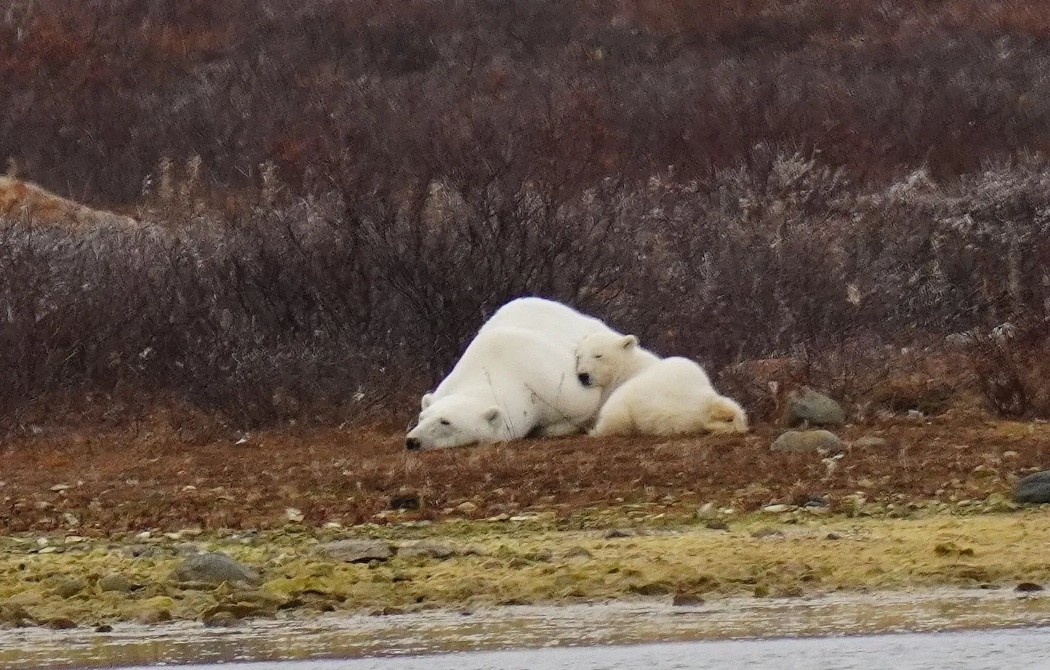
The next day, the tundra felt completely different. We saw a bear that had just taken a dip in Hudson Bay, rolling around in the willows to dry off, feet sticking up like a big puppy. Later, we watched a mother and her yearling cub resting together. The cub nursed for a bit, then curled up beside her and rested his head on her back. It was quiet except for the wind and a few distant gulls. All around us, bears were scattered across the landscape; some sleeping in the brush, others wandering along the coastline, perfectly at home in this wide, open place.
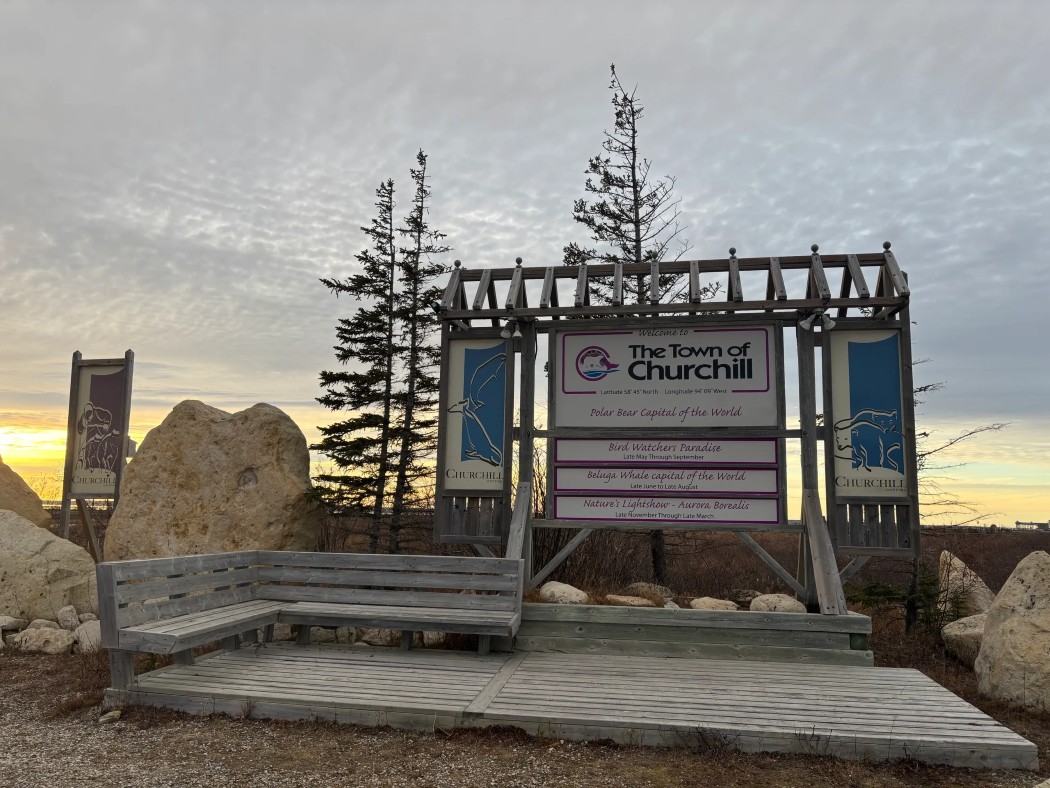
There’s a reason Churchill is known as the Polar Bear Capital of the World. The west coast of Hudson Bay is the first area to freeze each year, so when the Bay begins to ice over, the bears naturally gather here. It’s their waiting ground and one of the only places on Earth where people can safely see them in the wild.
The western Hudson Bay population includes about 900 to 1,000 bears, and Churchill’s unique location makes it one of the most accessible places in the world for polar bear viewing.
The safest and most common way to see the bears is from a large, specially designed vehicle that can travel over the rough tundra and keep both visitors and bears safe.
The best time to visit Churchill is during October and November, when the bears gather along the coast waiting for the sea ice to form.
Tourism here follows strict conservation guidelines set by Manitoba Conservation to protect the bears and their habitat. Travel is limited to designated areas, and the number of vehicles allowed on the tundra is carefully controlled.
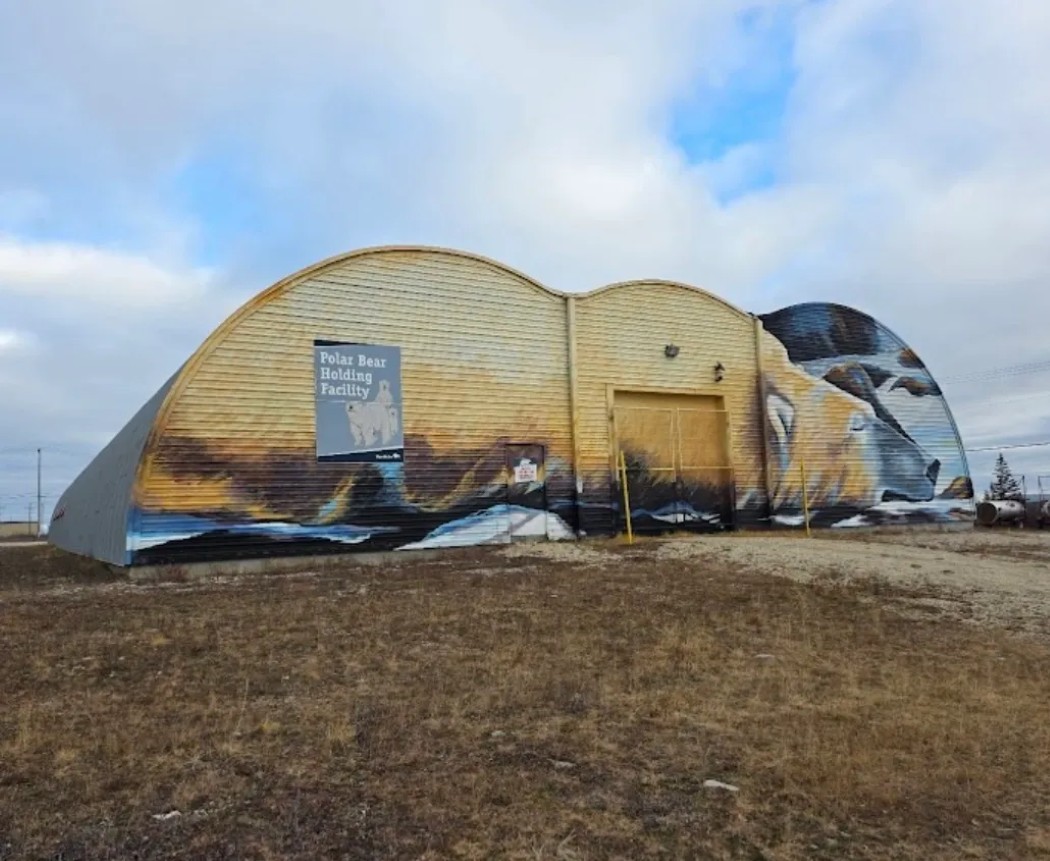
Churchill also runs a program affectionately known as “Polar Bear Jail,” which safely relocates bears that wander too close to town. There’s even a Polar Bears International House, an education and research center where visitors can learn more about polar bear conservation and the effects of climate change. To learn more about the science and stewardship behind these programs, visit Polar Bears International or Parks Canada’s Wapusk National Park page.
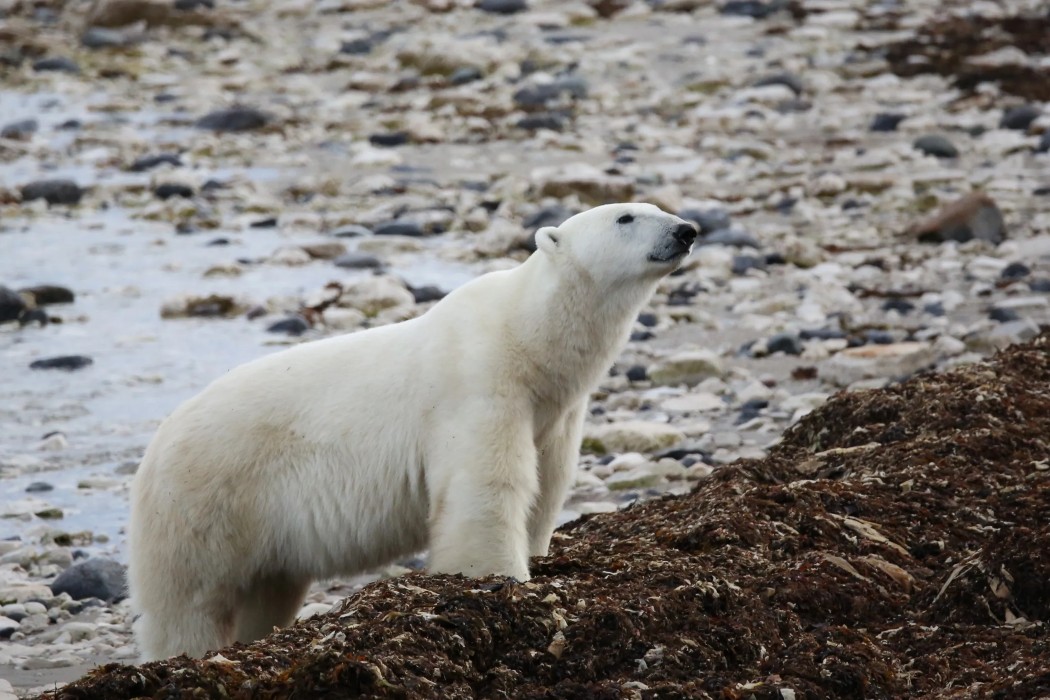
A Churchill polar bear tour isn’t luxury in the usual sense. There are no spas or fancy restaurants. But there’s something deeply luxurious about standing in silence on the tundra, watching a polar bear lift its head to the wind, and realizing just how small and connected we all are.
If you’ve ever dreamed of seeing the polar bears, GO! I would LOVE to help you with your adventure. It’s not a trip you’ll ever forget!
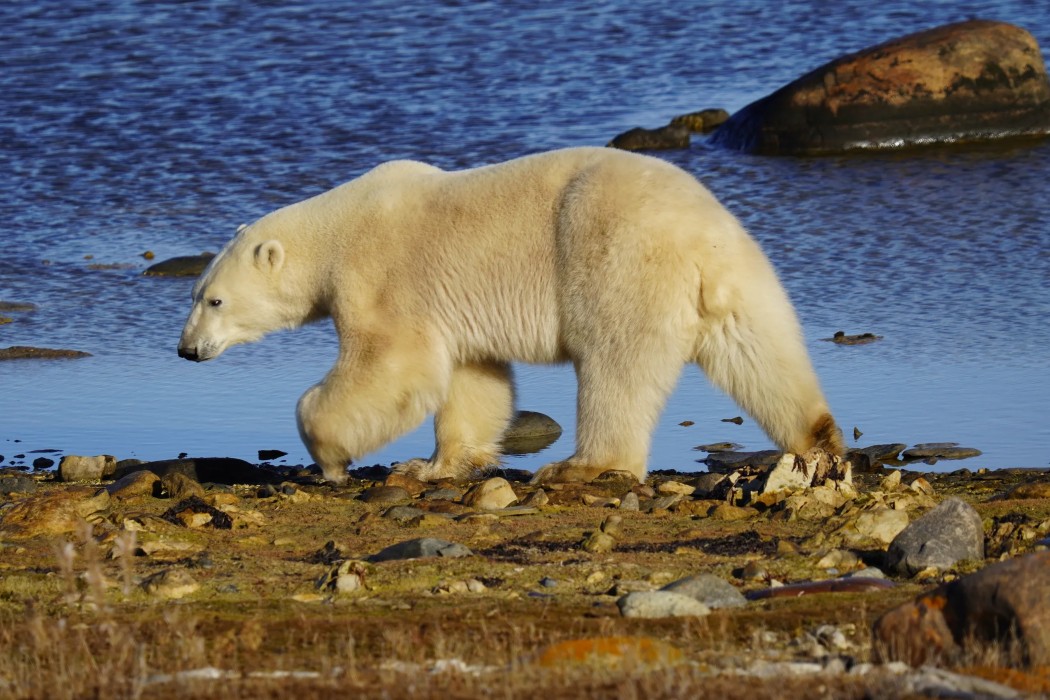
Seeing polar bears in the wild is something I’ll never forget. They’re powerful, curious, and surprisingly calm. It’s hard not to think about how much their world depends on the ice, and how the seasons are changing. Even so, they keep coming back; waiting, adapting, and somehow thriving in this place that feels both harsh and peaceful. I am happy to help if you’re ready to start organizing this adventure!
If extraordinary wildlife encounters are what draw you to travel, there are other remarkable destinations around the world worth knowing about.
I share more travel tips, sample itineraries, and destination ideas in my blog. You can subscribe here to get new posts sent to you.