
The Netherlands: Places to Visit Beyond Amsterdam
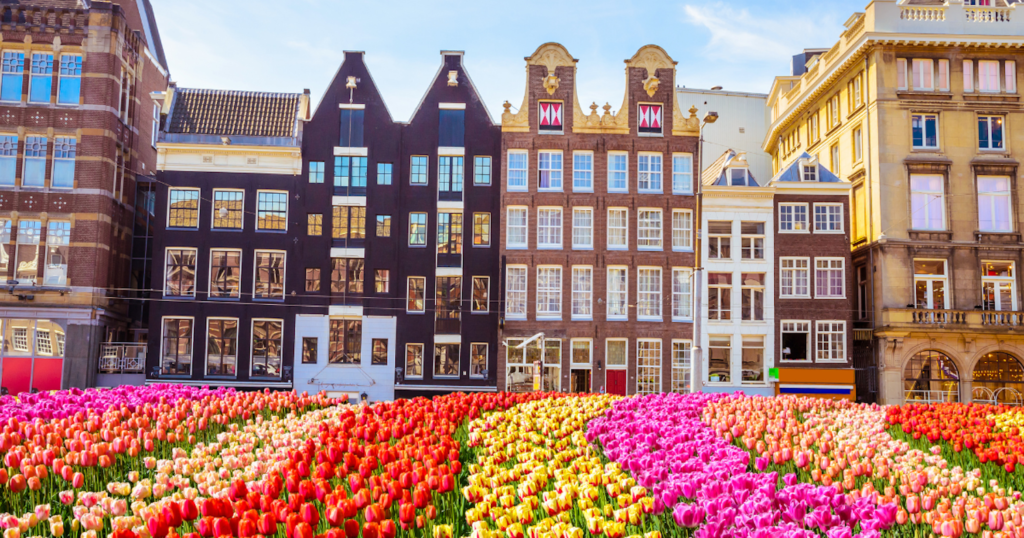
People tend to underestimate the Netherlands. They book Amsterdam for a long weekend, see the canals, tick the Van Gogh Museum off the list, and fly home thinking they have seen it. They have not seen it. Not even close.
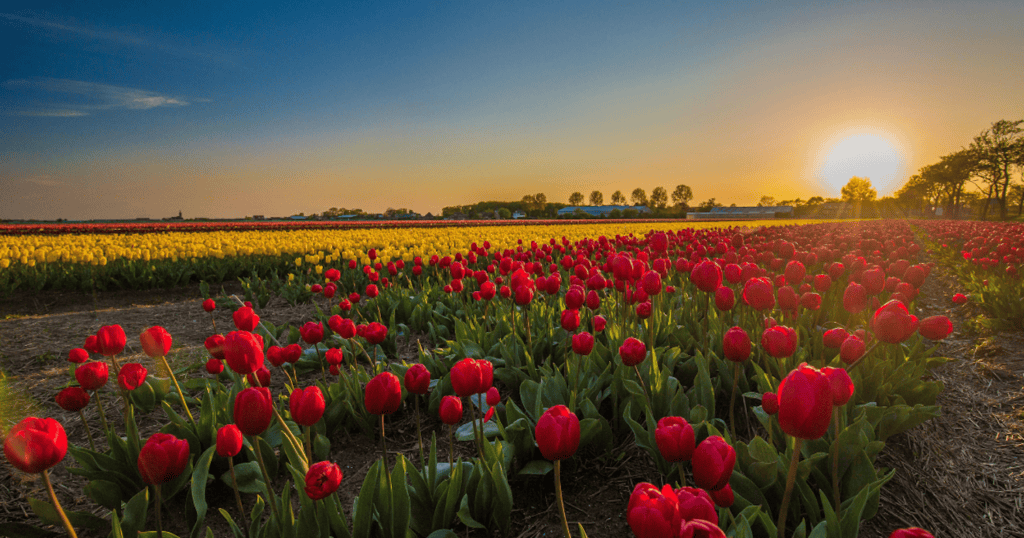
The Netherlands is one of those rare destinations that rewards curiosity in a way that genuinely surprises people. It is a country where a twenty-minute train ride can take you from one of Europe’s most visited cities to a village so quiet you will wonder if you have somehow wandered into a different century. Where the landscape itself, flat and wide and lit like a Dutch master painting, makes you stop mid-sentence just to look at it. Where cycling through tulip fields in April feels so impossibly beautiful that you will be slightly annoyed no photo does it justice.
I send clients here for all kinds of trips. Romantic getaways, solo adventures, family vacations, girls’ trips. And almost without exception, they come back saying some version of the same thing: I did not expect to love it this much.
Amsterdam
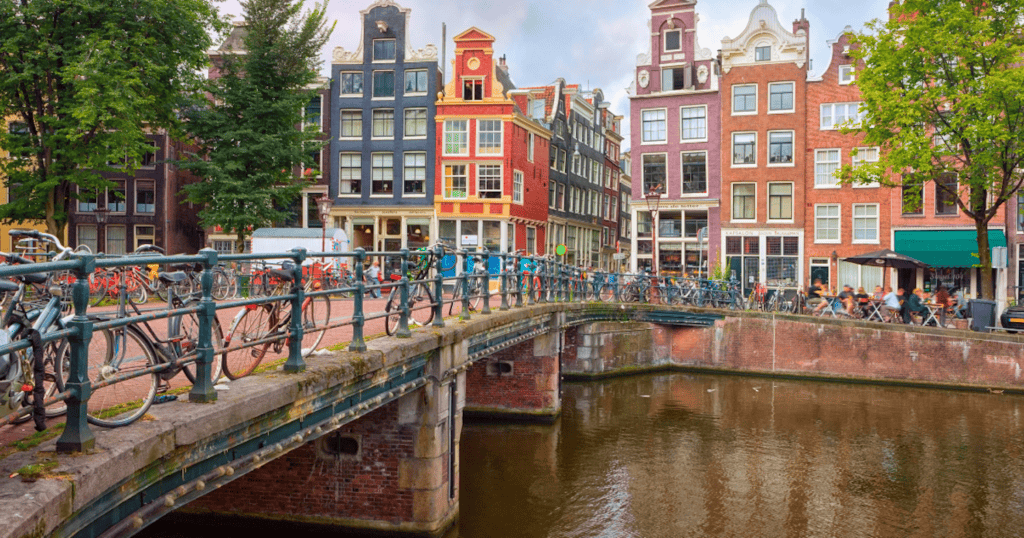
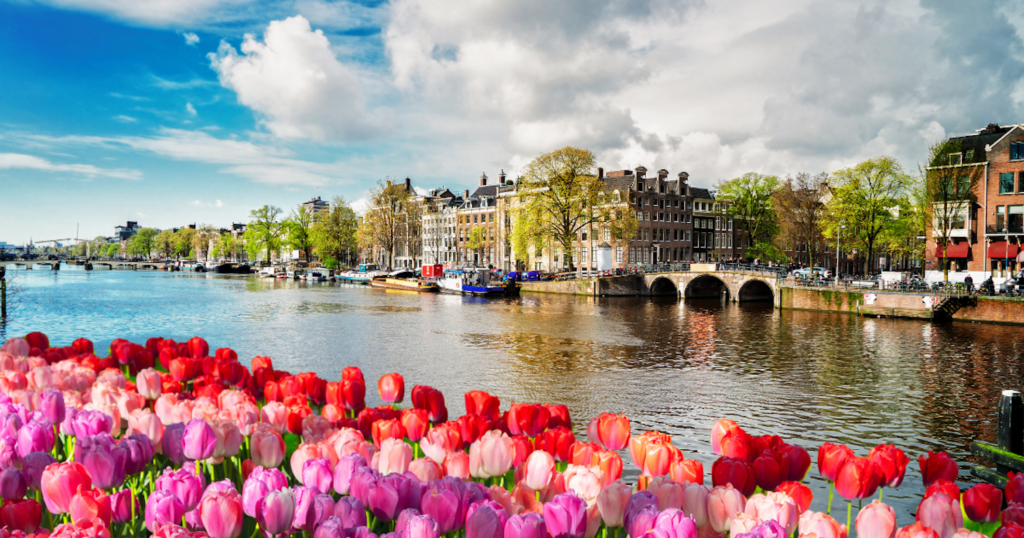
Amsterdam does not need a hard sell, but what it does need is a longer stay than most people give it. Three days at minimum. Four is better. The canal ring alone, a UNESCO World Heritage Site, is worth an afternoon of nothing but wandering without a destination in mind.
The Rijksmuseum is one of the great art museums in the world. Not in the Netherlands. In the world. Rembrandt’s Night Watch is larger than you expect and more commanding than any reproduction prepares you for. The Van Gogh Museum next door is equally essential, and the way the rooms are arranged to follow his life chronologically makes it feel less like a museum visit and more like bearing witness to something. Book tickets for both in advance.
The Anne Frank House is not comfortable. It is not supposed to be. Book weeks ahead during peak season, go with time to sit with it, and do not rush through.
Beyond the obvious, Amsterdam is best explored by neighborhood. The Jordaan is where you want to wander, with its independent galleries, side-street cafes, and the kind of quiet charm that makes you understand why so many people fall in love with this city and never quite get over it. De Pijp has the Albert Cuyp Market and a younger, more multicultural energy. The Plantage district is quieter and often overlooked, which makes it ideal.
Eat Indonesian food here. Seriously. The Netherlands has a deep Indonesian culinary history and a rijsttafel, a spread of small dishes served together, is one of the best meals you can have in Europe. And yes, get the Dutch frites with mayonnaise. Not because it is touristy, but because it is genuinely delicious.
Haarlem
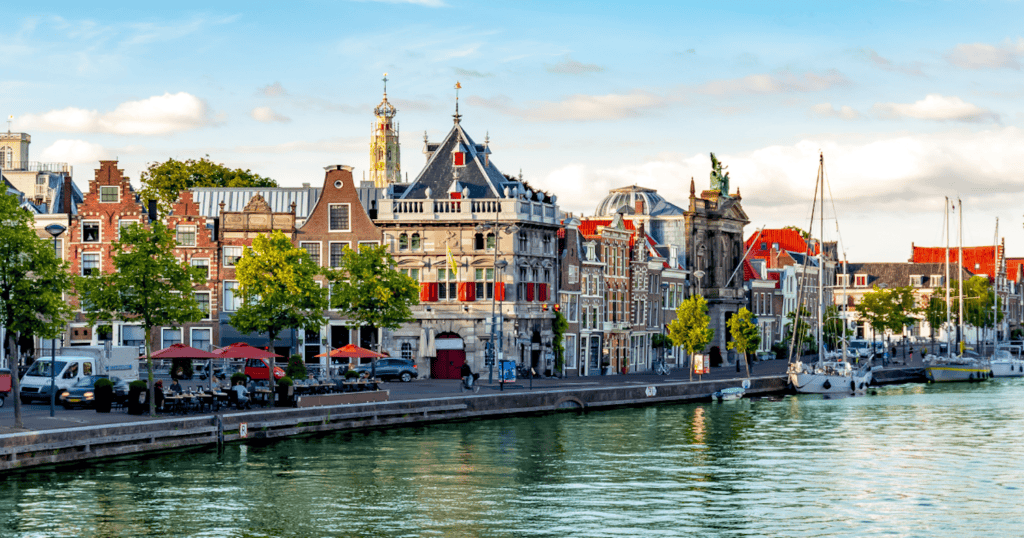
Twenty minutes from Amsterdam by train, and somehow a world away. Haarlem is what happens when a Dutch city has real cultural depth and has not yet been entirely consumed by tourism. The streets feel lived in. The cafes feel local. The main square, the Grote Markt, is anchored by Sint-Bavokerk, a Gothic church so beautiful that Mozart played its organ as a child.
The Frans Hals Museum is outstanding, and Teylers Museum, the oldest museum in the Netherlands at over 200 years old, is one of those places that makes you slow down and look carefully at things you might otherwise rush past. It covers art, science, and natural history in a building that feels like it was designed for curiosity.
If you are visiting in spring, Haarlem is the closest base to the tulip fields and a far more pleasant place to stay than commuting from Amsterdam every day.
Keukenhof and the Tulip Fields
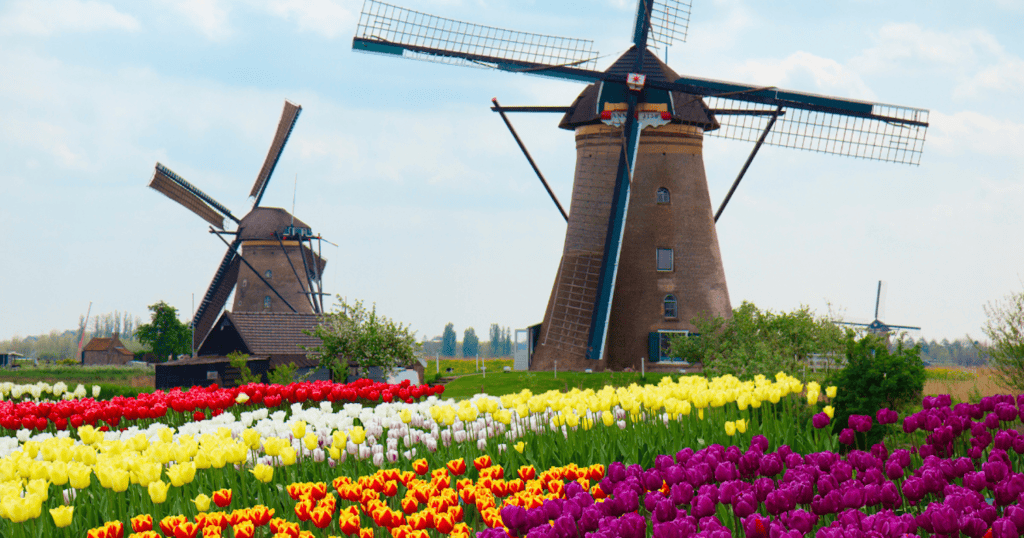
There is no gentle way to say this: if you have the chance to visit the Netherlands in April, rearrange your schedule and make it happen. The tulip fields are not a postcard exaggeration. They are long flat ribbons of red and yellow and purple stretching toward the horizon, windmills turning slowly in the background, the air smelling like something out of a gardening dream. Nothing quite prepares you for it.
Keukenhof Gardens near Lisse is open for about eight weeks each spring and plants over seven million bulbs across 79 acres. Walking through it in peak bloom is one of those experiences that earns the word spectacular without apology. Buy tickets online before you go because they sell out, and go on a weekday if your schedule allows.
After Keukenhof, take a bike through the surrounding Bollenstreek, the bulb-growing region stretching between Haarlem and Leiden. The open fields along those flat Dutch roads are, if anything, even more beautiful than the garden itself.
Delft
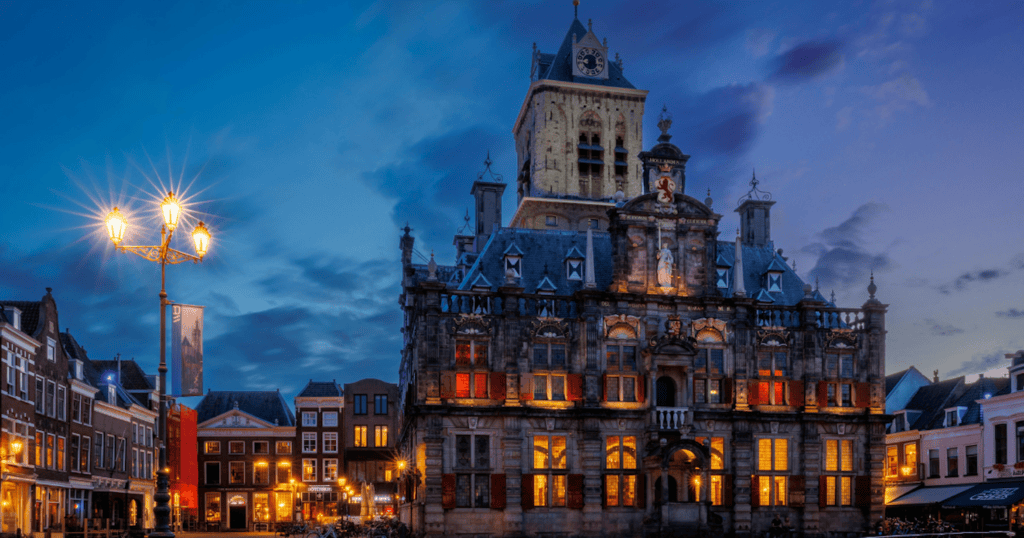
Delft is where Vermeer was born, worked, and is buried, and you feel that legacy walking through it. The city is small and beautiful, with narrow canals, perfectly proportioned squares, and a sense of history that feels genuine rather than performed. The Nieuwe Kerk on the Markt holds the Dutch royal family’s crypt and offers views across the rooftops from its tower.
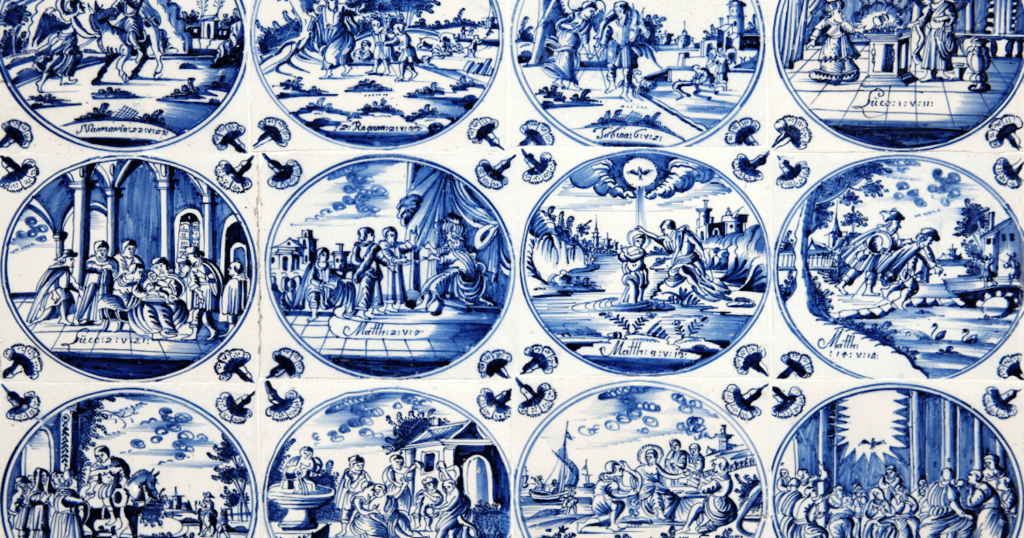
Royal Delft still hand-paints the blue-and-white pottery the city has been famous for since the 17th century, and the factory tour is genuinely fascinating even if you are not a pottery person. You will leave wanting to bring half the shop home with you.
Rotterdam
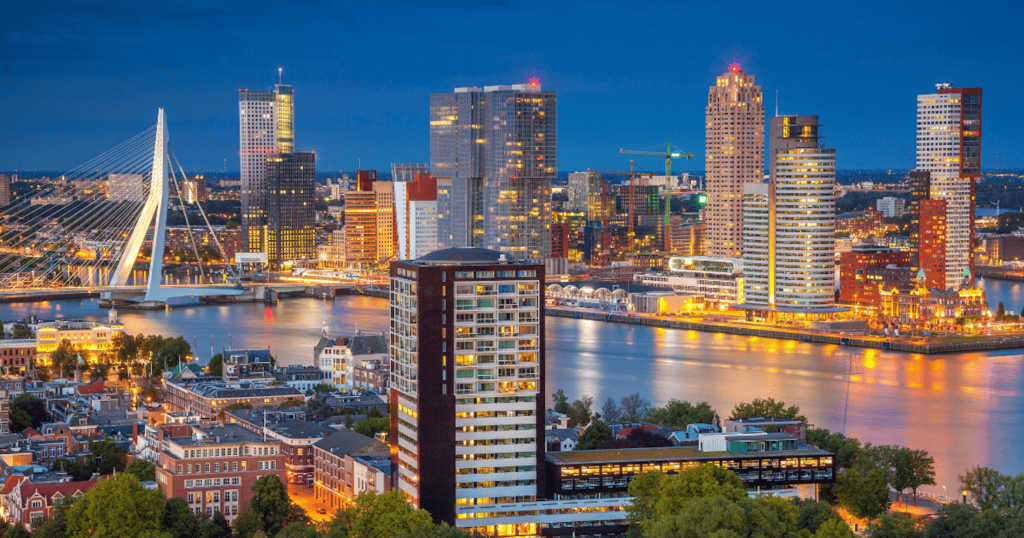
Rotterdam is the Netherlands for people who think they do not like the Netherlands. If canal houses and tulips feel a little too picturesque, this is your city. It was nearly leveled by bombing in 1940 and rebuilt from scratch, which means it has spent the last 80 years becoming one of the most architecturally adventurous cities in Europe.
The Cube Houses are residential buildings tilted at impossible angles, and you can tour the inside of one to understand how people actually live in them. The Markthal is a massive arched food hall covered floor to ceiling in an enormous mural of Dutch produce and flora. The skyline along the Maas River looks like the future.
Rotterdam has excellent contemporary art museums and a food scene that punches well above its tourist profile. A day trip from Amsterdam works, but this city earns an overnight.
The Hague
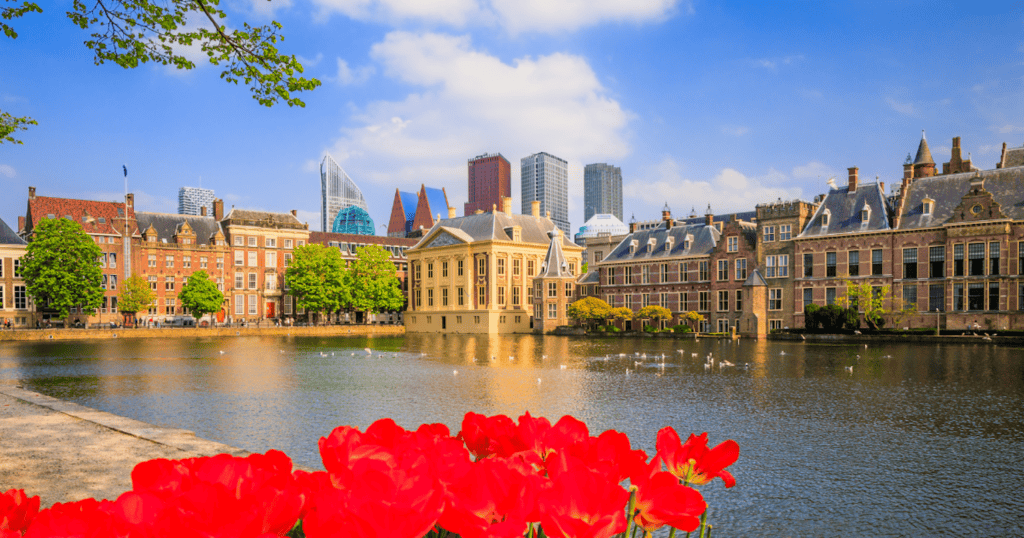
The Hague is where Dutch power lives, and it carries itself accordingly. The International Court of Justice is here. The Dutch parliament is here. And the Mauritshuis museum is here, which holds Vermeer’s Girl with a Pearl Earring in a setting so intimate that you can stand directly in front of it without a crowd between you and the painting. It is one of the great small museums in Europe.
The North Sea beach at nearby Scheveningen is worth the short tram ride, especially in summer. Wide, breezy, and genuinely beautiful in a way that Dutch beach towns tend to be.
Volendam and Marken
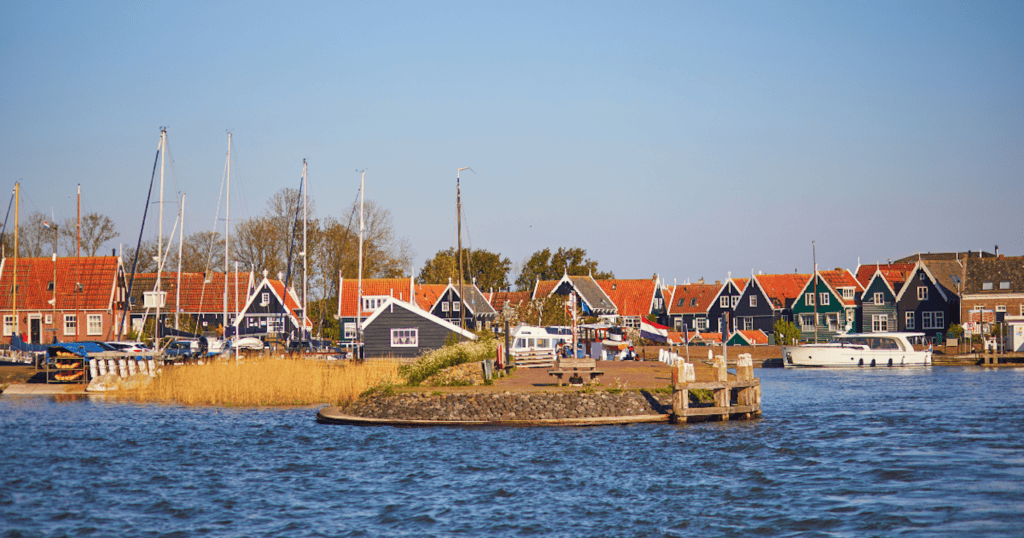
These two fishing villages on the IJsselmeer are best visited together, ideally by taking the ferry that crosses between them over open water. Volendam has a lively harbor lined with seafood restaurants and a charm that is easier to appreciate once the afternoon day-trippers have headed home. Marken, a former island now connected to the mainland by a causeway, is smaller and quieter, with dark green wooden houses clustered together and a lighthouse at the end of the jetty that looks out over a stretch of water that feels genuinely remote for somewhere so close to Amsterdam.
Utrecht
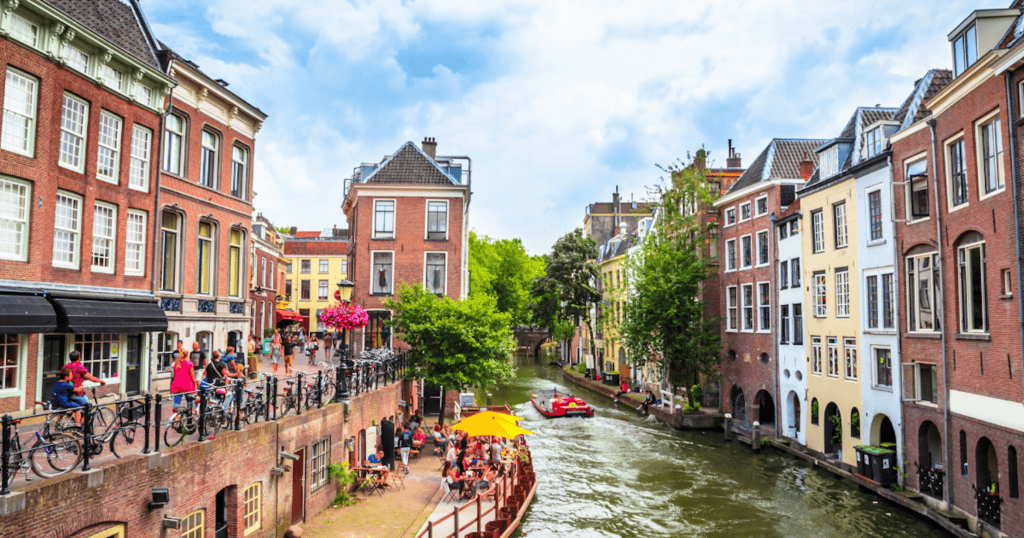
Utrecht has all the canal-house beauty of Amsterdam with a fraction of the tourist density, and a university presence that gives it an intellectual, slightly bookish energy that is easy to love. The Oudegracht canal runs below street level, with cafes and restaurants built into the old vaulted cellars lining the waterway, which creates an atmosphere unlike anywhere else in the country.
Climb the Dom Tower for views across the perfectly flat Dutch landscape. Visit the Rietveld Schröder House if architecture interests you at all. It is a UNESCO-listed De Stijl masterpiece and one of the most quietly radical buildings you will ever walk through.
Maastricht
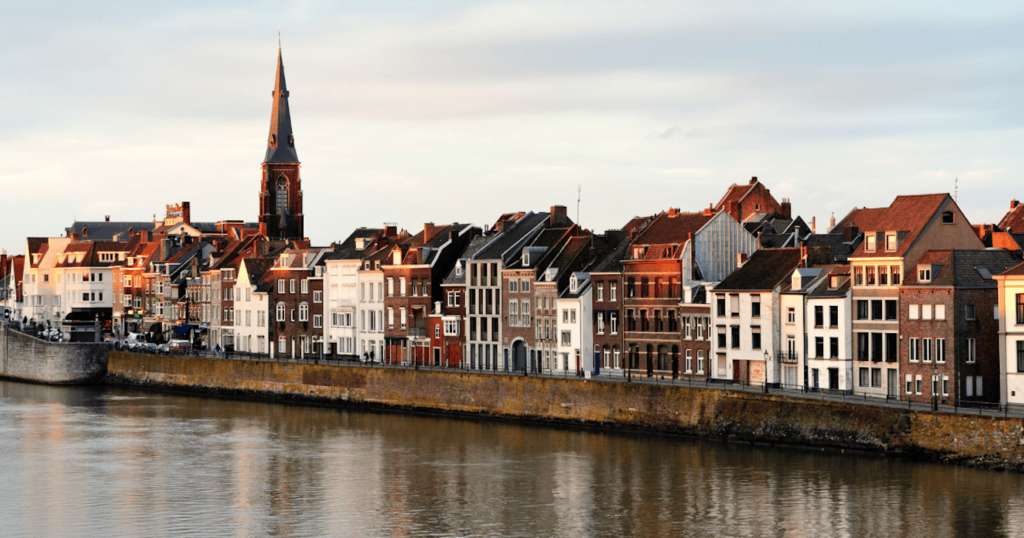
Maastricht sits at the very bottom of the Netherlands, tucked between Belgium and Germany, and it feels like a different country entirely. The architecture is older and more southern European. The food scene draws from French and Belgian influences and is frankly outstanding. The main square, the Vrijthof, is one of the most beautiful public spaces in the Netherlands, and the limestone caves and tunnels beneath the surrounding hills have been used for shelter and storage for centuries.
If you care about food and atmosphere and places that feel like they belong to the people who live there rather than the people passing through, Maastricht deserves a weekend of your time.
The Netherlands is one of those destinations that earns its reputation and then quietly exceeds it. The art is world-class. The countryside in spring is unlike anything else in Europe. And the Dutch, as a general rule, are practical, warm, and refreshingly direct in a way that makes everything from asking for directions to ordering dinner feel easy.
If you are ready to start planning, I would love to help you put together a trip that actually takes advantage of everything this country has to offer.
Ready for a trip that is smooth, efficient, and built around what actually matters to you? Contact me here and let’s make it happen.