
Beyond Santorini and Mykonos: The Ionian Islands of Greece
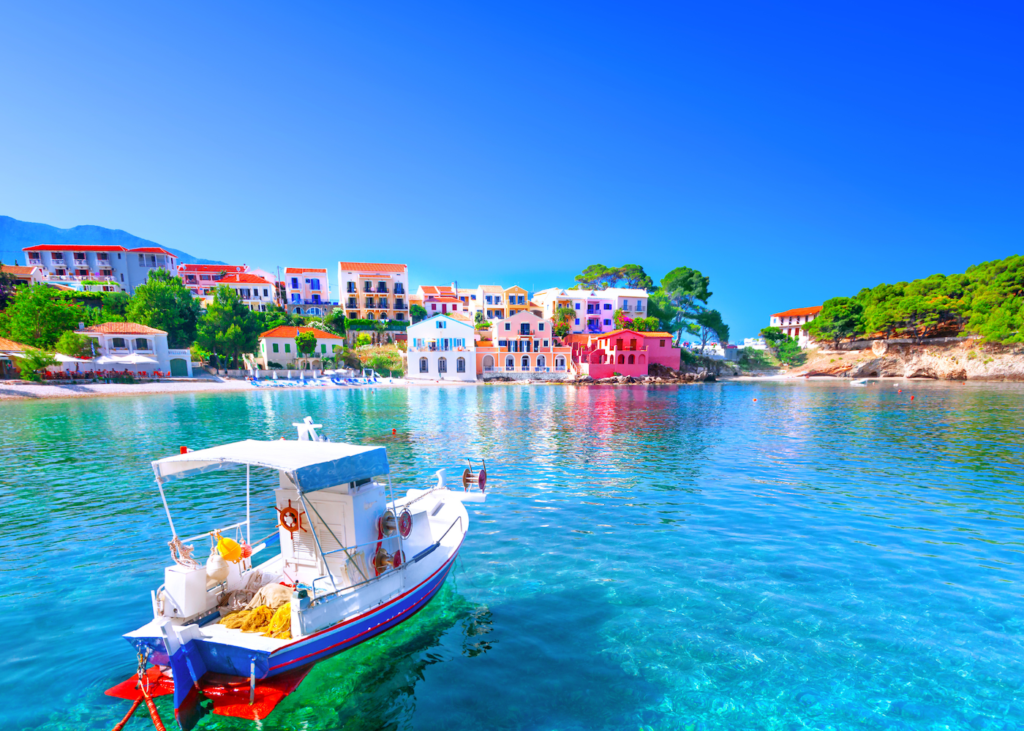
Everyone knows the Greece of whitewashed walls, blue domed churches, and cliffside infinity pools. It’s beautiful. It’s iconic. And if you’ve already been, or if you’re the kind of traveler who wants something a little less expected, you might be ready for a different version of Greece entirely.
The Ionian Islands sit on the western edge of the country, tucked along the coast of mainland Greece, and they feel like a completely different world from the Cyclades most people picture. These islands are green. Lush, almost tropical green, with dense pine forests tumbling down toward cliffs that drop into water so blue it looks edited. The architecture here isn’t whitewashed cubes. It’s colorful Venetian facades, cobblestone alleyways, and elegant town squares that reflect four centuries of Venetian rule. The vibe is slower, more local, and honestly more interesting than the tourist machine that Santorini and Mykonos have become.
Here are the islands worth putting on your radar.
Corfu
Corfu is the most visited of the Ionian Islands and the easiest to reach, with its own international airport and regular ferry connections from mainland Greece and Italy. That accessibility has made it popular, but don’t let that put you off. Corfu has enough personality and enough geography to absorb visitors without losing itself.
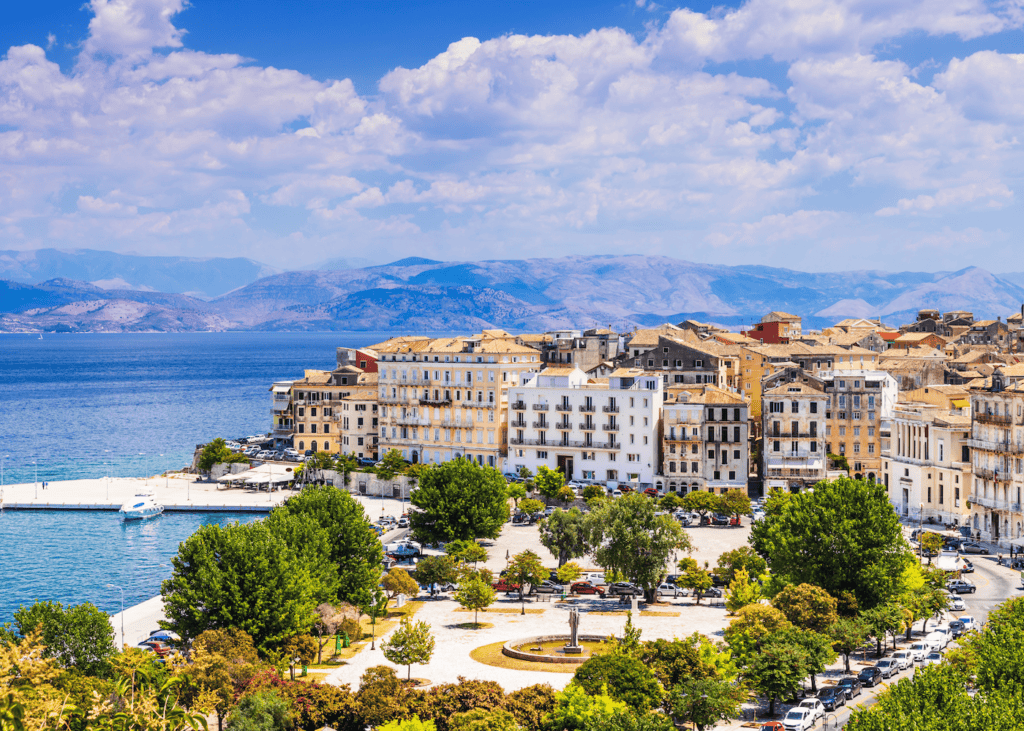
Corfu Town is a UNESCO World Heritage Site and genuinely one of the most beautiful old towns in all of Greece. The Venetian architecture, the narrow lanes called kantounia, the twin fortresses standing guard over the harbor, and the lively esplanade where locals gather for evening walks all add up to something that feels lived in and real rather than staged for tourists. Wander long enough and you’ll find yourself at a tiny café with an espresso and no idea what time it is, which is exactly the point.
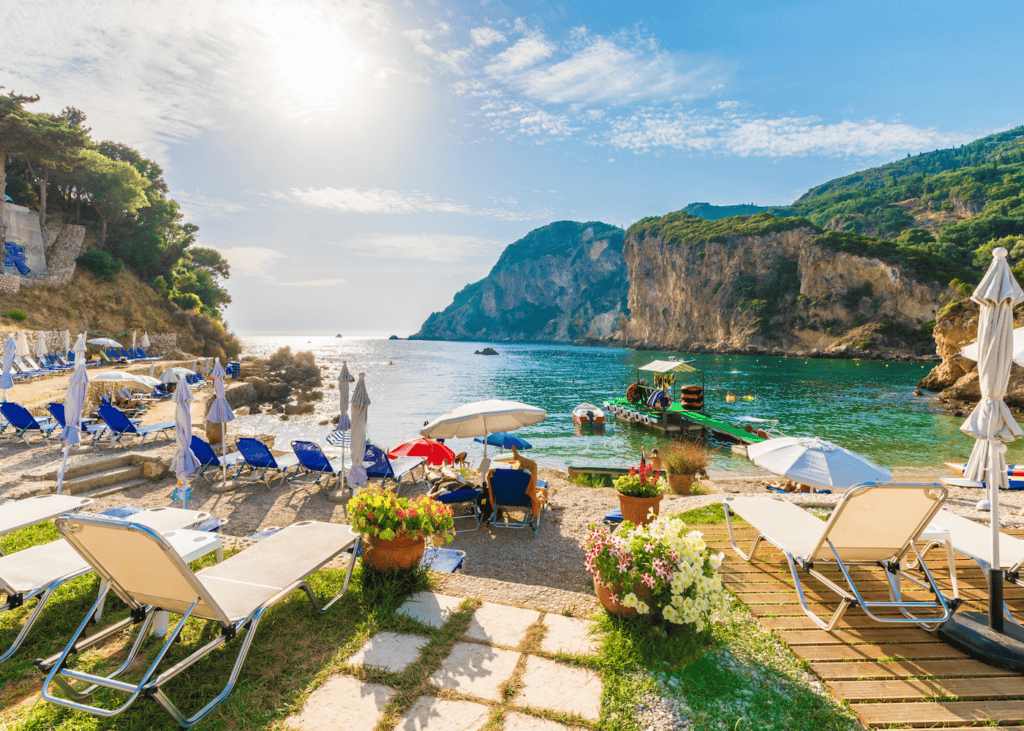
Beyond the town, the island opens up into dramatic coastal scenery. Paleokastritsa on the northwest coast has the kind of water that makes people stop mid sentence. Porto Timoni requires a hike to reach two tucked away twin beaches but the payoff is significant. The northeast coast near Kassiopi is quieter and more local in feel. Corfu rewards the traveler who rents a car and explores.
Kefalonia
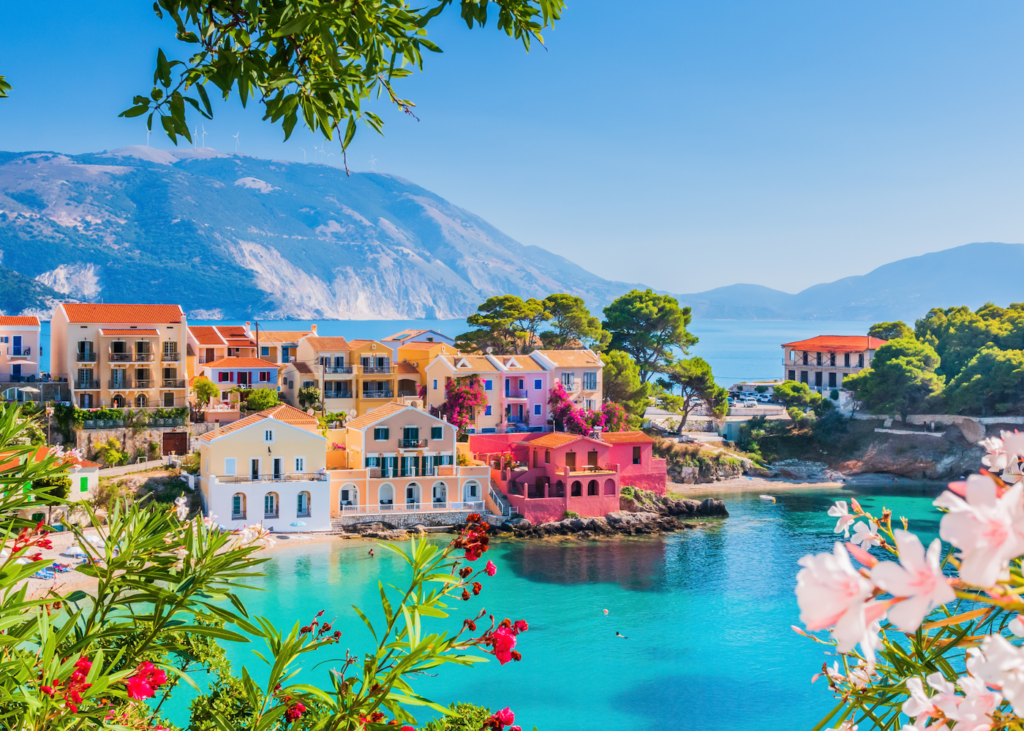
Kefalonia is the largest of the Ionian Islands and arguably the most dramatically beautiful. The landscape shifts constantly here, from towering mountains and dense cedar forests to wide sandy beaches and tiny fishing villages built around perfect natural harbors. It doesn’t look like anywhere else in Greece.
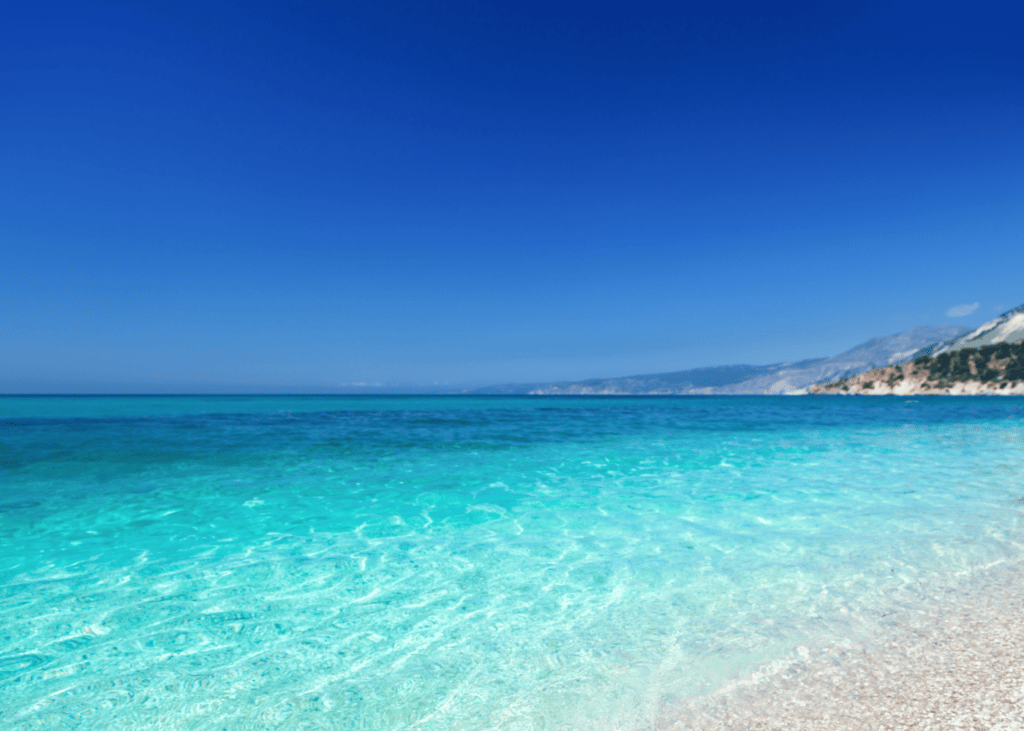
Myrtos Beach is the postcard moment, a sweeping crescent of white pebbles backed by steep green cliffs with water in a shade of blue that photographers struggle to capture accurately. It’s one of the most photographed beaches in the entire Mediterranean and it earns every bit of that attention. The village of Assos, set on a narrow peninsula with a Venetian fortress above it, is the kind of place that makes you reconsider your return flight.
Melissani Cave is worth making time for too. It’s an underground lake inside a partially collapsed cave where sunlight pours through the opening and turns the water a brilliant, almost electric blue. Captain Corelli’s Mandolin was filmed here, and that romantic cinematic quality still clings to the island. Kefalonia tends to attract independent travelers who want to explore rather than be entertained, which tells you something about the kind of trip it delivers.
Zakynthos
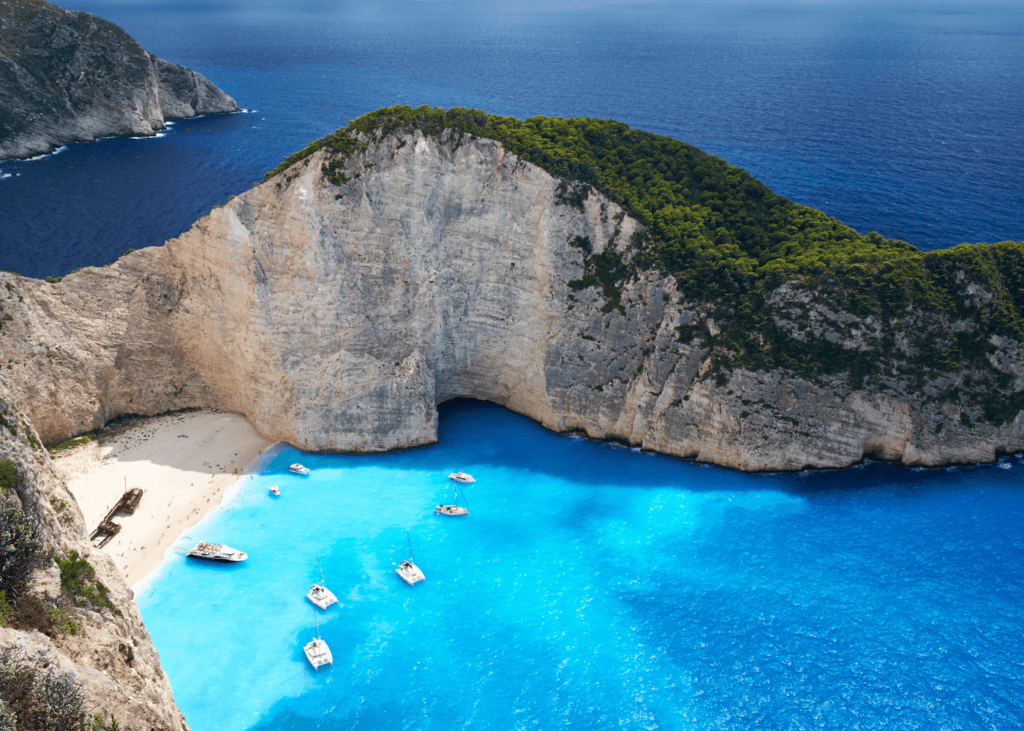
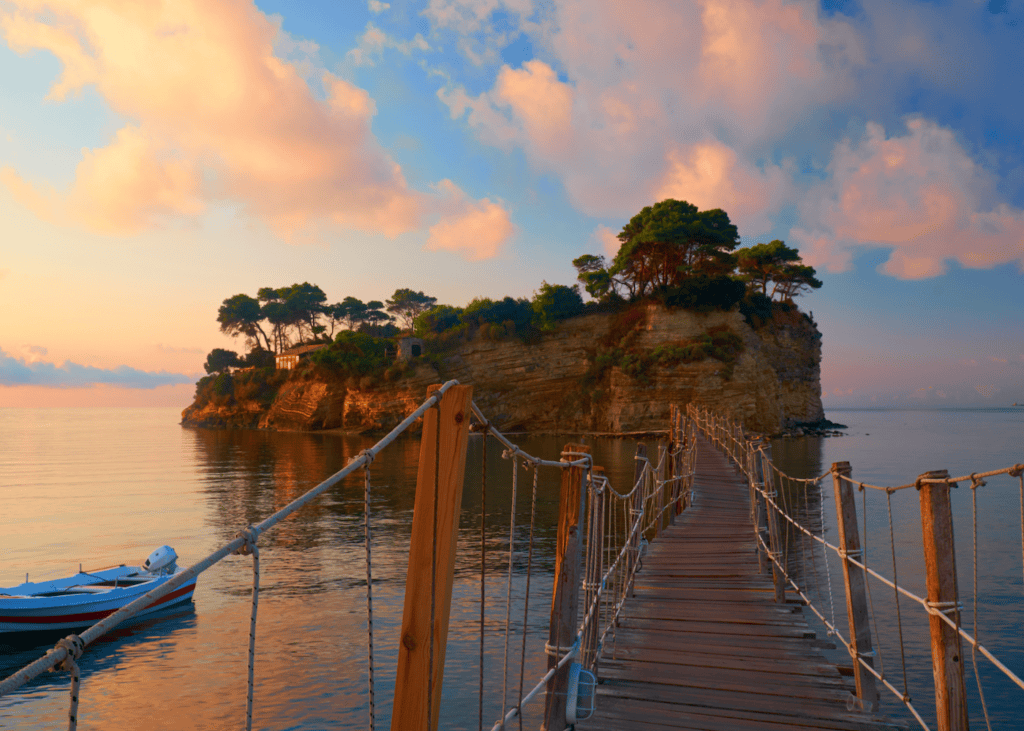
Zakynthos, also called Zante, is famous for one image above all others: Navagio Beach, also known as Shipwreck Beach. A rusted freighter sits marooned on chalk white sand inside a cove surrounded by soaring limestone cliffs, and the water around it is the kind of color that makes people genuinely gasp. You can only reach it by boat, which somehow makes it feel even more special.
Beyond that iconic image, Zakynthos has a lot going for it. The Blue Caves on the northern coast create their own surreal light show where the turquoise water reflects off the cave walls in constantly shifting patterns. Loggerhead sea turtles nest in Laganas Bay on the southern coast, and the protected zones there are taken seriously. If you time it right you might spot them in the water just offshore.
The eastern coast of the island has the bulk of the hotels and restaurants and the livelier nightlife if that’s what you’re after. The western coast is more rugged and far less developed. Zakynthos is the most energetic of the Ionian Islands in terms of atmosphere, which makes it a good fit if you want beautiful scenery but also want to feel like you’re somewhere with a pulse.
Lefkada
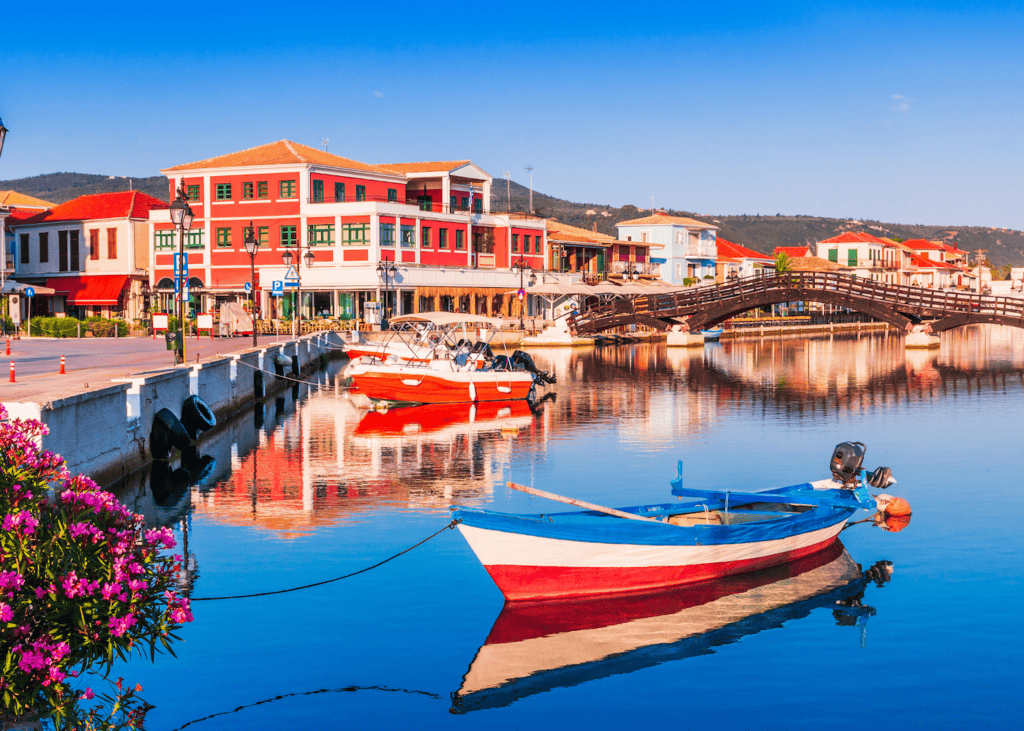
Lefkada is technically connected to the mainland by a causeway, which makes it the only Ionian Island you can drive to without a ferry. Don’t let that practical detail fool you into thinking it’s any less of an island experience. Once you’re across that bridge, Lefkada feels completely removed from the mainland world.
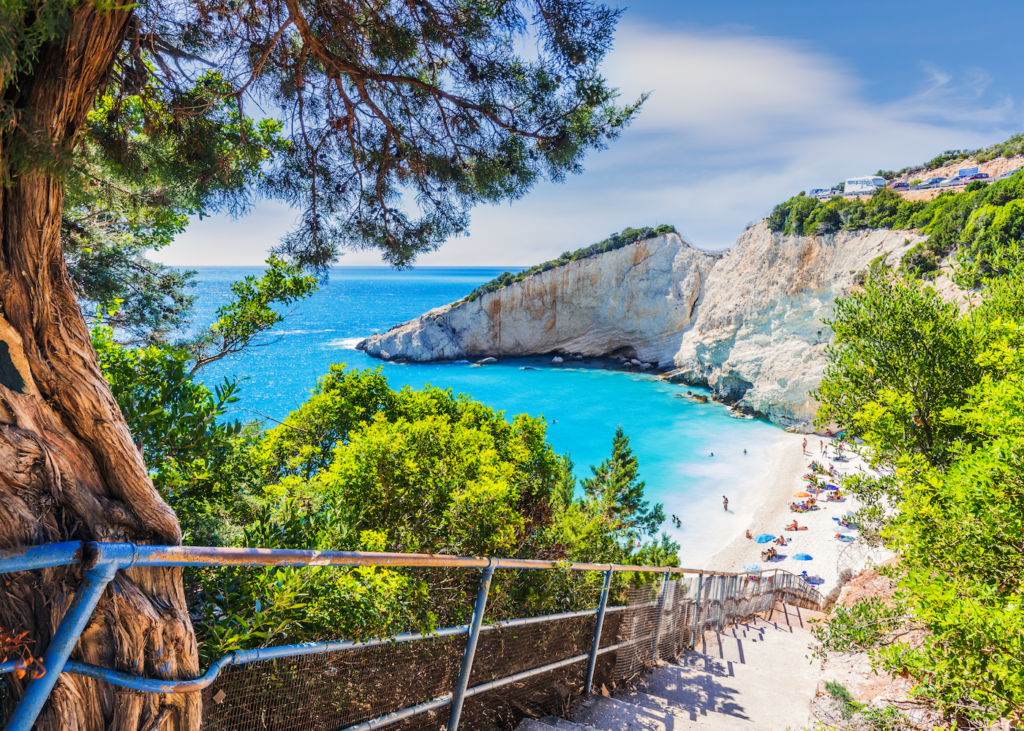
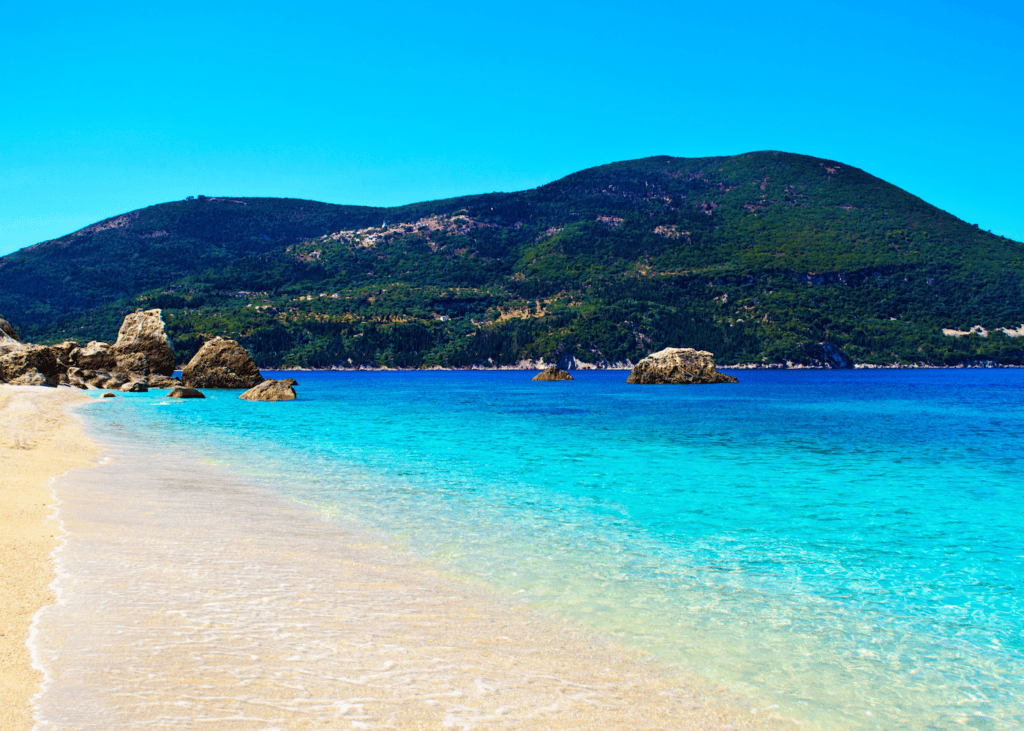
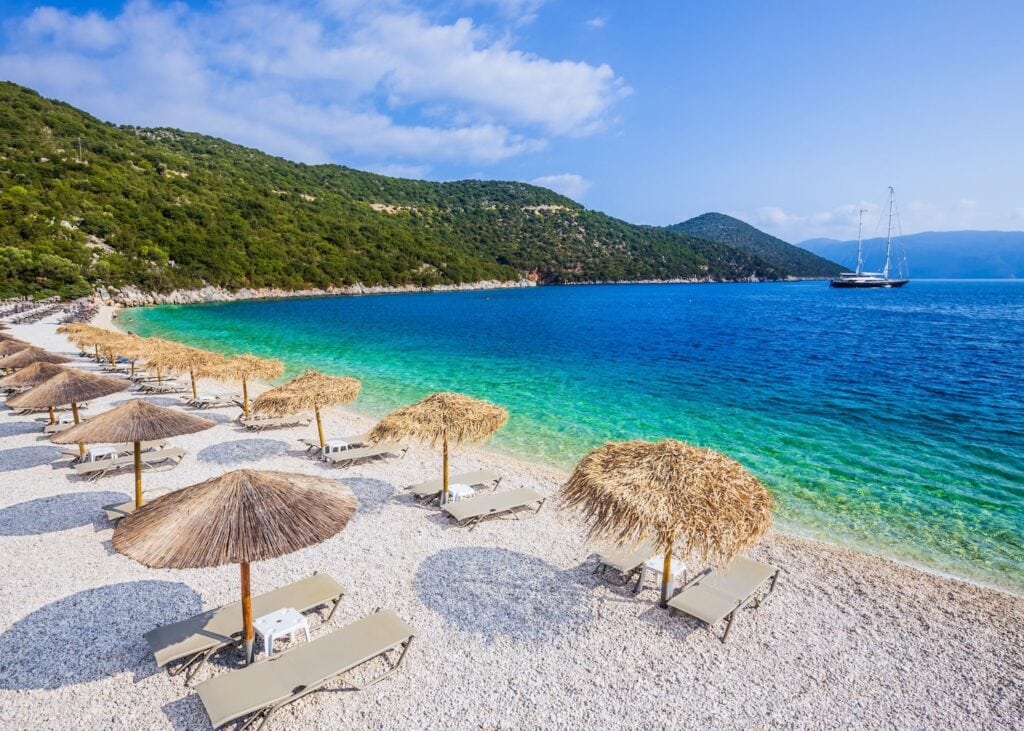
The beaches here are genuinely exceptional, even by Greek island standards. Porto Katsiki and Egremni on the west coast consistently rank among the best beaches in all of Europe and it’s not hard to see why. Those same dramatic white limestone cliffs, that same impossible blue water, but with a sense of scale and wildness that feels untouched. Egremni requires a climb down several hundred steps to reach, which keeps the crowds manageable.
Lefkada also has a charming main town with colorful buildings along a waterfront promenade, a string of pretty villages in the interior, and a laid back energy that makes it a favorite with Greeks themselves. It tends to draw a quieter, more nature focused crowd than Corfu or Zakynthos, and the sailing scene here is excellent.
Paxos
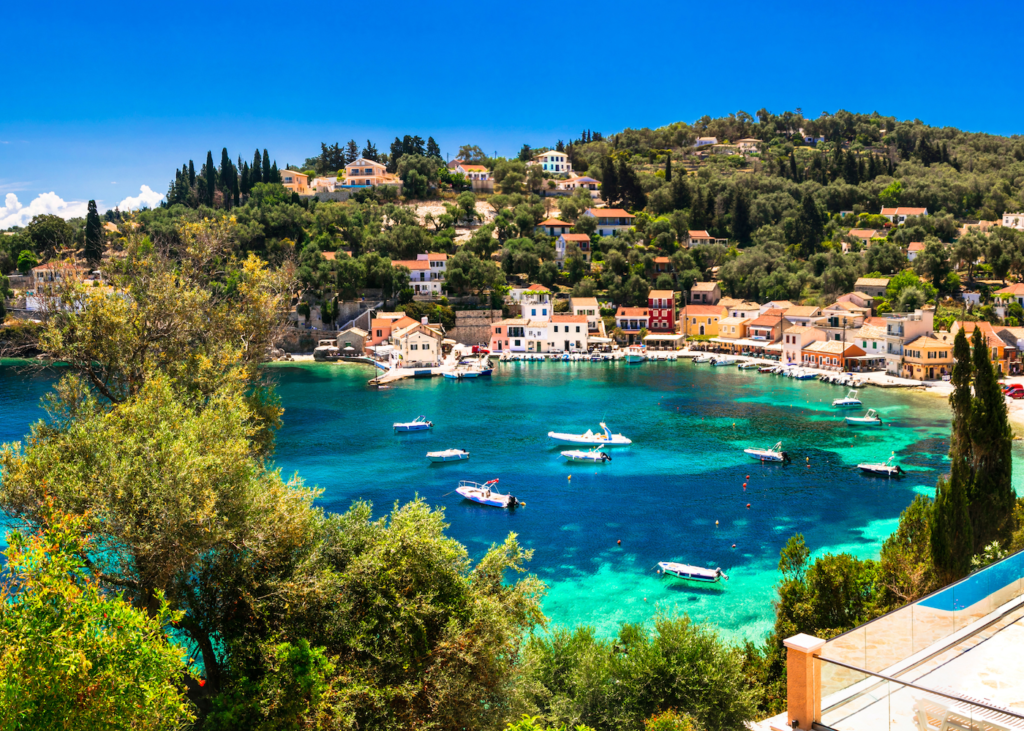
Paxos is the smallest of the main Ionian Islands, just ten square kilometers, and it wears that smallness beautifully. There’s no airport, limited accommodation, and very little in the way of tourist infrastructure, all of which conspire to keep it exactly the kind of place it is: quiet, unhurried, and genuinely lovely.
The harbor town of Gaios is the heart of the island, a cluster of Venetian style buildings around a protected harbor with a tiny islet sitting just offshore. Olive groves cover much of the interior, some of the trees centuries old, and the coastline is riddled with sea caves and impossibly clear water in every shade of blue and green you can imagine. A lot of people visit Paxos on a day trip from Corfu, but the travelers who stay a night or two are the ones who really understand what it’s offering. If total peace is what you’re after, Paxos delivers
Ithaca
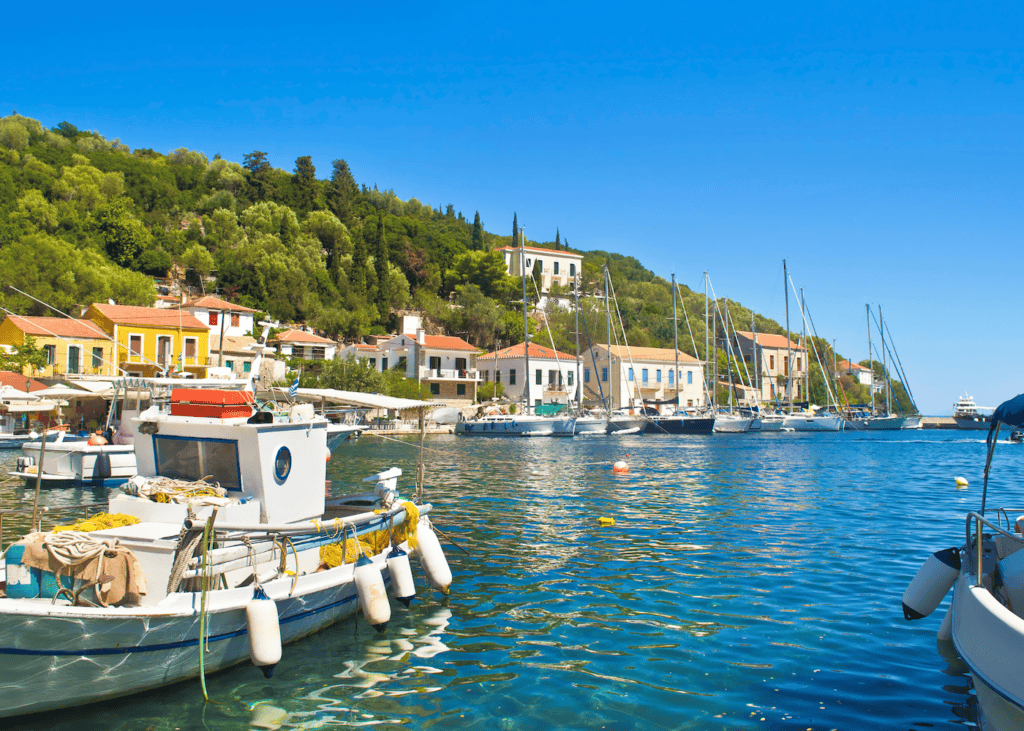
Ithaca is small, quiet, and carrying a story bigger than itself. This is the legendary home of Odysseus, the island he spent ten years trying to return to in Homer’s Odyssey, and that mythology gives even a simple walk through the port town of Vathy a kind of weight that’s hard to explain but easy to feel.
In practical terms, Ithaca has no airport and no major beach resorts, which is entirely the point. It attracts travelers who want to slow all the way down, swim off rocks into clear water, eat grilled fish at a table practically in the sea, and not worry about what else is on the itinerary. The main town of Vathy is beautiful in a quiet understated way, with colorful neoclassical houses reflected in a perfectly sheltered bay. Day trippers come over from Kefalonia, but the travelers who stay overnight are the ones who really get it. Ithaca is the kind of place you find yourself talking about for years afterward, not because of a single dramatic sight, but because of how it made you feel.
When to Go
The sweet spot for the Ionian Islands is May through mid June or mid September through October. The weather is warm, the water is swimmable, the light is golden, and you’re not competing with peak summer crowds for ferries, parking, or a table at dinner. July and August are busy and hot, though the islands handle it better than the Cyclades simply because there’s more space to spread out. Shoulder season here isn’t a compromise. It’s genuinely the better experience.
Getting Around
Renting a car on each island is the single best decision you can make. Public transport exists but it’s limited, and the best beaches, viewpoints, and villages are almost always off the main routes. The roads can be narrow and occasionally dramatic but that’s part of it. Ferry connections link the islands to each other and to the mainland ports of Igoumenitsa, Patras, and Kilini depending on which island you’re heading to. Lefkada is the one exception since you can drive straight there from the mainland without a ferry at all.
If exploring the Greek islands the right way sounds like something you want help planning, that’s exactly what I do. Let’s build something custom and well researched together. Start here.