
Best Winter Wonderland Vacations
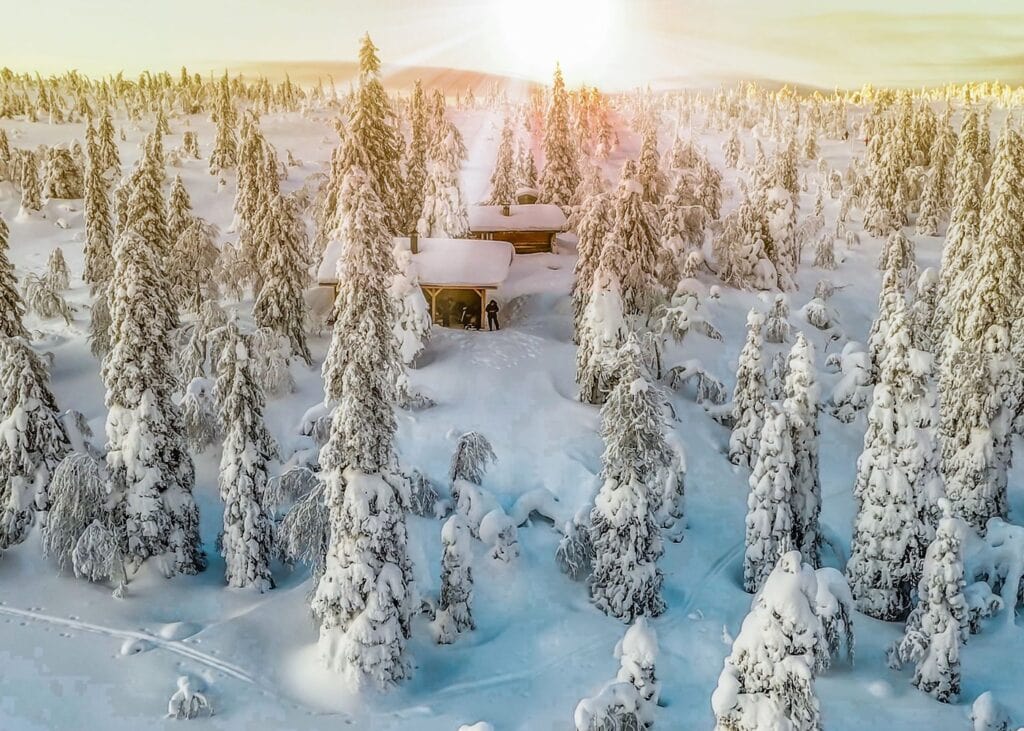
Everyone pictures a winter wonderland a little differently, but there’s usually a common thread. Deep snow piled on the trees. A cozy hotel or cabin to come back to. Frozen lakes, twinkling lights, and enough going on outside that winter becomes the whole point of the trip instead of something you’re just bundling up to survive.
A lot of places claim to deliver that. Not many actually do.
Three places really nail it, and they each do winter their own way. Finnish Lapland goes full Arctic, reindeer, huskies, glass igloos, the works. Québec City feels like someone airlifted a slice of Europe and dropped it in the snow. And Banff and Lake Louise give you the Canadian Rockies at their most dramatic, mountains and frozen lakes and some genuinely beautiful places to stay.
So which one’s right for you really comes down to what you’re picturing when you close your eyes and imagine this trip.
Finnish Lapland: The Full Arctic Experience
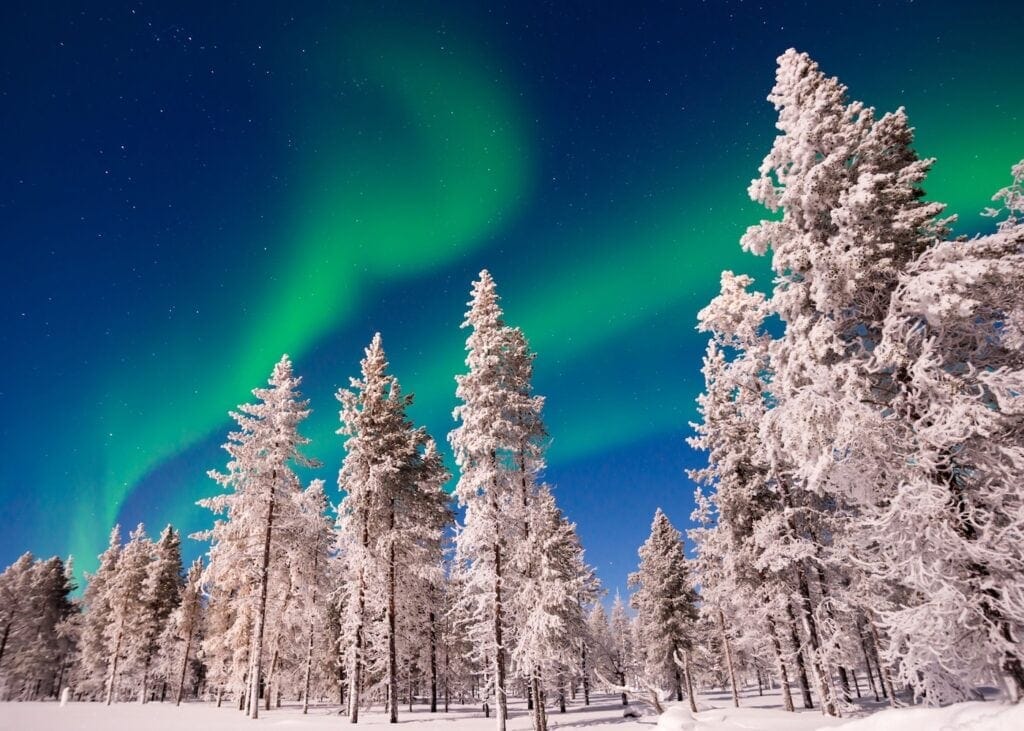
If your daydream involves snow covered forests, a husky team, reindeer, and a glass roof over your bed while you wait around for the Northern Lights to show up, that’s Lapland. That’s the trip you’re imagining.
Lapland stretches across a huge chunk of northern Finland, so where you base yourself actually matters quite a bit.
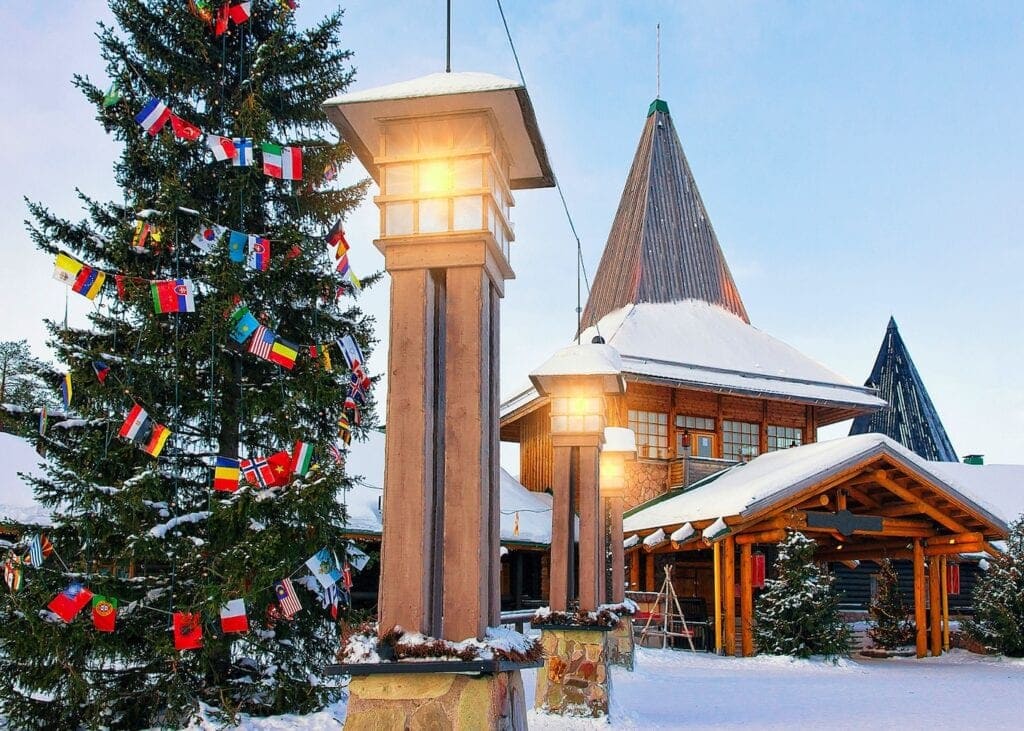
Rovaniemi is the name most people know, and it’s especially popular with families. Santa Claus Village sits right on the Arctic Circle, and you can pair a visit there with reindeer rides, husky runs, snowmobiling, and Northern Lights excursions.
But Rovaniemi isn’t your only option.
Levi is a great alternative if you want the snowy Lapland feel without going full isolation. It’s a real resort town, restaurants, shops, things to actually walk to, so you’re not stuck at one property for days on end. That matters more than people expect once you’re several nights in.
Saariselkä leans more wilderness. Some of the smaller lodges out there are stunning, but also genuinely remote. That cabin surrounded by nothing but snow sounds incredible for a night or two. After four straight days of eating every meal at the same resort restaurant, you might feel differently.
That’s why mixing it up tends to work so well in Lapland. Spend a few nights somewhere with easy access to restaurants and activities, then head to a wilderness lodge or a glass roofed cabin for a night or two at the end.
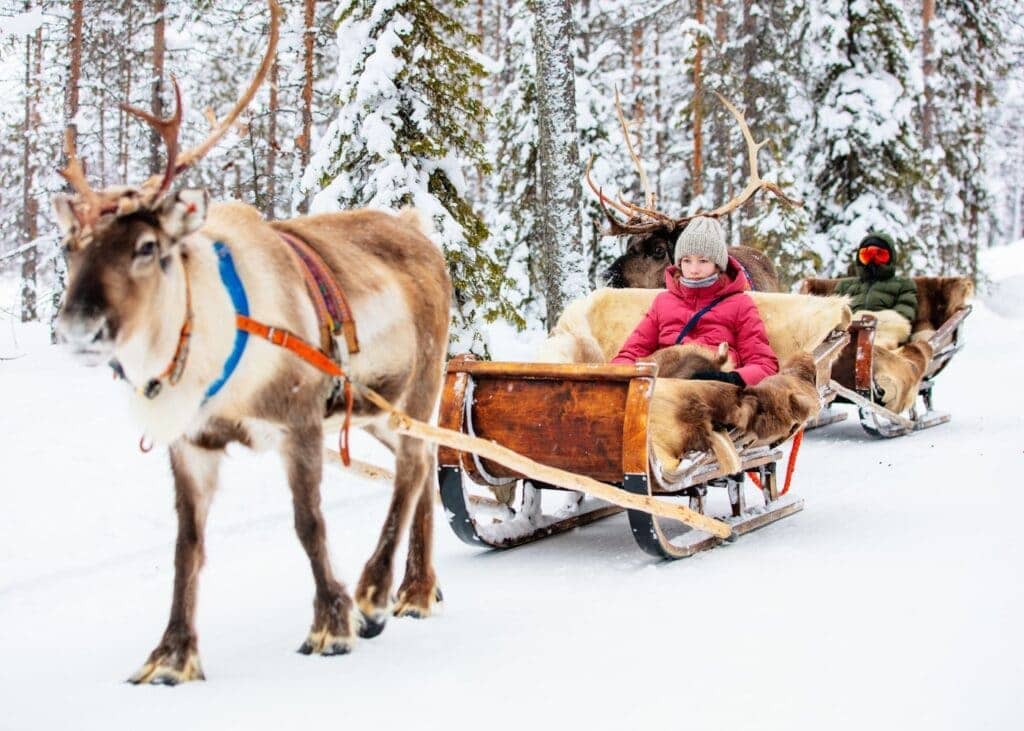
There’s plenty to fill the days regardless. Husky sledding can be a quick spin or a longer trek through the forest. Reindeer sleigh rides are the quieter option. Snowmobiling gets you deeper into the wilderness, and snowshoeing is a nice, slower way to just take the landscape in.
And then there’s the main event.
Seeing the aurora is never a guarantee. Weather, cloud cover, solar activity, it all has to line up. The longer you stay, the better your odds, and getting away from artificial light helps too when conditions are good.
But honestly, the trip isn’t only about checking boxes. Half the appeal of Lapland is simply being there in winter. An afternoon in a sauna, a walk through a snow covered forest, sitting by a fire as it gets dark outside, those moments end up sticking with people just as much as any excursion does.
Québec City: A Storybook Winter City
Québec City is a completely different flavor of winter wonderland.
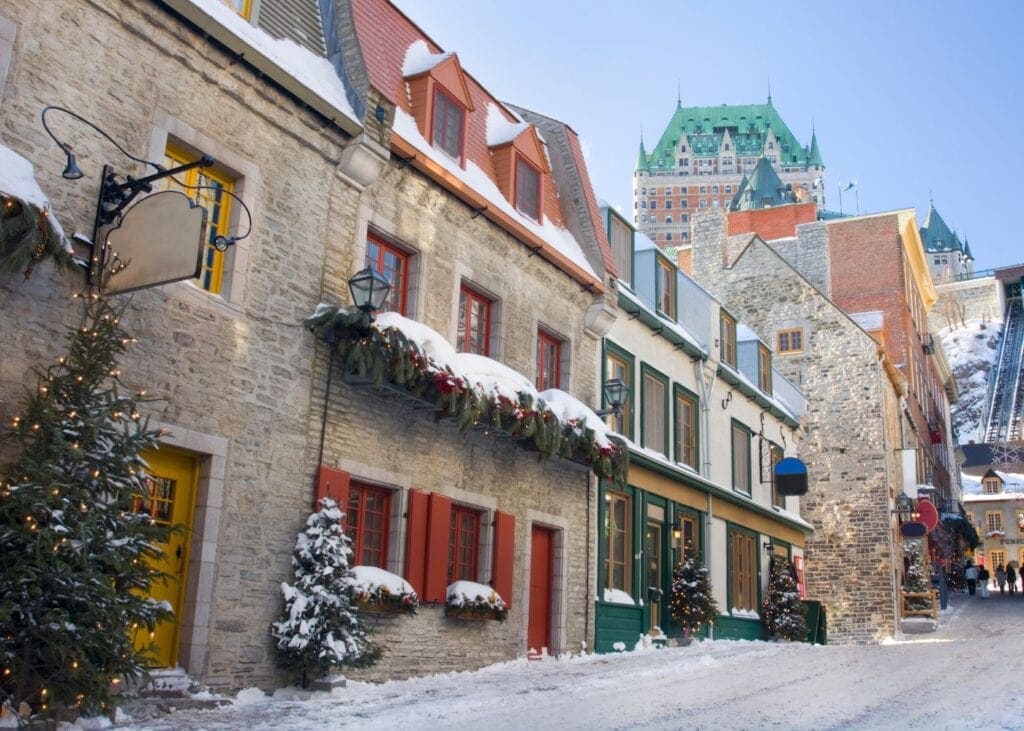
Instead of Arctic wilderness, you get narrow streets, historic buildings, cafés, restaurants, and honestly one of the prettiest old cities in North America.
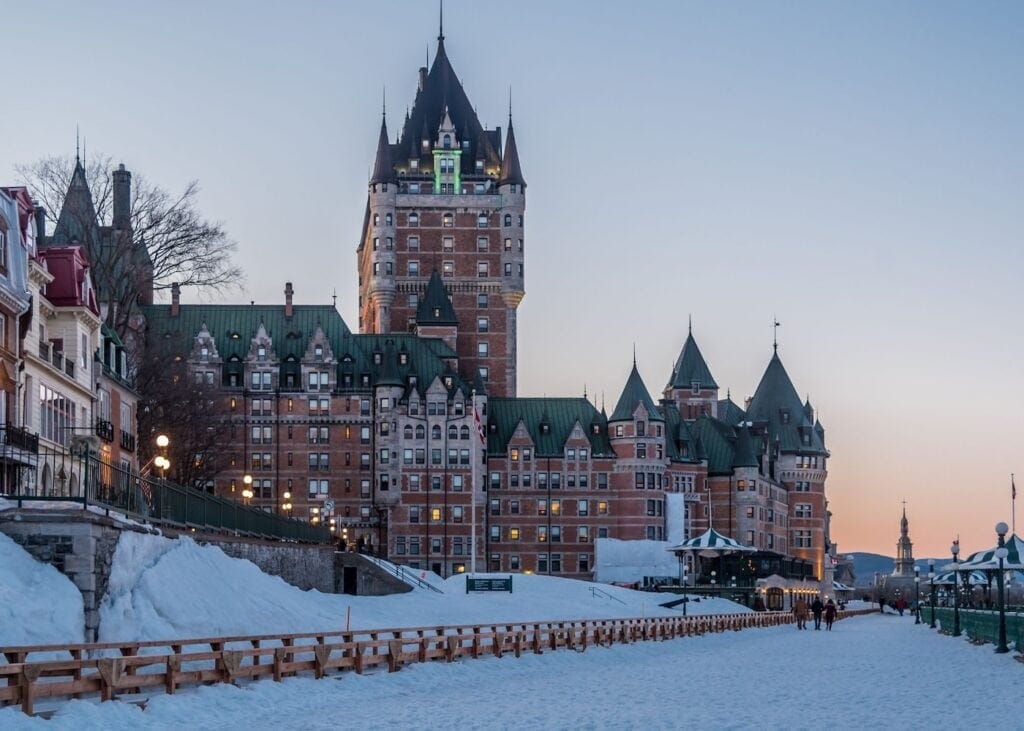
Old Québec is a UNESCO World Heritage Site, and winter changes the whole mood of the place. Snow settles on the rooftops, Château Frontenac towers over the St. Lawrence River, and the streets around Petit Champlain look almost too pretty once the holiday lights go up.
It’s one of the few places in North America where you get that European winter feeling without actually crossing the Atlantic.
December is the festive pick. The city decks itself out for Christmas, and the German Christmas Market spreads through Old Québec. But if snow is the priority, January and February are your better bet. Those December photos showing a city buried in white? Mother Nature doesn’t always cooperate on schedule.
February brings its own reason to go: the Québec Winter Carnival. Ice and snow sculptures, outdoor celebrations, and activities all over the city for one of Canada’s biggest winter festivals.
One of the best things about Québec City is that you don’t need to fill every hour. Wander through Old Québec, stop for a long lunch, poke around Petit Champlain, grab dinner somewhere good. That’s a full day.
When you want more action, head just outside the city for dogsledding or snowshoeing. Montmorency Falls is right there too, and it looks like a completely different place once snow and ice take over.
That mix is what makes Québec so good for people who want plenty of winter atmosphere without giving up restaurants, history, and a city worth wandering. It’s also a great choice if you’re working with a shorter trip.
Banff and Lake Louise: Winter in the Canadian Rockies
Banff is the mountain version of a winter wonderland.
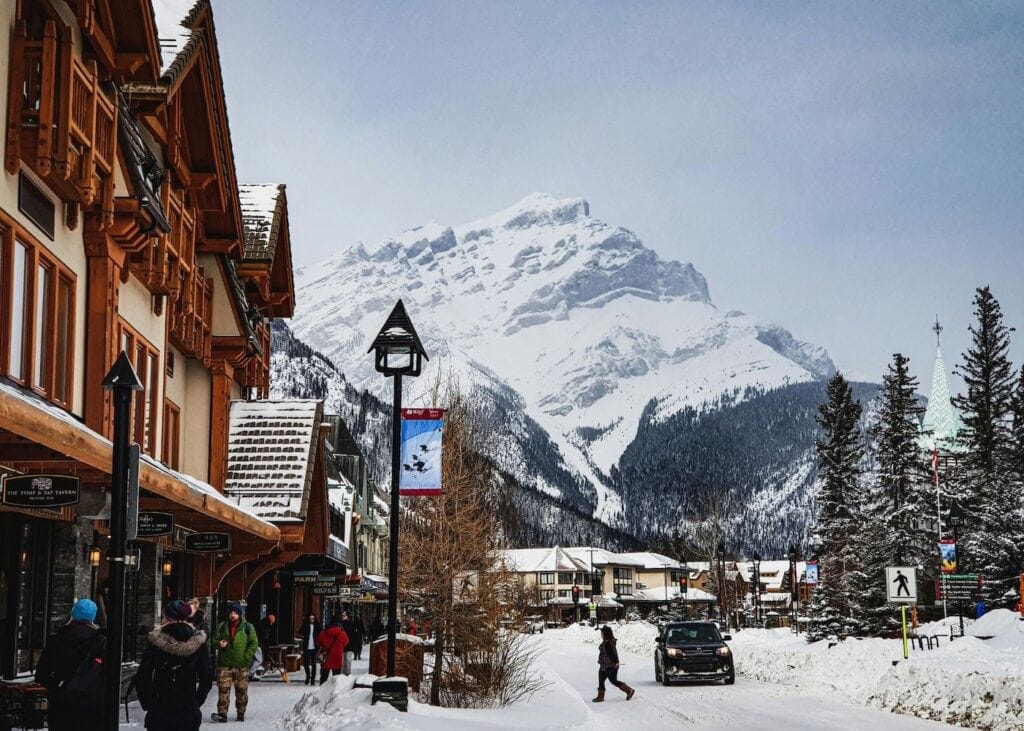
Banff National Park sits in the middle of the Canadian Rockies, and once winter hits, snowy peaks, evergreen forests, and frozen lakes combine into pretty much exactly the scenery people picture when they think of Canada.
Banff and Lake Louise get lumped together a lot, but they’re really quite different experiences.
Banff is a proper town. You can walk to restaurants, shops, cafés, and there are hotels across every price range. If you don’t want to feel stuck at a resort, this is where most of the trip should be based.
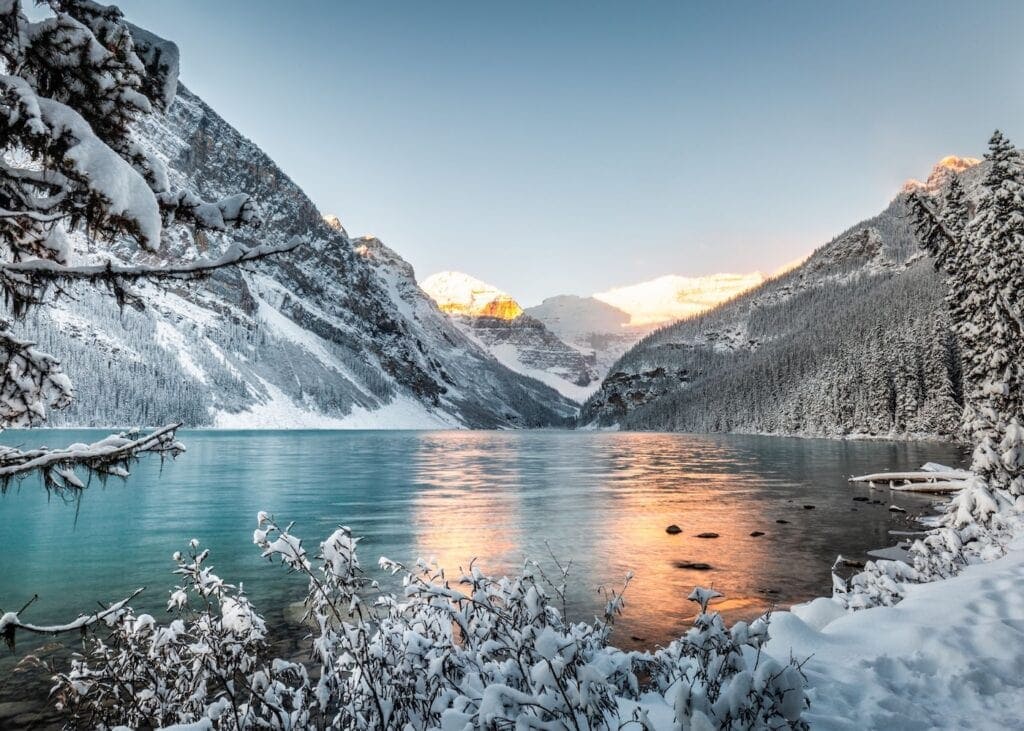
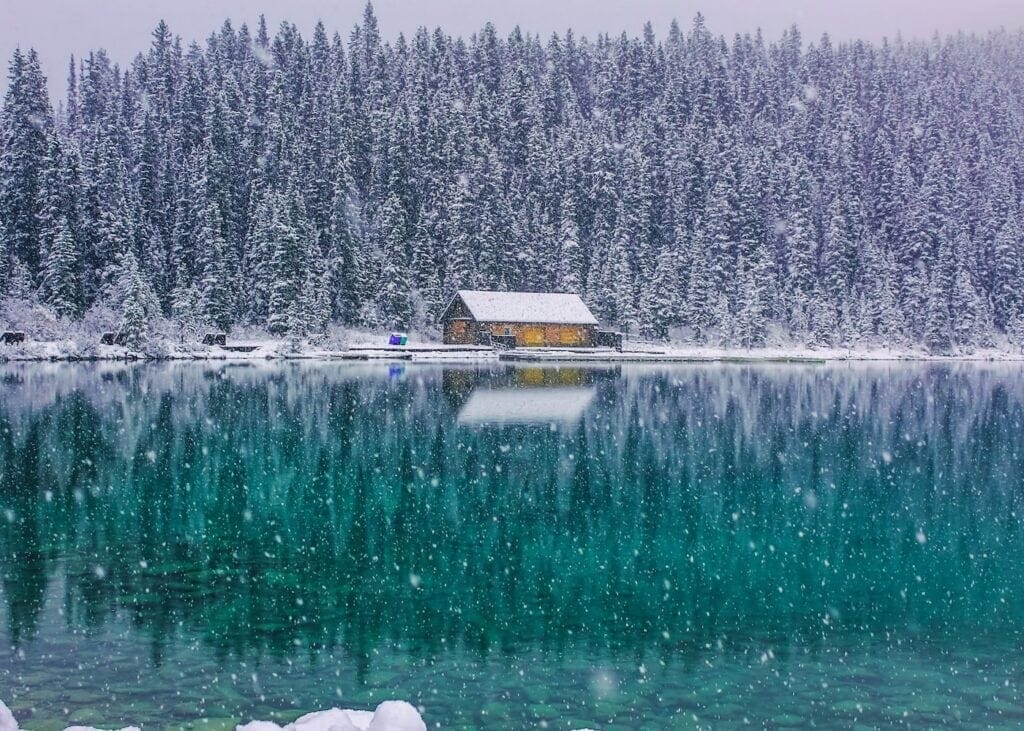
Lake Louise is quieter and much more about the view. In winter, the lake freezes over beneath the surrounding mountains, and it becomes one of the most recognizable winter scenes in the country. Depending on conditions, you can skate on it, take a sleigh ride, or just stand there and take it in.
Combining the two makes a lot of sense for a longer trip.
And even though Banff and Lake Louise are famous ski towns, skiing doesn’t have to be why you’re there. Gondola rides, snowshoeing, ice skating, winter walks, sleigh rides, spa days, scenic drives, there’s plenty to do. One person can hit the slopes while someone else spends the day doing something completely different.
That’s the real advantage of basing yourself in Banff. You get a full day outdoors, then come back to actual restaurants and things going on in town. Great setup for couples or families where not everyone wants the exact same kind of vacation.
Choosing Between Lapland, Québec and Banff
All three of these qualify as winter wonderlands. They’re just not interchangeable.
Go with Finnish Lapland if winter itself is the whole point. Reindeer, huskies, glass roofed cabins, snowy forests, and a shot at the Northern Lights add up to something you really can’t get anywhere else. Families can lean into the Santa side of things around Rovaniemi, while couples can skip that entirely and go straight for a wilderness lodge, a sauna, and Northern Lights excursions instead.
Go with Québec City if you want snow paired with history, restaurants, and a city you can actually explore on foot. It’s especially good for a shorter trip, and for anyone who likes the idea of a European winter getaway without the transatlantic flight.
Go with Banff and Lake Louise if mountains are the picture in your head. The scenery does the heavy lifting here, and you can make the trip as active or as laid back as you want.
When to Go and How Long to Stay
Timing actually matters here, since snow is a big part of why you’re taking this trip in the first place.
In Finnish Lapland, December is hugely popular, especially with families chasing that Christmas magic. It’s also one of the priciest windows, and the more distinctive stays can book out well ahead of time. January and February bring the deep winter conditions and long dark nights that are ideal for Northern Lights viewing. March is a great option too, more daylight, still plenty of snow on the ground.
Late November can work, especially farther north, but if deep snow is non negotiable, it’s smarter to go a little later than to gamble on the start of the season. Plan on at least five nights in Lapland. Six or seven is even better, especially given how far most Americans are traveling to get there and how much more that extra time helps your odds of catching the aurora.
Québec City shifts depending on when you go. December wins for Christmas atmosphere and markets, while January and February give you better odds at that deep snowy look everyone’s picturing. Three or four nights covers the city itself nicely, and you can always stretch the trip by tacking on another stop in Québec.
For Banff and Lake Louise, January through March generally brings more reliable winter conditions than the very start of the season. January runs colder and quieter after the holidays, while February and March bring more daylight for getting outside. Four or five nights is enough to enjoy the area without feeling rushed. Six or seven makes sense if you want a slower pace, a few solid days of skiing, or you’re splitting time between Banff and Lake Louise.
Honestly, the first question isn’t really where to go. It’s what you picture yourself doing once you’re there.
If it’s riding behind a team of huskies through the snow, hoping the sky lights up that night, that’s pointing you toward Finland.
If it’s wandering snowy cobblestone streets before settling into a great dinner, Québec City wins.
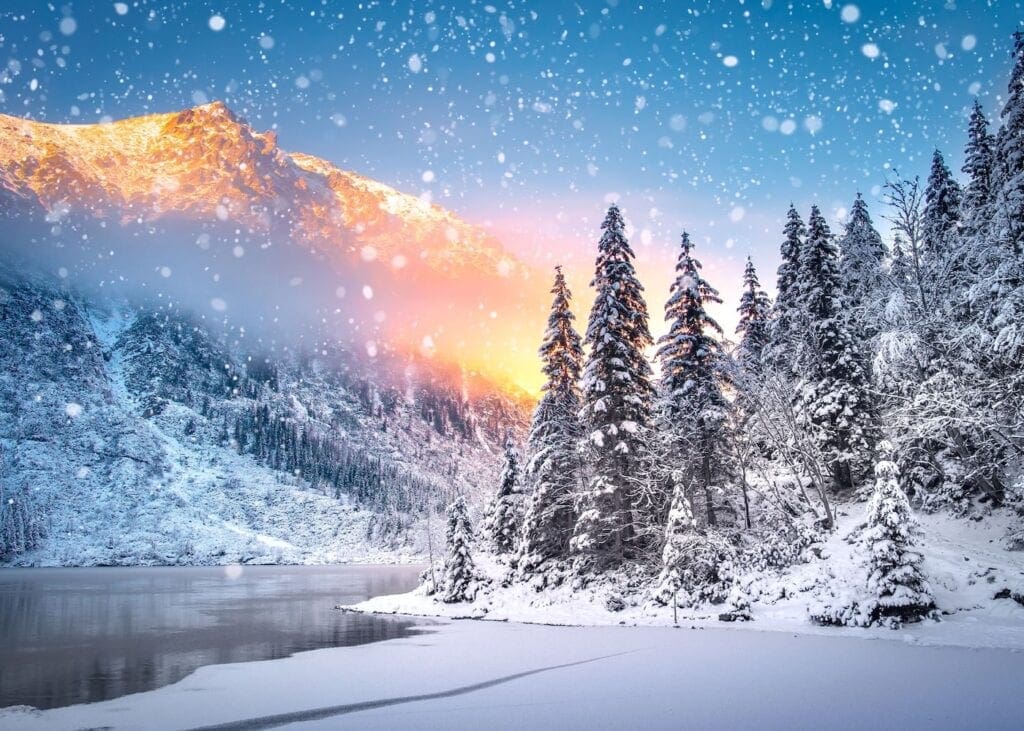
And if it’s waking up to enormous snow covered mountains right outside your window and spending the day out in the Rockies, start with Banff.
All three deliver a genuinely beautiful winter trip. The trick is just figuring out which version of winter you actually want.
If you’re picturing your own winter wonderland trip, reach out and let’s talk about which destination fits, where to stay, and how to put it all together.