
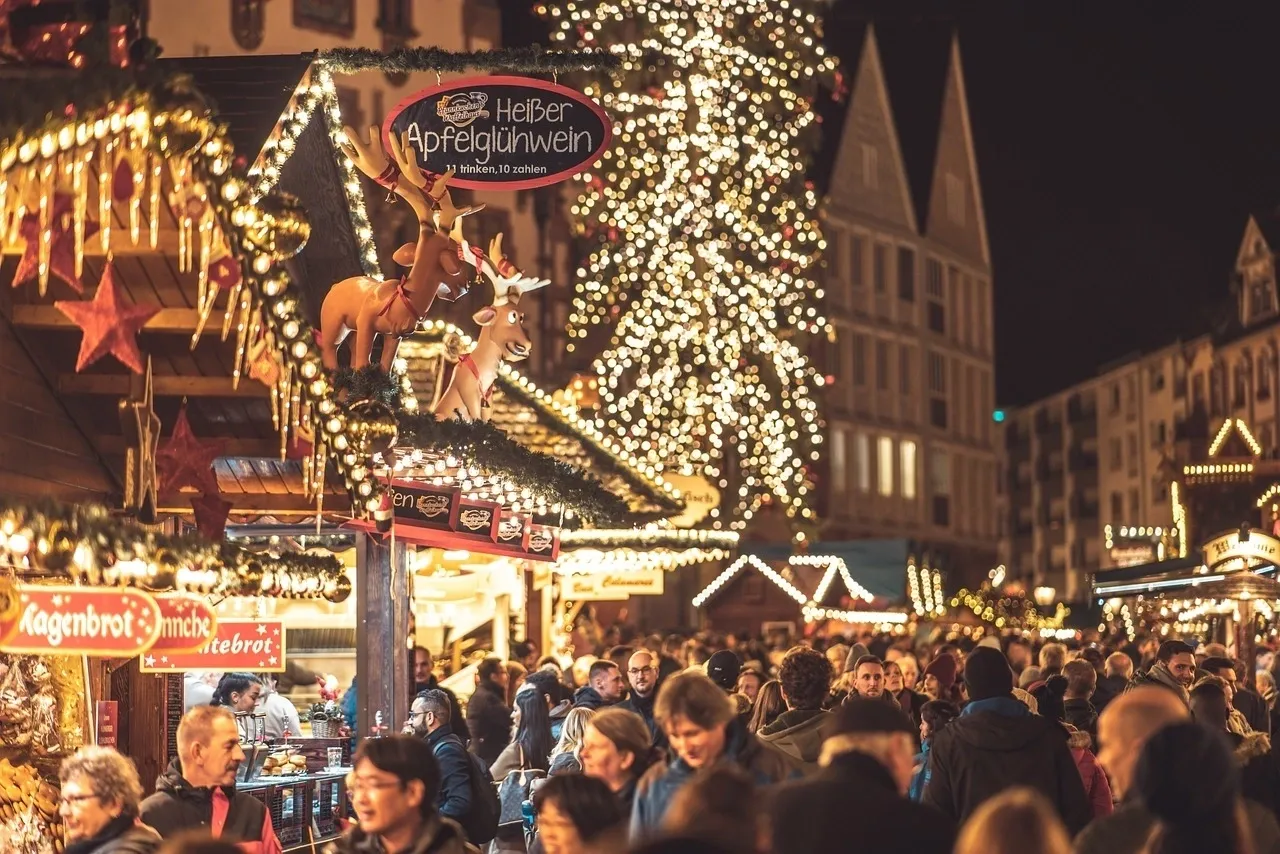
Some travel experiences are hard to explain until you’ve done them. European Christmas markets are one of those. The combination of cold air, glowing lights, mulled wine, roasted chestnuts, and centuries of tradition creates something that no holiday movie or decorated shopping mall has ever quite managed to replicate. Travelers who have been once tend to go back. Some make it an annual tradition.
It’s at the top of my own list, and in the meantime, I’ve done a deep dive into exactly what makes these markets so worth the trip, which ones deserve your time, and how to plan a visit that actually delivers.
Christmas markets have been a European tradition since the Late Middle Ages, originating in Germany as winter markets where locals could stock up on food, supplies, and handmade goods during the colder months. Over centuries, they evolved into the festive celebrations we know today, gathering places where communities come together, traditions are passed down, and the season actually feels like the season.
What’s remarkable is how each country, and even each city, has put its own stamp on the tradition. The markets in Strasbourg feel nothing like the ones in Prague, which feel nothing like Copenhagen’s Tivoli. That variety is part of what makes a Christmas market trip so worth doing and worth doing more than once.
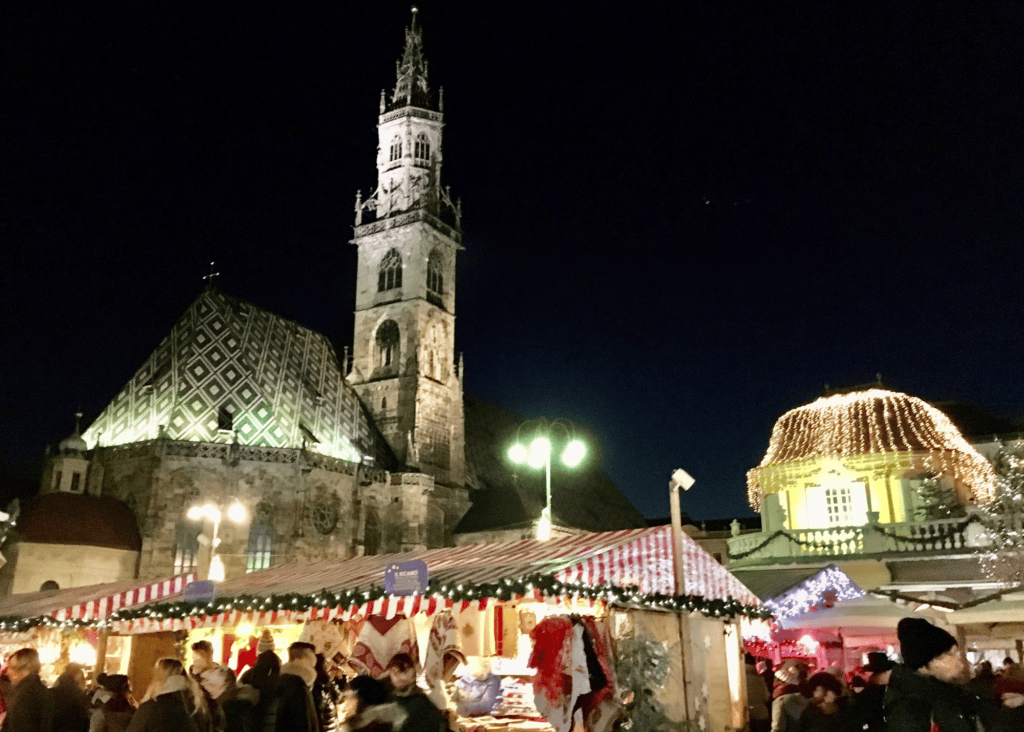
Strasbourg, France earns the title “Capital of Christmas” and has the history to back it up. The city has been hosting its market since 1570, which means they’ve had a few centuries to get it right. More than 300 stalls spread through cobblestone streets with a stunning Gothic cathedral as the backdrop, Strasbourg is consistently at the top of every “best Christmas markets in Europe” list, and the travelers who go there understand why immediately.
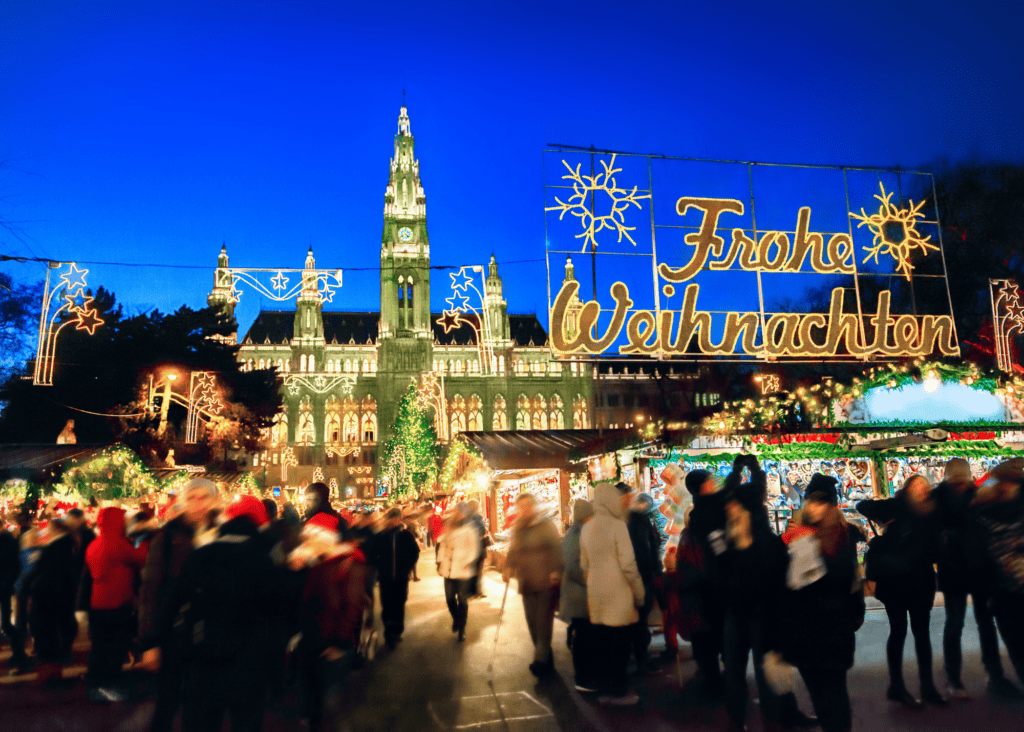
Vienna, Austria is where tradition meets grandeur. The Christkindlmarkt at the Rathausplatz fills the square in front of one of Europe’s most impressive city hall buildings with twinkling lights, handmade crafts, and glühwein (mulled wine) that travelers describe as the best they’ve ever had. Vienna also runs multiple markets simultaneously throughout the city, so you could spend an entire day moving from one to the next.
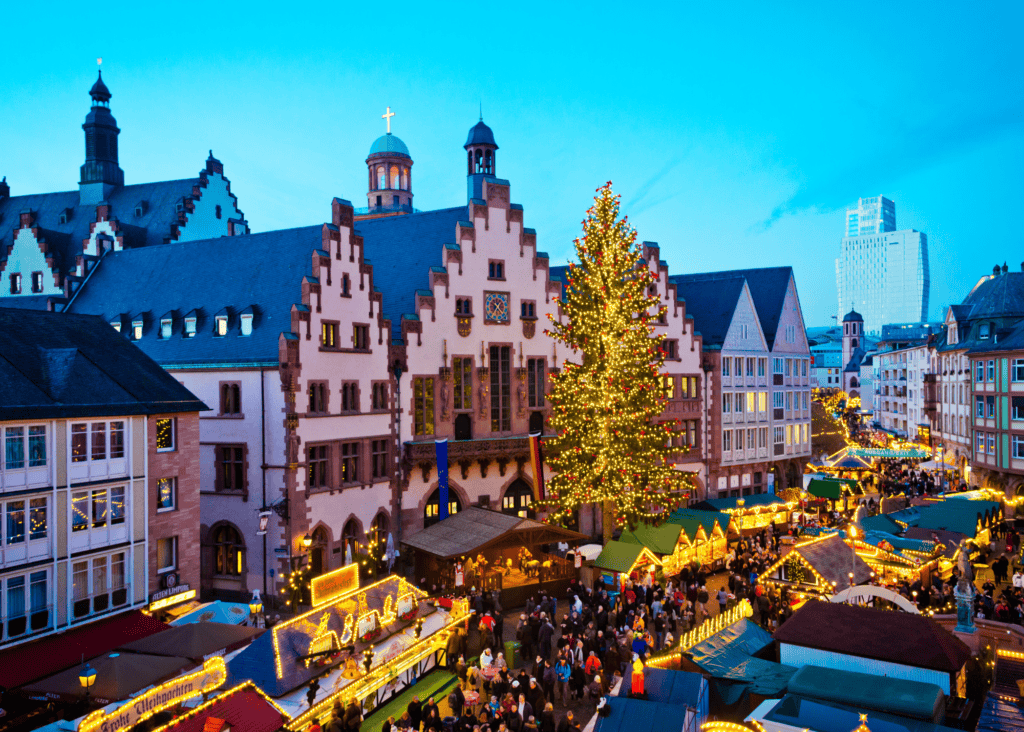
Nuremberg, Germany is the market that historians and traditionalists tend to point to first. The Christkindlesmarkt here dates back to the 1600s, and the annual opening ceremony, led by the Christkind, a young woman chosen to represent the spirit of Christmas, is a tradition unlike anything else. The gingerbread is famous for a reason, and the market’s setting in the historic main square is genuinely beautiful.
Prague, Czech Republic might be the most visually stunning of the group. Old Town Square transforms completely during the Christmas season, with a towering tree at the center, wooden stalls lining every corner, and the dramatic backdrop of the Astronomical Clock on the hour. The food alone draws people back — look for trdelník (a spiral pastry cooked over an open flame) and svařák, the Czech version of mulled wine.
Copenhagen, Denmark takes a different approach through Tivoli Gardens, the historic amusement park that becomes a fully decorated Christmas wonderland each season. It’s a little more whimsical than the traditional markets, with illuminated rides, holiday performances, and a setting that feels pulled straight from a storybook. Families especially love this one.
Give yourself time to browse slowly. The best finds at these markets aren’t the souvenirs near the entrance; they’re the handmade ornaments, the local specialty foods, and the small-batch crafts you discover when you take a wrong turn and end up in a quieter corner of the market.
Eat your way through it deliberately. Each market has regional specialties that you genuinely cannot find anywhere else. In Austria, look beyond the glühwein and try the Maroni (roasted chestnuts) and Lebkuchen (spiced gingerbread). In Germany, Nuremberg’s famous finger sausages are a must. In Prague, the roasted ham on a spit is something travelers talk about long after they get home.
Pay attention to the craftsmanship. One of the things that separates European Christmas markets from anything you’ll find at home is the quality of what’s being sold. These aren’t mass-produced items — they’re handmade ceramics, hand-carved wooden ornaments, handwoven textiles. Even if you don’t buy anything, it’s worth taking the time to appreciate what you’re looking at.
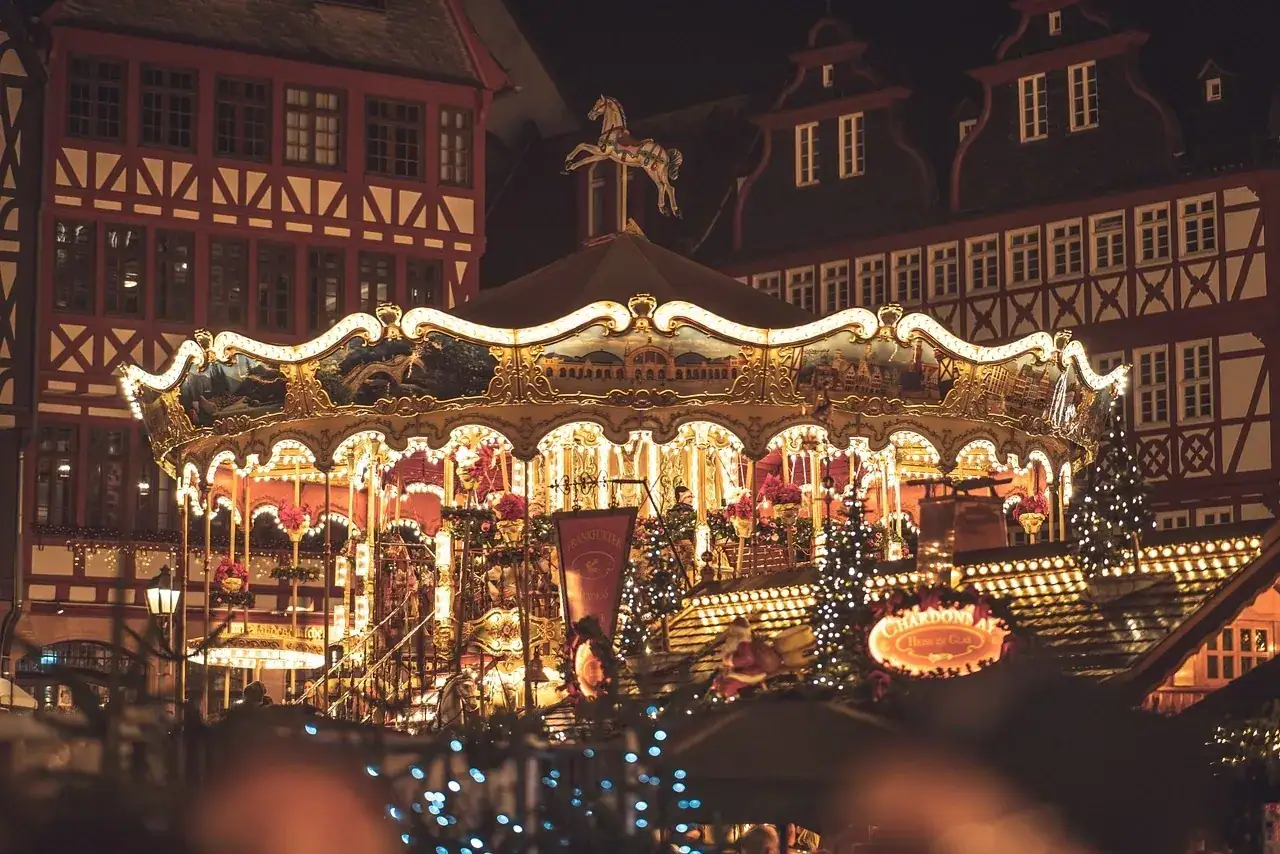
Timing matters more than most people realize. Most markets run from late November through Christmas Eve, but peak crowds fall on weekends in mid-December. A weekday visit, especially in the evening when the lights are at their best, will be noticeably more enjoyable than a Saturday afternoon at peak season.
Dress for the weather, not the photos. European winters range from crisp and manageable to genuinely cold, and you’ll be spending hours on cobblestone streets. Layers are your best friend, and comfortable, waterproof shoes are non-negotiable.
Give yourself more time than you think you need. This is not a half-day activity. The best Christmas market experiences are unhurried ones, where you have the space to stop, linger over something warm, watch the crowd, and let the atmosphere actually settle in.
And if you’re planning to visit more than one city, which I’d strongly encourage, consider connecting them in a logical route. Germany, Austria, and the Czech Republic are remarkably close to one another, and a trip that hits Nuremberg, Vienna, and Prague in one sweep is very doable with the right planning.
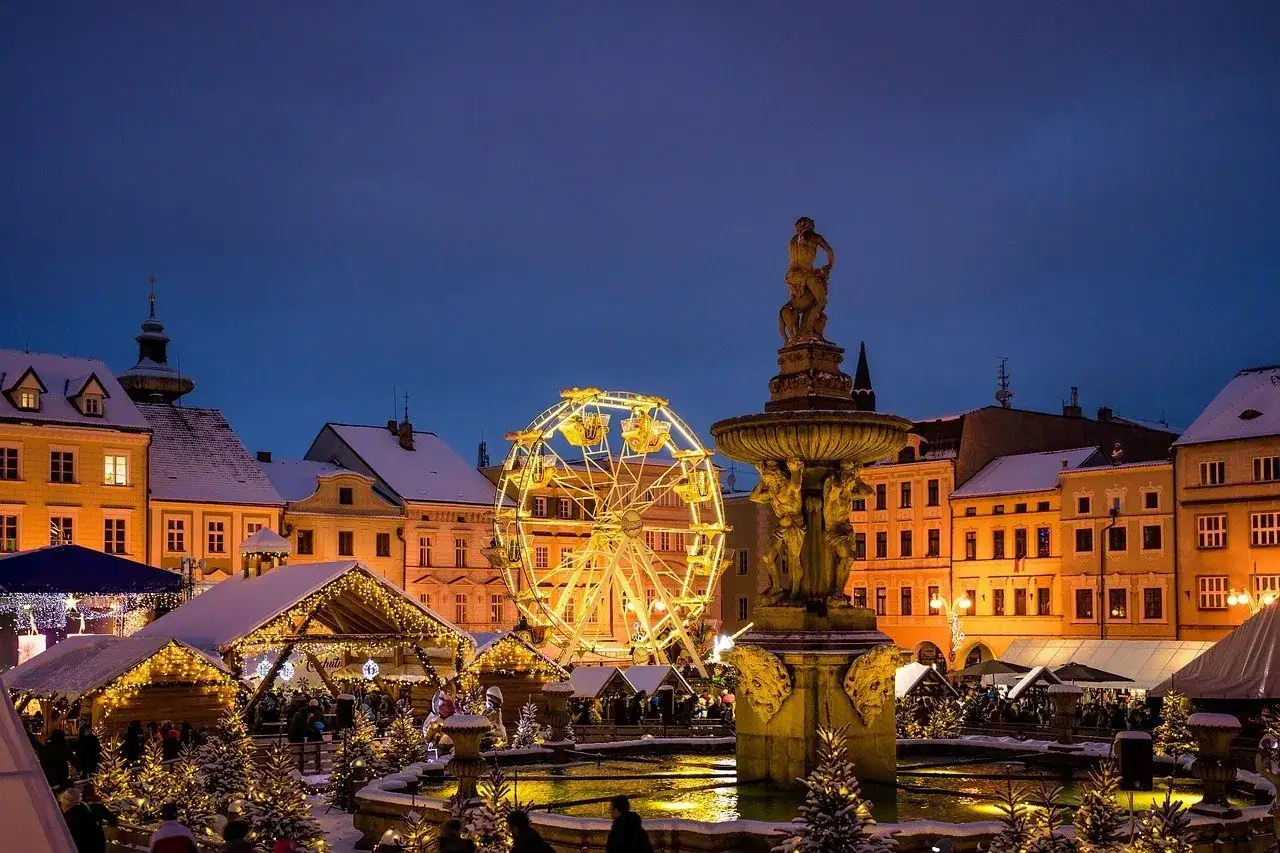
A Christmas market trip is one of those travel experiences that tends to become a tradition, the kind travelers come back to year after year. If you’ve been thinking about making it happen this holiday season, I’d love to help you put together something that fits your schedule, your travel style, and the experience you’re actually looking for.
Smooth, well-organized itineraries are what I do, and there’s nothing quite like spending the holidays somewhere that makes the season feel like the season again.