
Amalfi Coast vs. French Riviera: Why You Should Do Both
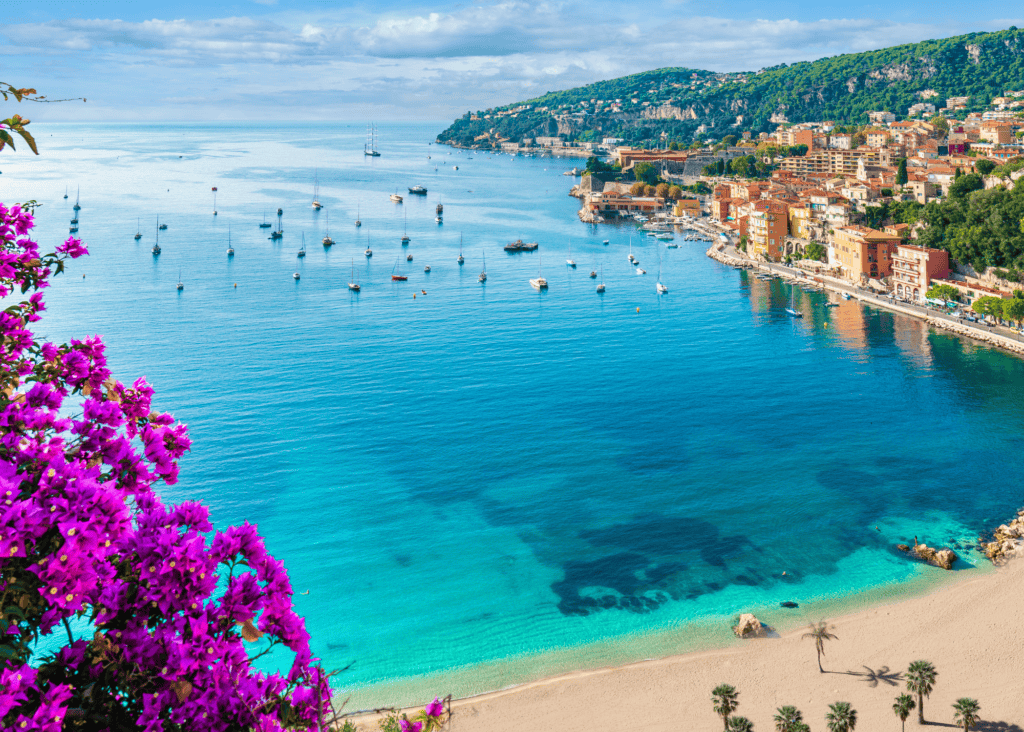
Two Coastlines. One Dream.
If you’ve ever found yourself staring at travel photos and thinking why can’t I just have both, welcome to the Amalfi Coast versus French Riviera debate. Two of the most beautiful stretches of Mediterranean coastline on the planet, sitting within a few hours of each other, and people spend years trying to decide between them. The answer is that you shouldn’t have to.
The Amalfi Coast
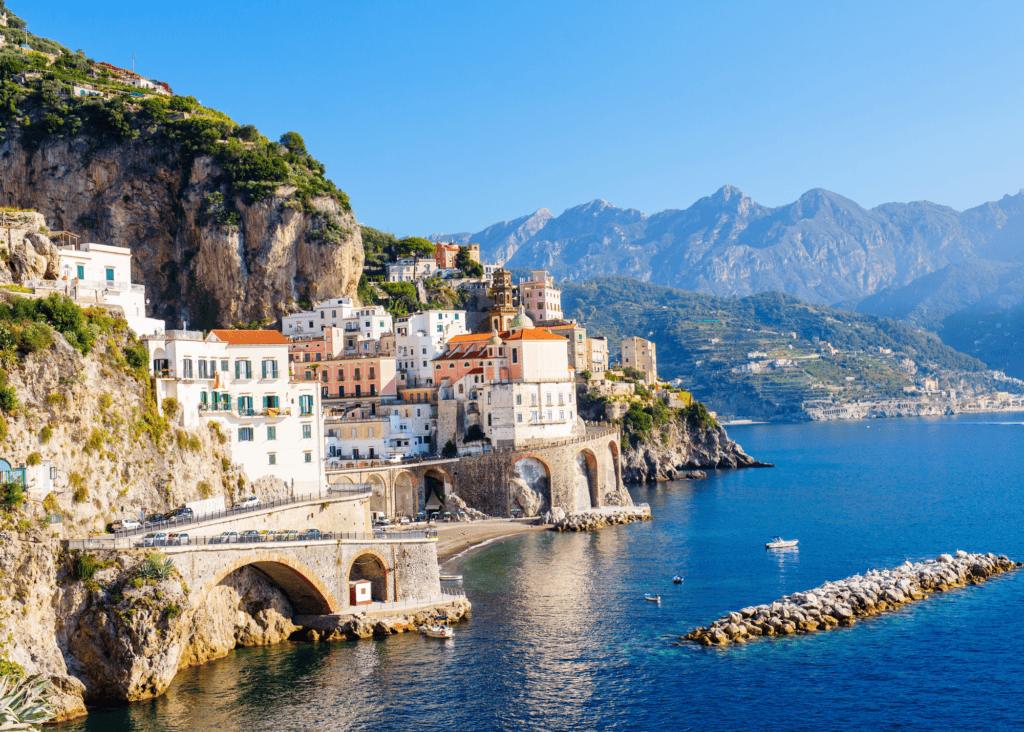
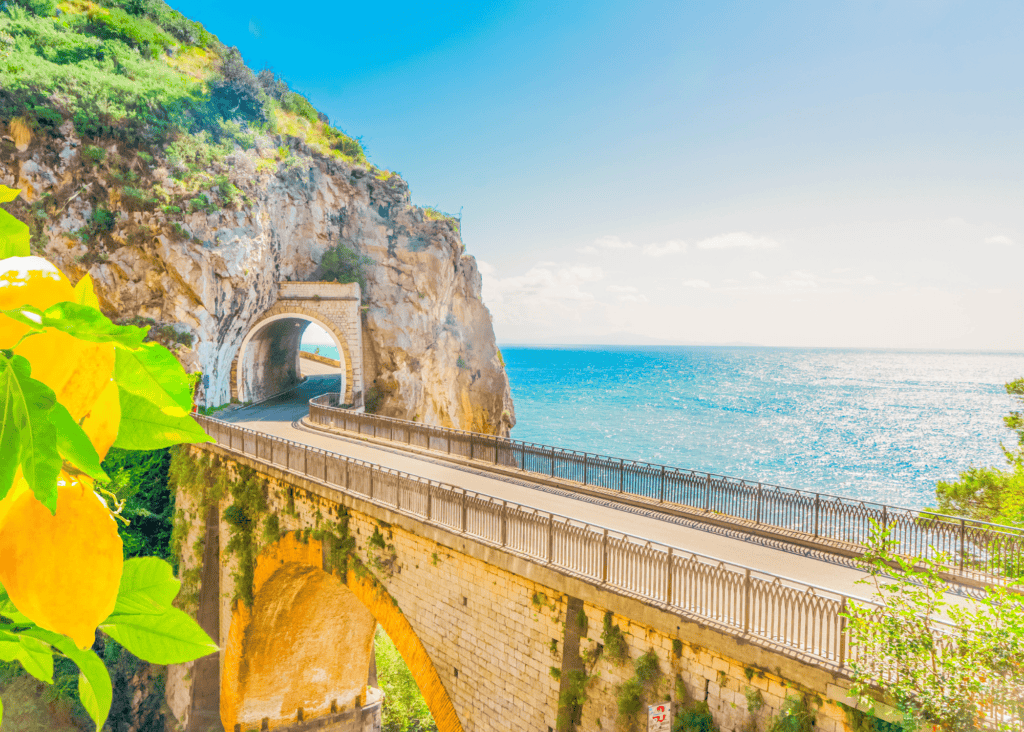
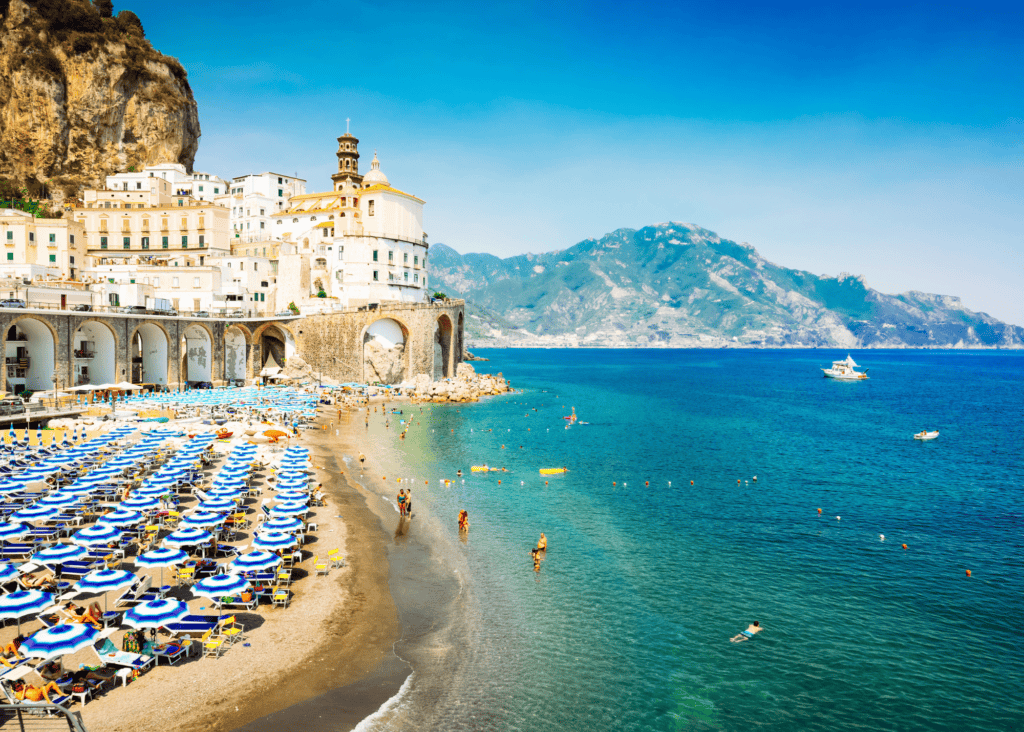
The Amalfi Coast is drama. Pastel villages like Positano, Ravello, and Atrani tumble down cliffs so steep it looks like someone stacked them there on a dare. The sea is a shade of blue-green that doesn’t seem real until you’re in it. The food is outrageously good: fresh pasta with clams at a table hanging over the water, a cold Aperol Spritz at sunset, limoncello that tastes nothing like the bottle you brought home from duty-free. This coast isn’t just beautiful. It’s completely, stubbornly itself.
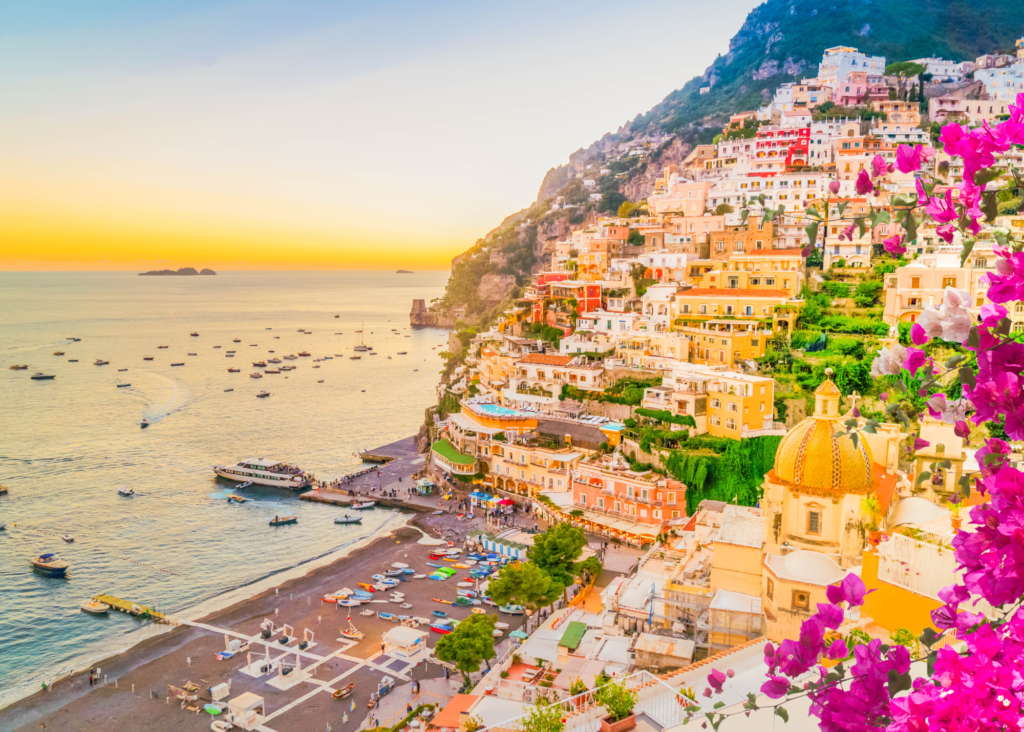
Positano is the one everyone pictures first and it earns every bit of the attention. The houses stack up the hillside in shades of pink and terracotta, the beach sits right in the center of town, and the boutiques and restaurants spill down every staircase. It’s busy in summer but magical in the shoulder season when you can actually breathe. It’s also a UNESCO World Heritage Site, which tells you everything you need to know about how special this stretch of coastline really is.
Ravello sits about 1,100 feet above the water and feels like its own world entirely. It’s quieter than the coastal towns, more peaceful, and the views are honestly some of the best in all of Italy. The gardens at Villa Rufolo date back to the 13th century and have inspired everyone from Wagner to Boccaccio. If you can only make one stop above the coast, make it Ravello.
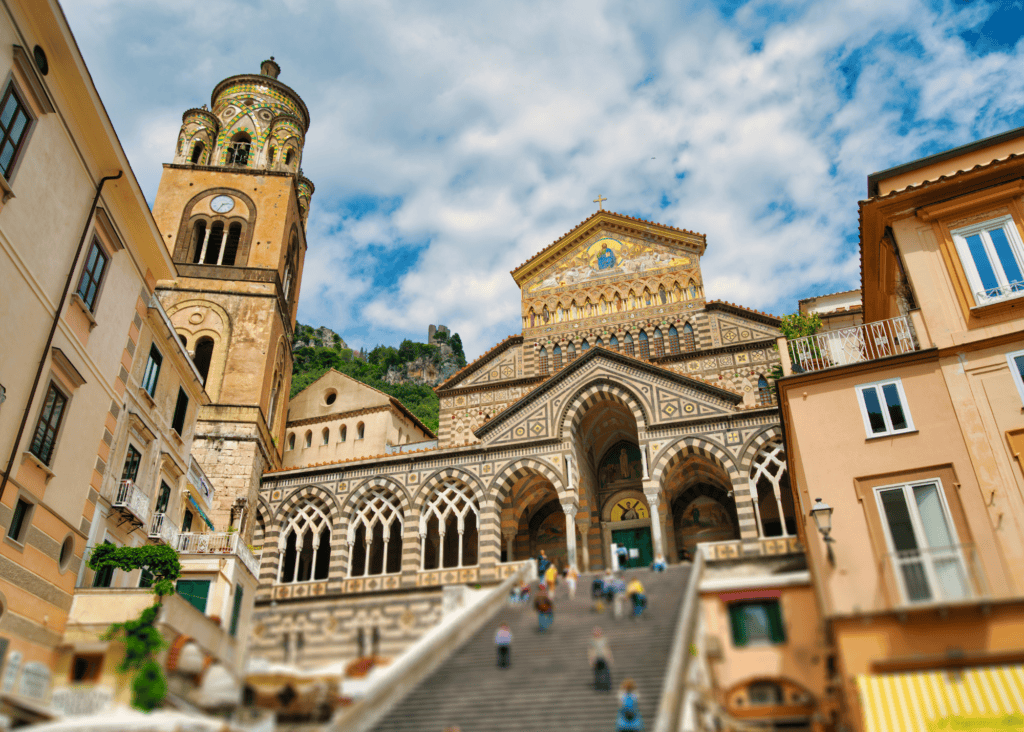
Amalfi town itself is worth a few hours of wandering. It’s quaint and small with narrow streets, cute cafes and shops, and a stunning cathedral that stops you in your tracks the moment you walk into the main piazza. It has that perfect Italian small town feel where you can sit at a cafe, watch the world go by, and completely lose track of time. Amalfi was actually one of the most powerful maritime republics in medieval Italy, which makes the grandeur of the town make a lot more sense once you know that.
And little Atrani, tucked just around the bend from Amalfi and often missed by visitors, is one of the smallest towns in all of Italy. It feels completely untouched and genuinely local in a way that’s hard to find anywhere on this coast in peak season.
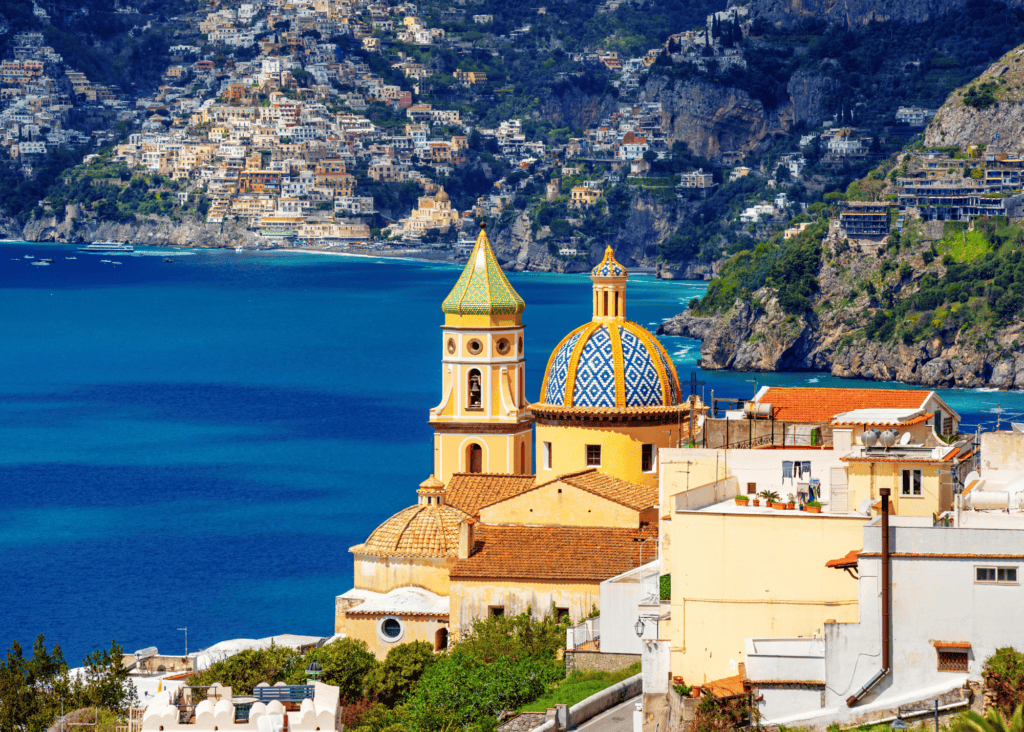
If I have one insider tip for the Amalfi Coast it’s this: stay in Praiano. Tucked between Positano and Amalfi, it’s small, peaceful, and nowhere near as touristy as its famous neighbors. Wake up in the morning, step out onto your balcony with a coffee, and watch the little fishing boats bobbing in the sea below. It’s the kind of quiet that’s hard to find anywhere on this coast in the summer and once you’ve had breakfast with that view you will completely understand why some people never want to leave.
Skip the rental car. Take the ferry between towns, hike the Path of the Godsif your legs are willing, a trail that runs high above the coastline between Positano and Praiano with views that will make your camera feel completely inadequate. Spend at least one evening in Ravello where the gardens seem to float between sky and sea. If you want to do Italy right and actually breathe while you’re there, I have a whole guide to 10 days in Italy without feeling rushed that pairs beautifully with a few days on the coast. It will ruin you for ordinary vacations.
The French Riviera
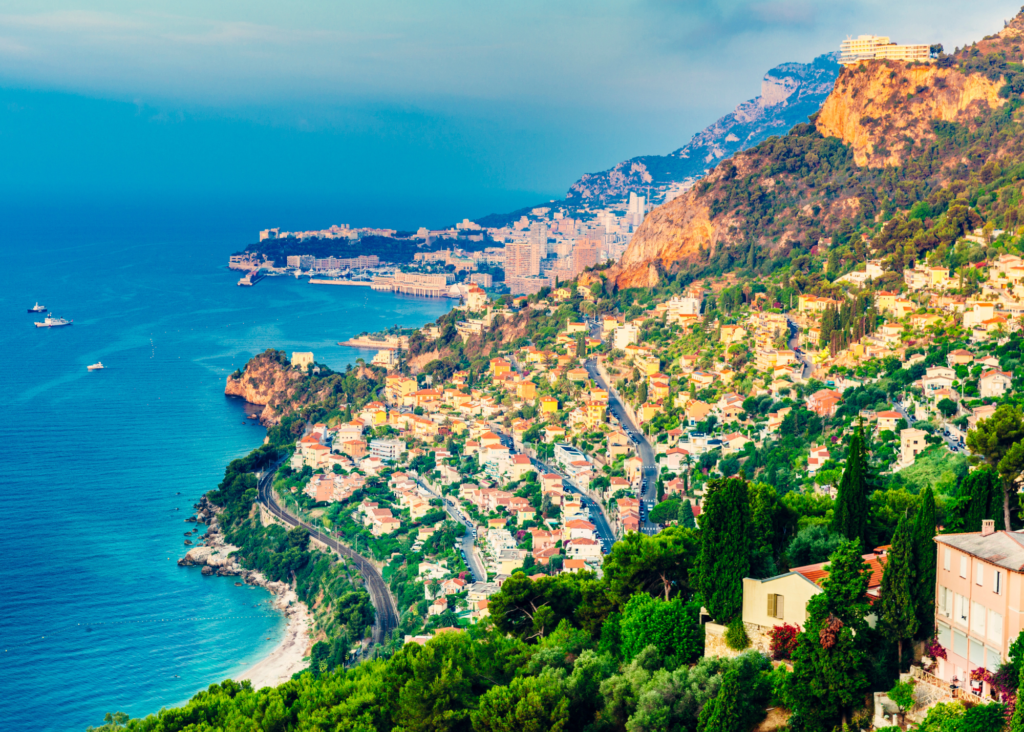
The French Riviera is something different. It’s the Amalfi Coast’s more polished, more cosmopolitan cousin, the one who went to art school and knows how to dress. Nice, Antibes, Villefranche-sur-Mer, Èze, each one distinct, each one rewarding. Matisse, Picasso, and Chagall all lived and worked along this coast, and it shows. There’s real cultural depth alongside the glamour, which is why the Côte d’Azur holds up trip after trip.
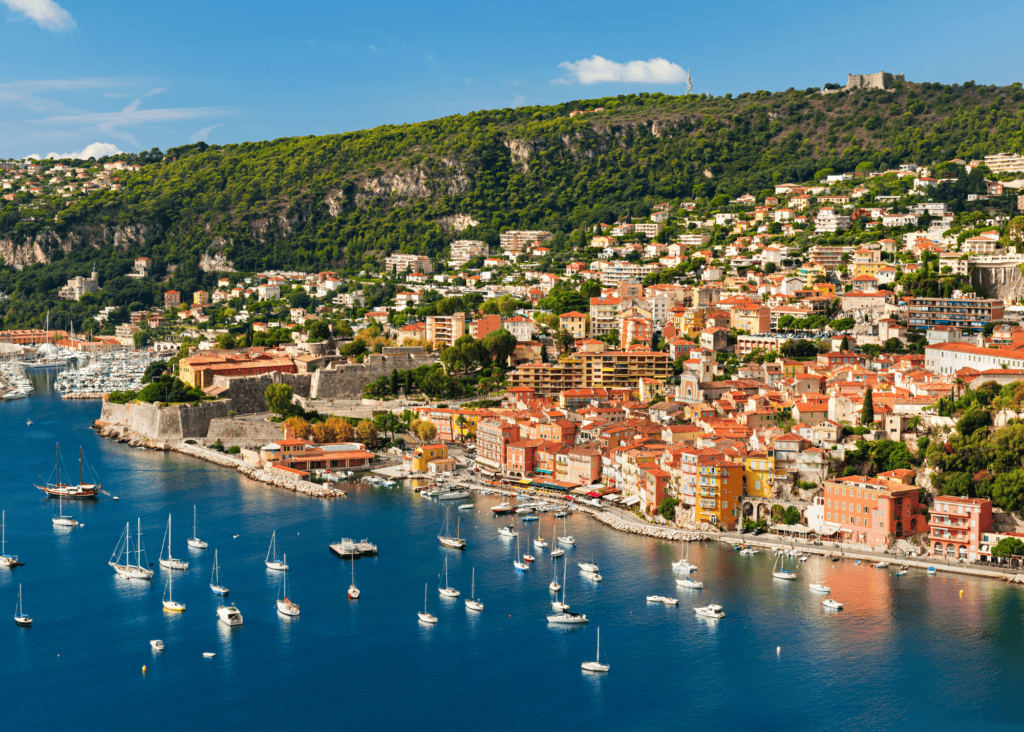
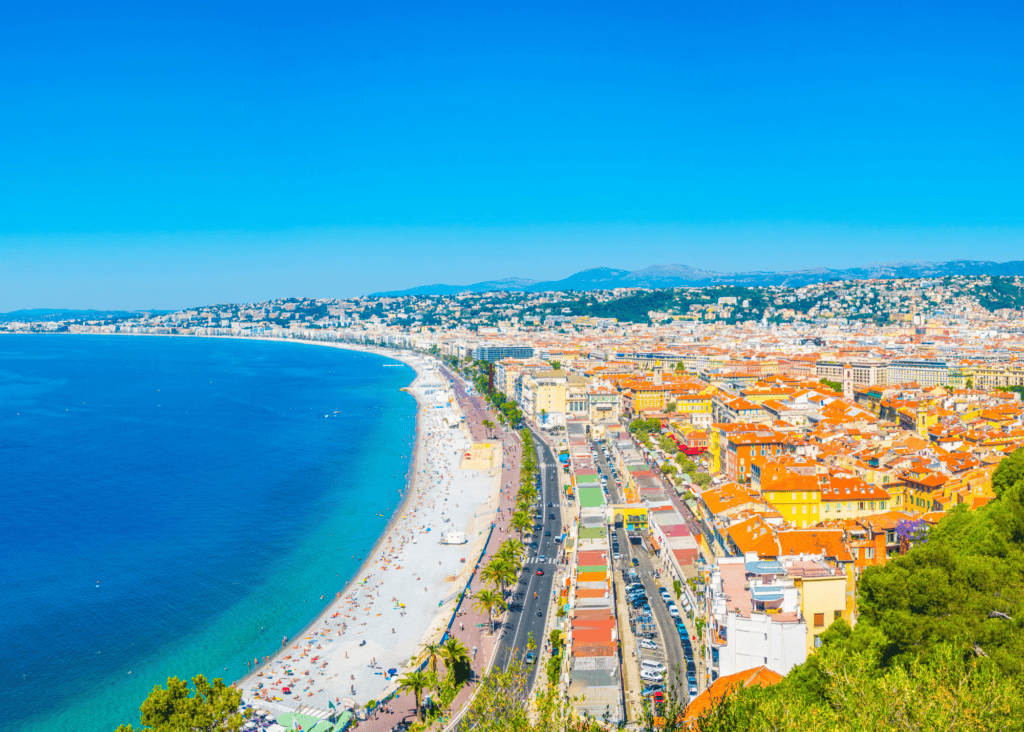
Nice is the natural base for any trip to the French Riviera and a wonderful city in its own right. The Old Town, known as Vieux Nice, is a maze of narrow streets and colorful buildings painted in warm shades of ochre and coral. The Cours Saleya market spills out every morning with flowers, fresh produce, and local vendors and is one of the best markets in the south of France. The museums here are genuinely world class, including the Matisse Museum which sits in a beautiful 17th century villa above the city and houses one of the most important collections of his work anywhere in the world. Nice is also incredibly well connected by train, which makes it the perfect jumping off point for exploring the rest of the coast.
Villefranche-sur-Mer sits just around the bay from Nice and feels like a secret even though it’s only a few minutes away by train. The waterfront is painted in shades of orange and yellow, the fishing boats rock quietly in the harbor, and the pace is slow in the best possible way. There is a small chapel right on the port decorated by Jean Cocteau that is worth a visit, and the beach here is one of the most beautiful on the entire coast.
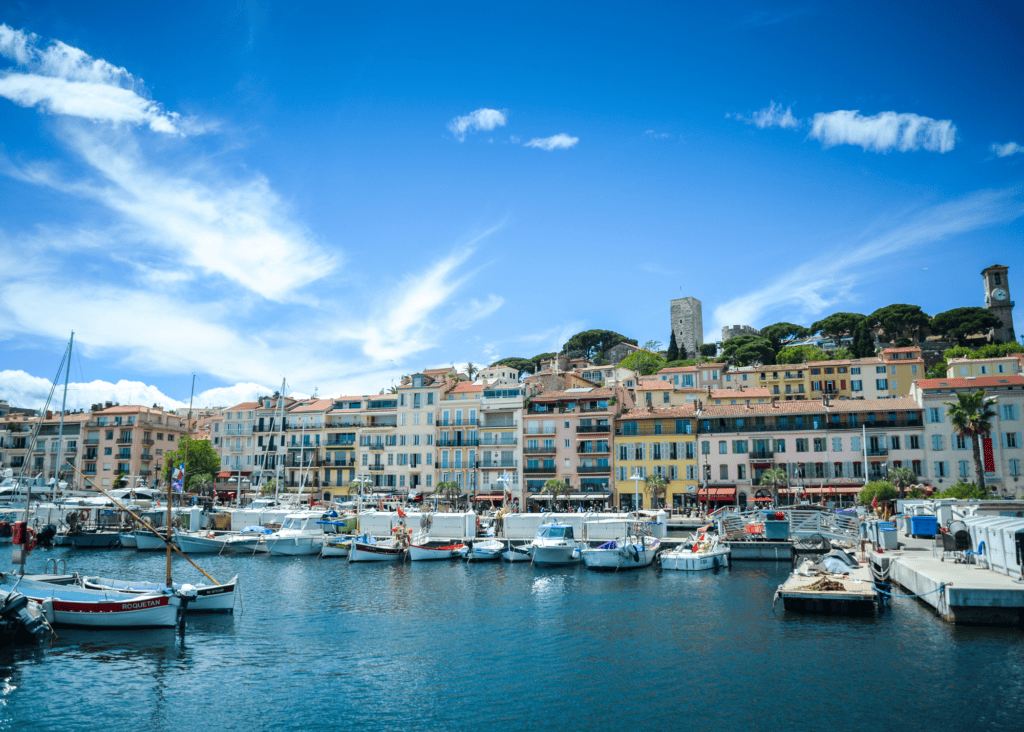
Cannes is worth so much more than its film festival reputation. The old quarter of Le Suquet sits above the port with winding lanes and panoramic views over the bay, and the market at Forville is one of the best on the coast for fresh produce, cheese, and local specialties. The Boulevard de la Croisette is perfect for a leisurely walk with the sea on one side and grand hotels on the other, and the harbor is always worth a wander regardless of what time of year you visit.
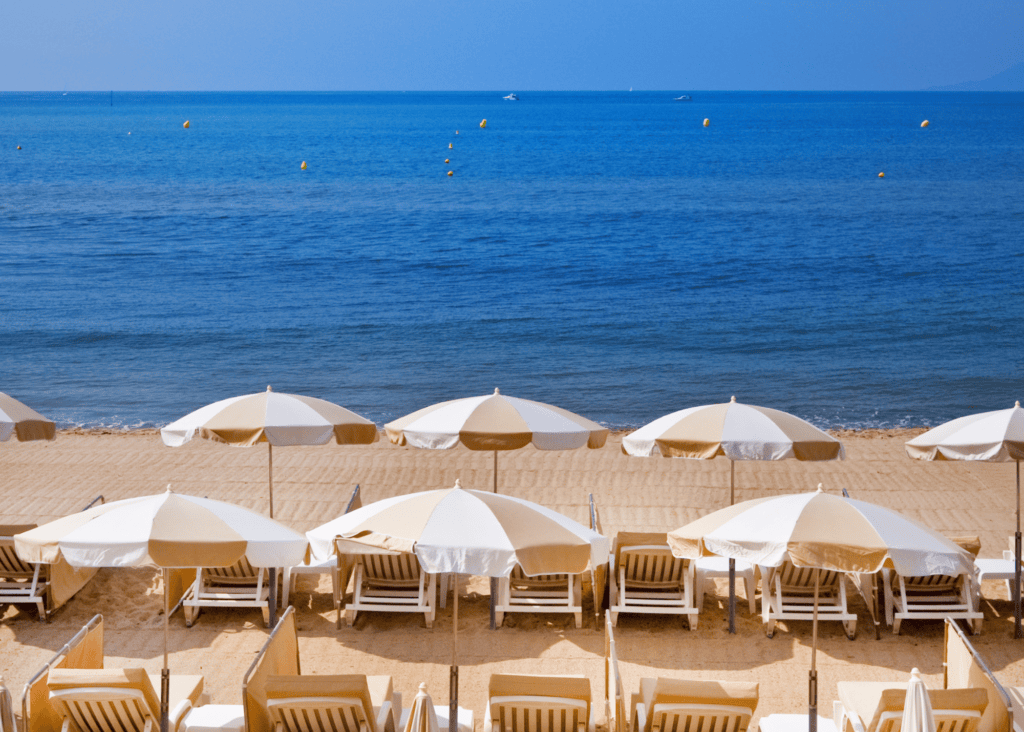
Antibes is a favorite with people who come back to the Riviera year after year and it’s easy to understand why. It has a beautiful old town with medieval walls, a lively port, and the Picasso Museum set inside a medieval château right on the water. It has a more relaxed, residential feel than some of the flashier Riviera towns and a great market that locals actually shop at, which is always a good sign.
Saint-Jean-Cap-Ferrat is one of the quieter, more elegant corners of the French Riviera. The peninsula sits between Nice and Monaco, with secluded coves, coastal walking paths, and some of the most beautiful villas and gardens on the coast. Villa Ephrussi de Rothschild is the standout, surrounded by nine themed gardens overlooking the Mediterranean. It’s an easy place to spend a few hours when you want a break from the busier Riviera towns, especially if you combine the villa with a walk along the coast or lunch by the harbor.
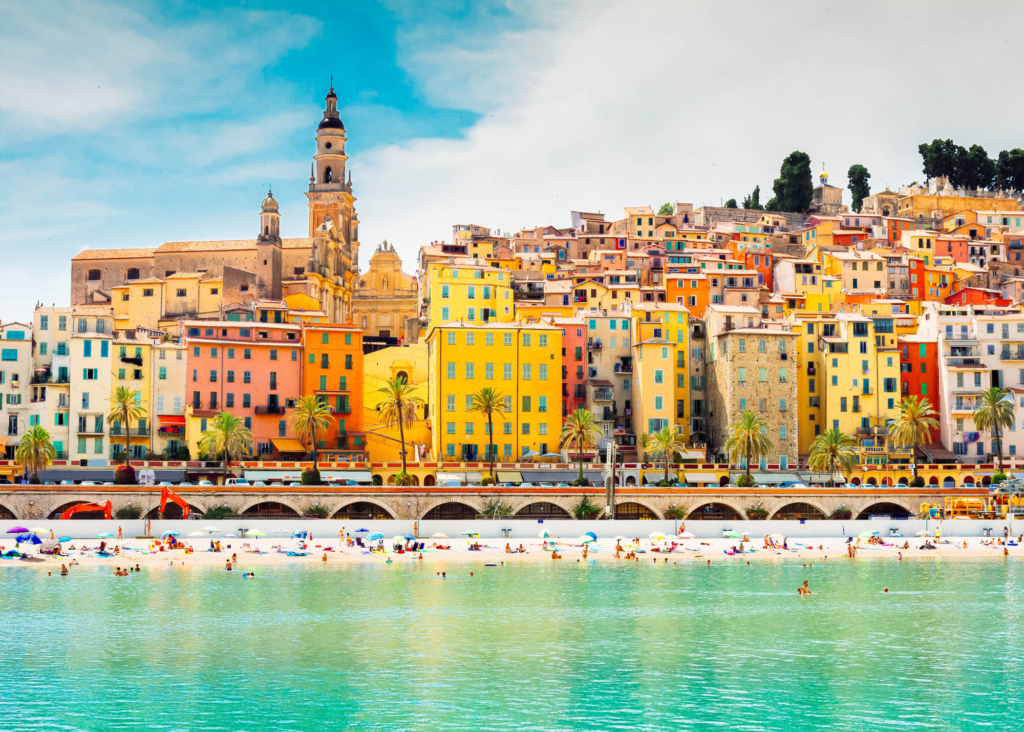
Menton sits right on the Italian border and is one of the most beautiful and most overlooked towns on the entire Riviera. The old town climbs steeply up from the sea in layers of pale yellow and pink and the gardens here are extraordinary, benefiting from one of the mildest microclimates in all of France. Menton is also famous for its lemons, which appear in everything from tarts to cocktails, and the annual lemon festival every February is one of the most charming events on the coast.
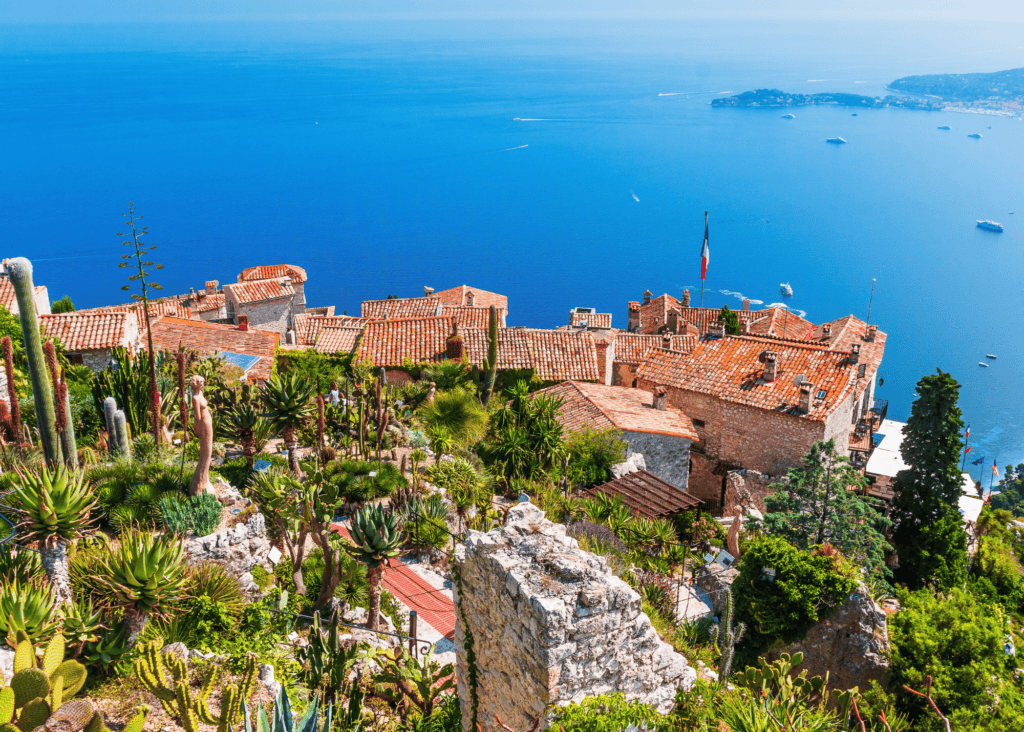
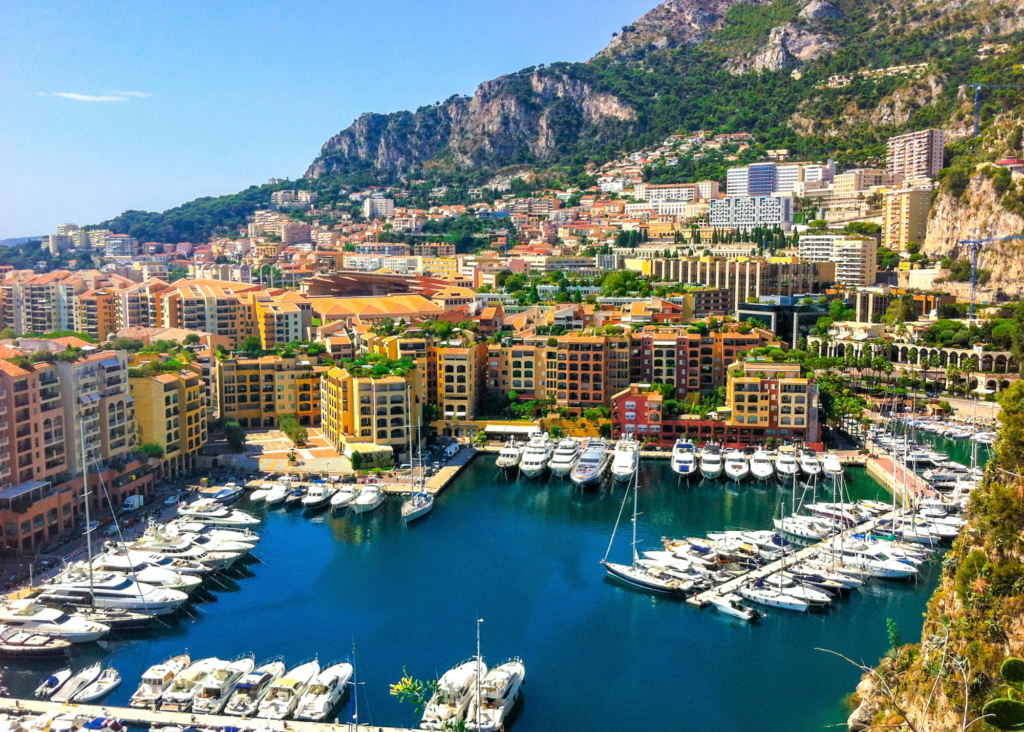
Èze Village, perched high above the sea between Nice and Monaco, is unlike anywhere else on the Riviera. The medieval village is built entirely from stone, with winding staircases, flowering terraces, and views that stretch all the way to the Italian coast on a clear day. It can get busy with day trippers in the afternoon so go in the morning if you can, and if budget allows, spending a night up there is one of those travel experiences that is very hard to forget. And while you’re in the area, Monaco and Monte Carlo are worth a quick stop for the sheer spectacle of it all, the palace, the harbor full of yachts, and the famous casino are unlike anything else on the coast.
Base yourself in Nice, take the coastal train east and west, and budget at least one afternoon for the Cours Saleya market. If you can manage a night in Èze Village, the medieval hilltop town above Monaco, do it. The view from up there is one of those travel moments you’ll describe to people for the rest of your life.
Both coasts are best in May, June, September, and October. High summer is crowded, but both are spectacular enough that people still go. The sweet spot is late spring, when the bougainvillea is in full bloom and you can still get a table at a good restaurant without a reservation made three weeks out.
And if you really want to do it right? Fly into Nice, spend a week on the French Riviera then take a ferry south into Italy and spend another week on the Amalfi Coast. Two coastlines. One extraordinary Mediterranean vacation. And if France has been on your radar lately, you’re not alone. Here’s why France is becoming Europe’s new must visit classic and the Riviera is just the beginning. Stop picking and start planning.
If the Amalfi Coast is already calling your name, I put together a guide to all the highlights worth knowing about before you go. Amalfi Coast Highlights is completely worth looking at while you’re still gathering ideas.
And if the French Riviera has your heart, I put together my personal Top 10 Things to Do on the Côte d’Azur.
Ready to start planning the whole trip? This is exactly the kind of itinerary I love building. Reach out here and let’s make it happen.