Is Slovenia Worth Visiting? Yes. Here's Why
I feel like every time I start describing Slovenia to someone, I watch their face go a little blank. Not bored, just… processing. Because it’s one of those places where the more you explain it, the more it sounds made up. An alpine lake with a tiny church on an island in the middle of it. A medieval castle built inside a cliff. A river that runs a shade of green so vivid you assume the photos are filtered. A charming little capital city with a dragon on every corner. An Adriatic coastline with a perfectly preserved Venetian town at the end of it.
It’s all real. It’s all in the same small country. And most people have never thought to go.
Slovenia sits tucked between Italy and Austria, smaller than New Jersey, and it has somehow ended up with more variety per square mile than almost anywhere in Europe. You can do alpine lakes in the morning, hike through a river gorge in the afternoon, and be eating fresh seafood on the coast by evening, and none of that is a stretch. The country is just built that way.
Lake Bled
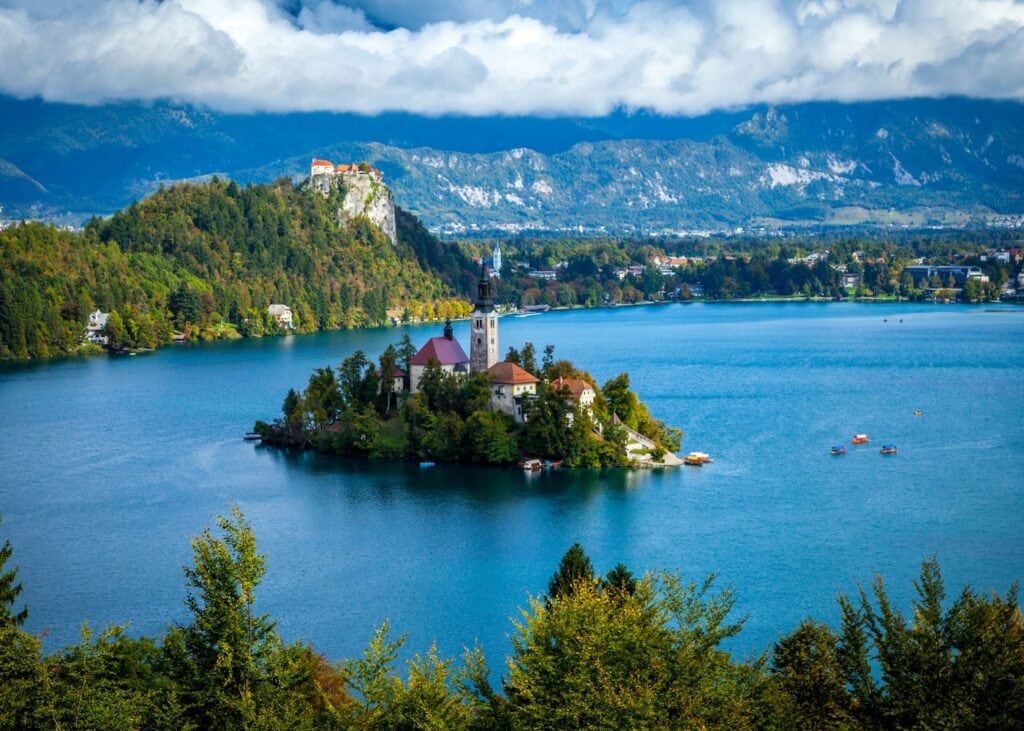
I know, I know. You’ve seen the photos. You’ve probably scrolled past Lake Bled a hundred times on Pinterest and thought, okay, that’s obviously edited. It’s not. The lake is a deep, clear blue, the little island with the church really is sitting right in the middle of it, and the Julian Alps really are right there in the background. It’s one of those views that travelers consistently say stopped them in their tracks.
You can get out to the island by pletna, a traditional wooden rowboat that’s been shuttling people across the lake for hundreds of years. The church at the top of the 99 stairs is lovely, the view back toward the shore is even better, and while you’re there, the Bled cream cake is worth tracking down. It’s a custard and whipped cream situation inside flaky pastry, and it’s a very big deal locally. As it should be.
Bled gets busy in summer, and early morning makes a real difference. If you can get there before 8 a.m., the mist is still sitting on the water and you basically have the whole thing to yourself. It’s worth setting the alarm. Spring visits, April through June, give you the green landscapes and the light without the peak crowds, and fall brings a quieter version of the same magic with color in the trees.
Ljubljana
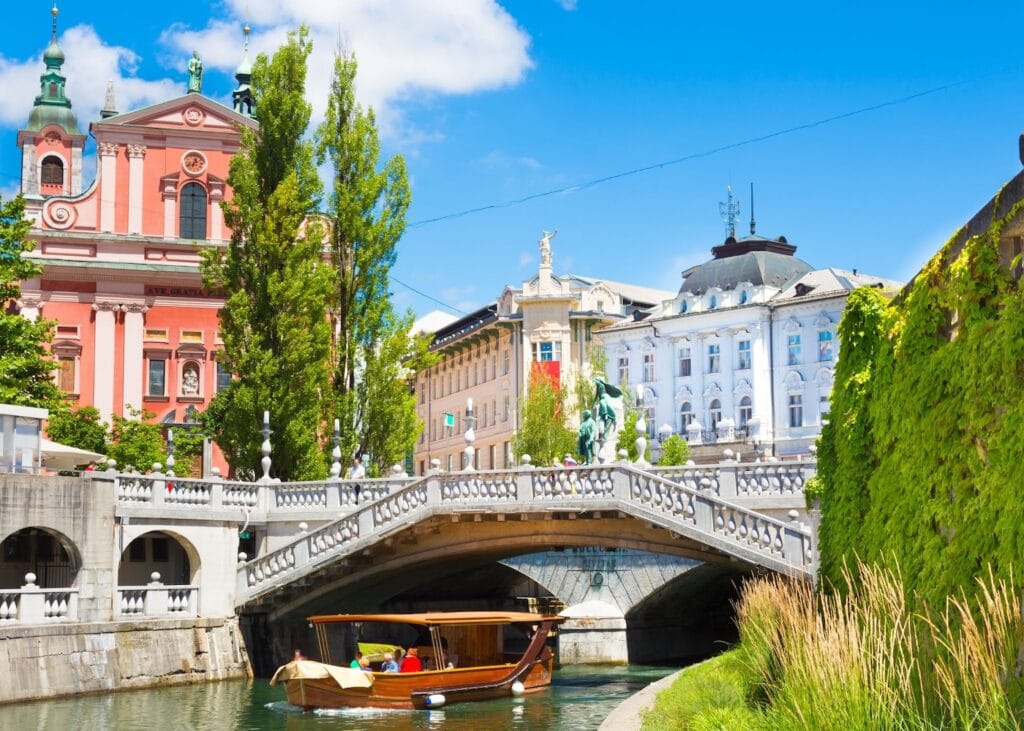
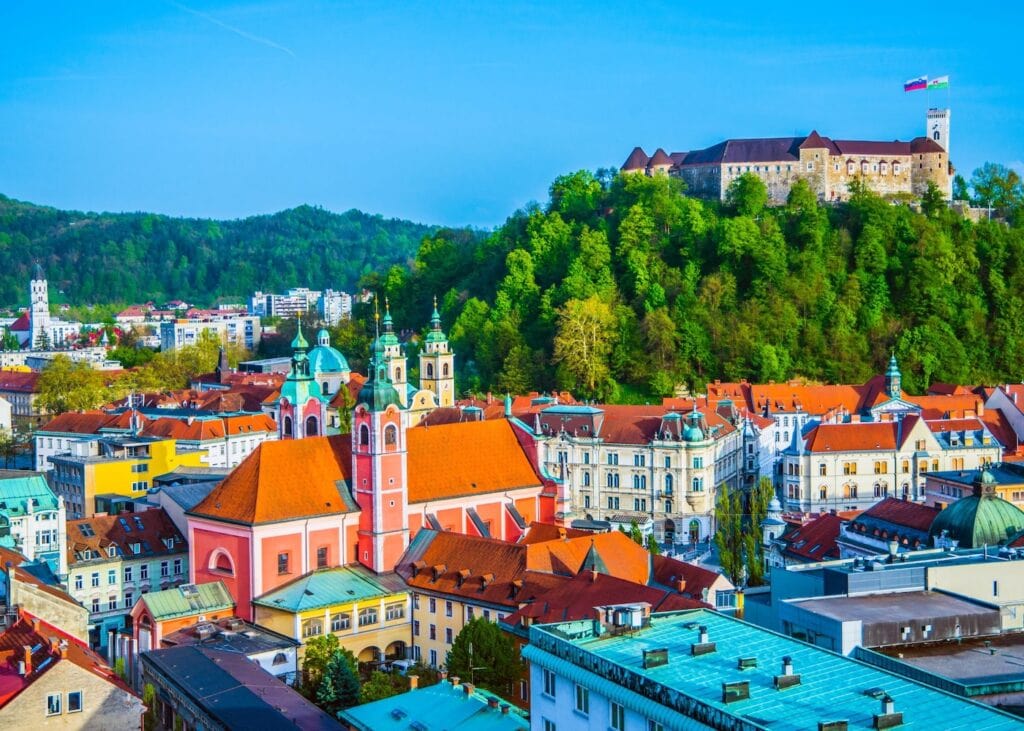
Ljubljana might be the most underrated capital city in Europe, and that’s not a small claim. It’s walkable and genuinely beautiful, with a slightly storybook quality that’s hard to explain without just telling you to go. The old town runs along a river lined with café tables, there’s a castle up on the hill above everything, and the bridges have dragons on them because according to local legend, this is where Jason of the Argonauts slayed one.
The food and coffee scene is genuinely good, the outdoor market along the river is one of those places where you go to pick up something for lunch and end up staying for two hours, and at night the old town lights up in a way that feels festive and real rather than staged for visitors. People who visit consistently say it was one of the best surprises of the whole trip, and it tends to catch them off guard because they came for the lakes and the caves.
Postojna Cave and Predjama Castle
These two are close together and they’re both genuinely impressive in a way that goes beyond the typical “interesting sight.”
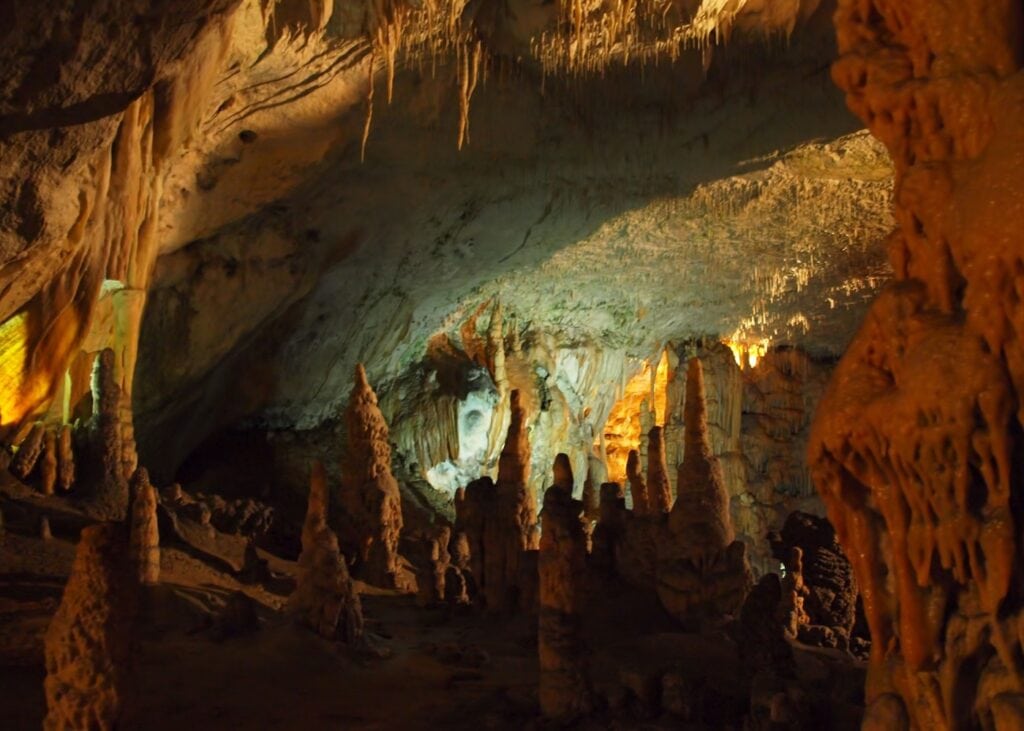
Postojna Cave is one of the largest cave systems in the world, and the way they handle the visit says everything about its scale: you start by boarding a small train that takes you two kilometers underground before you even begin the walking portion. The chambers inside are enormous. It’s a whole world down there.
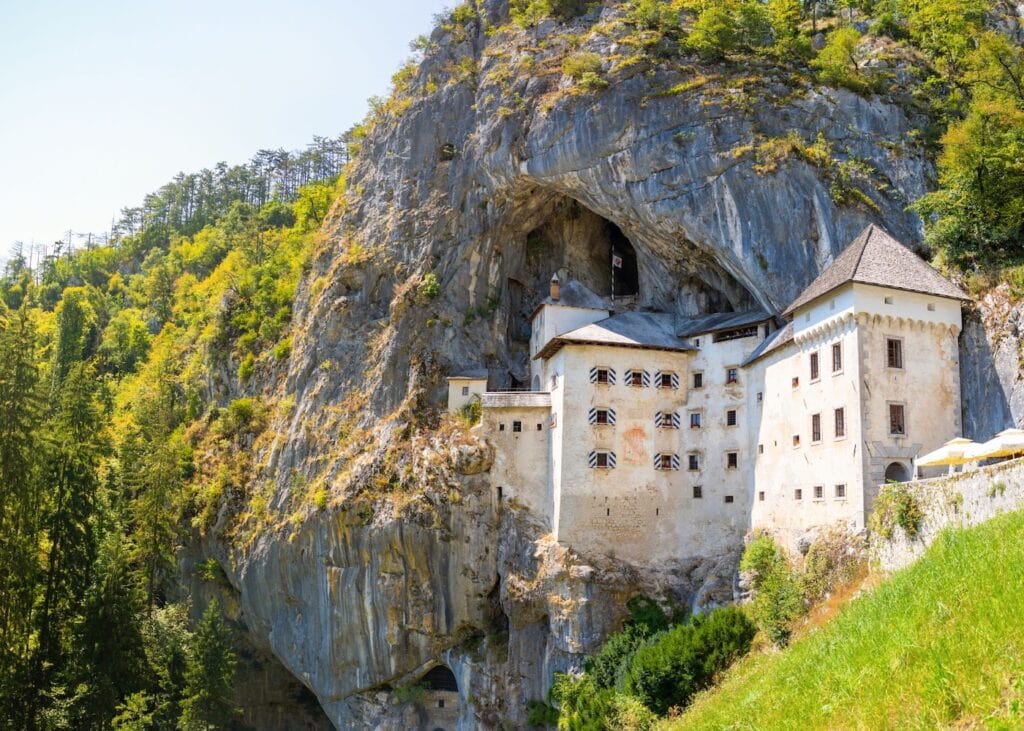
Predjama Castle is a short drive away and it might be the single most dramatic thing in all of Slovenia. It’s a medieval fortress built directly into the opening of a cliff, part castle and part cave, and it sits above a valley in a way that is genuinely hard to process the first time you see it. The photos do not do it justice, which is saying something because the photos are already pretty wild.
The Soca Valley
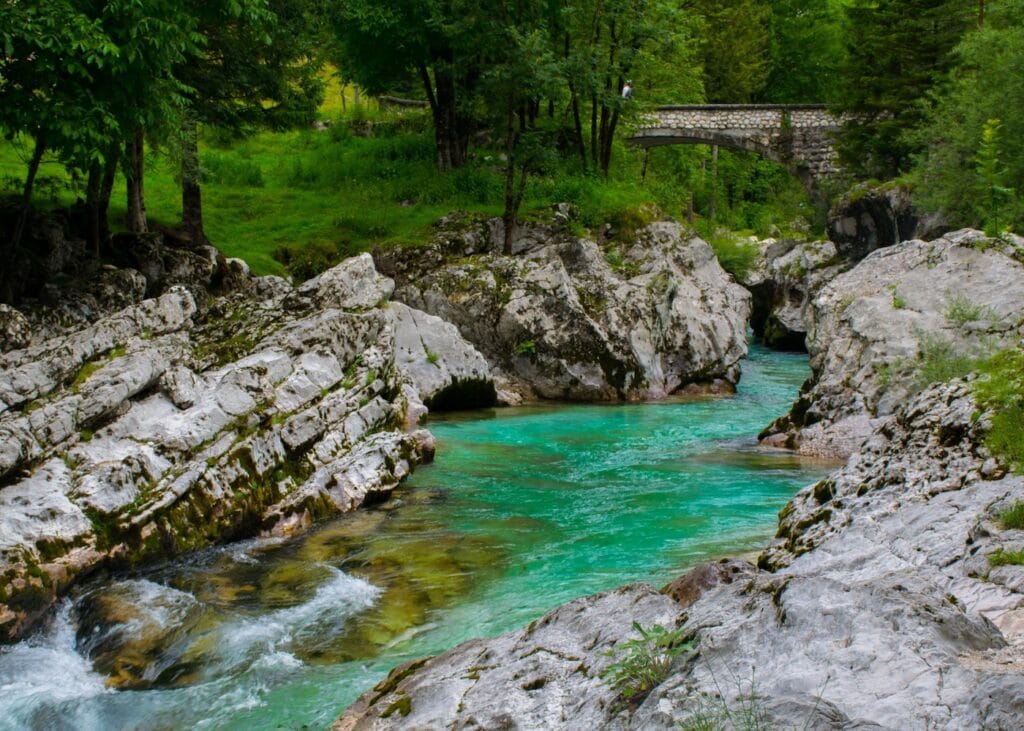
The Soca River is the reason people end up completely rearranging their plans once they arrive in Slovenia. It runs through a valley in a shade of emerald green that has no real equivalent anywhere else in Europe, and the surrounding landscape, mountains, forests, wooden bridges over clear water, is exactly the kind of scenery that makes you want to stay an extra week. Summer is peak season here for rafting and kayaking, but the valley is stunning in any season, and shoulder season visits in May or September are especially good for hiking without the crowds.
People come here to raft, kayak, hike, and cycle, but honestly some people just come to stand next to the river and stare at it for a while. That also feels completely justified.
Vintgar Gorge
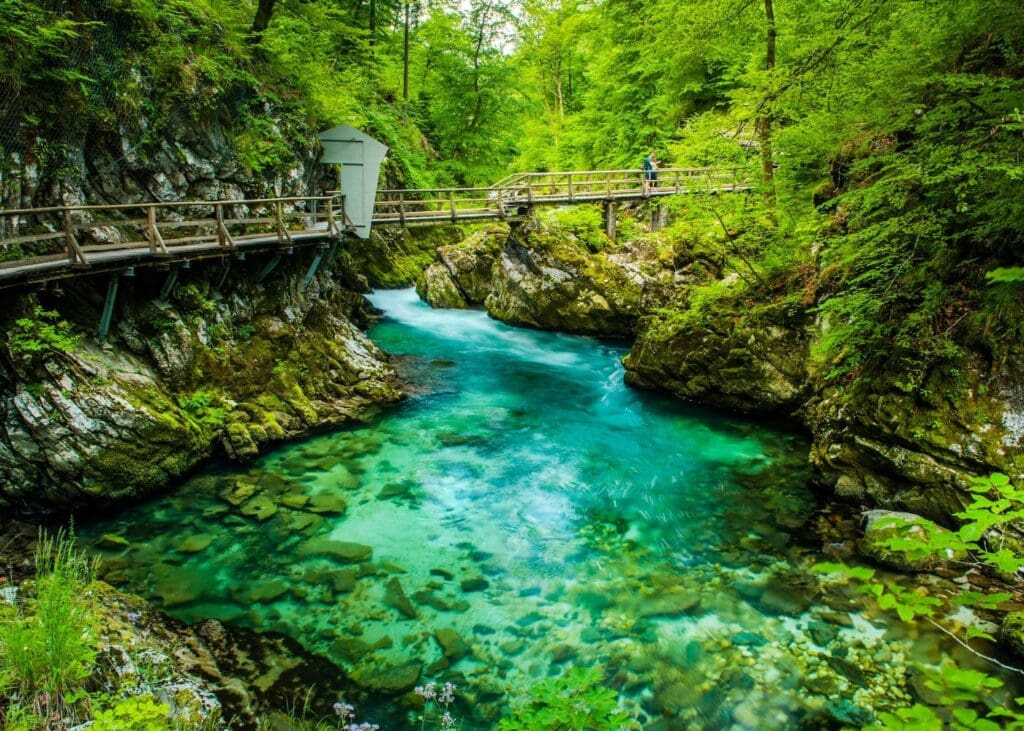
A few kilometers from Bled, Vintgar Gorge is an easy walk along a wooden path that follows a river through a narrow canyon. The water is turquoise, there are little waterfalls and rapids along the way, and the whole thing takes about an hour. It’s the kind of place that would be a highlight in most countries and here it’s just a casual afternoon add-on. Late spring is particularly good here when the water levels are high and the whole gorge is running full.
About the Coast
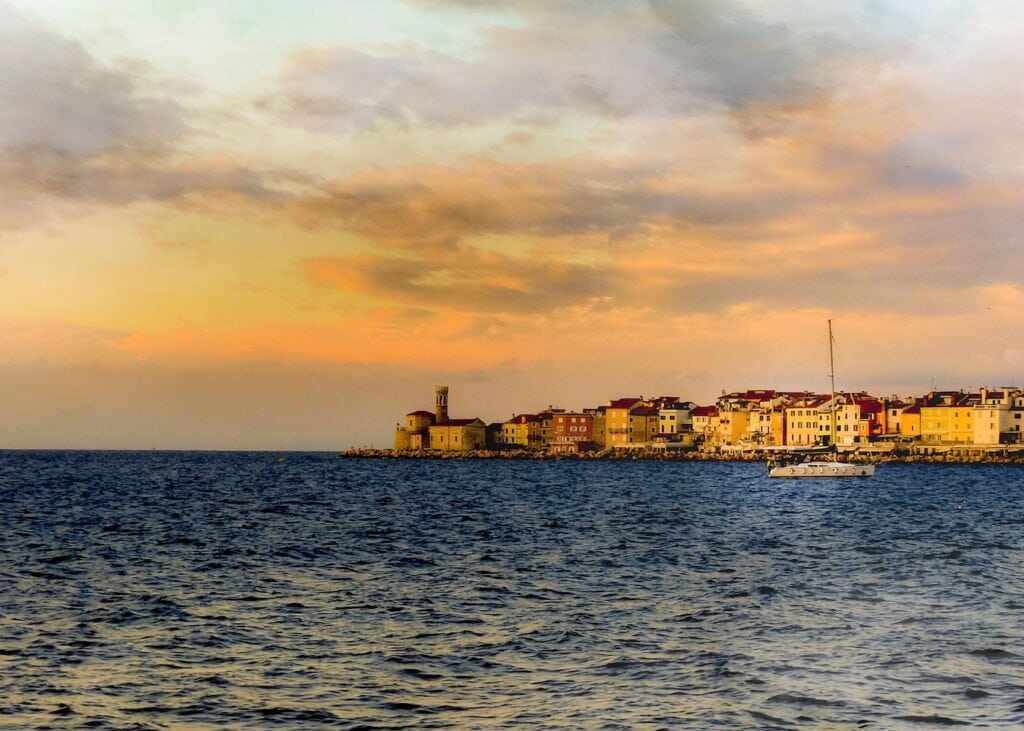
Slovenia has 47 kilometers of Adriatic coastline, and I want to be straight with you: if you’re coming to Slovenia for beaches, this isn’t that trip. The coast is rocky and pebbly, the swimming is fine, but it’s not Croatia. The reason to come to the coast is Piran, and Piran is absolutely worth it.
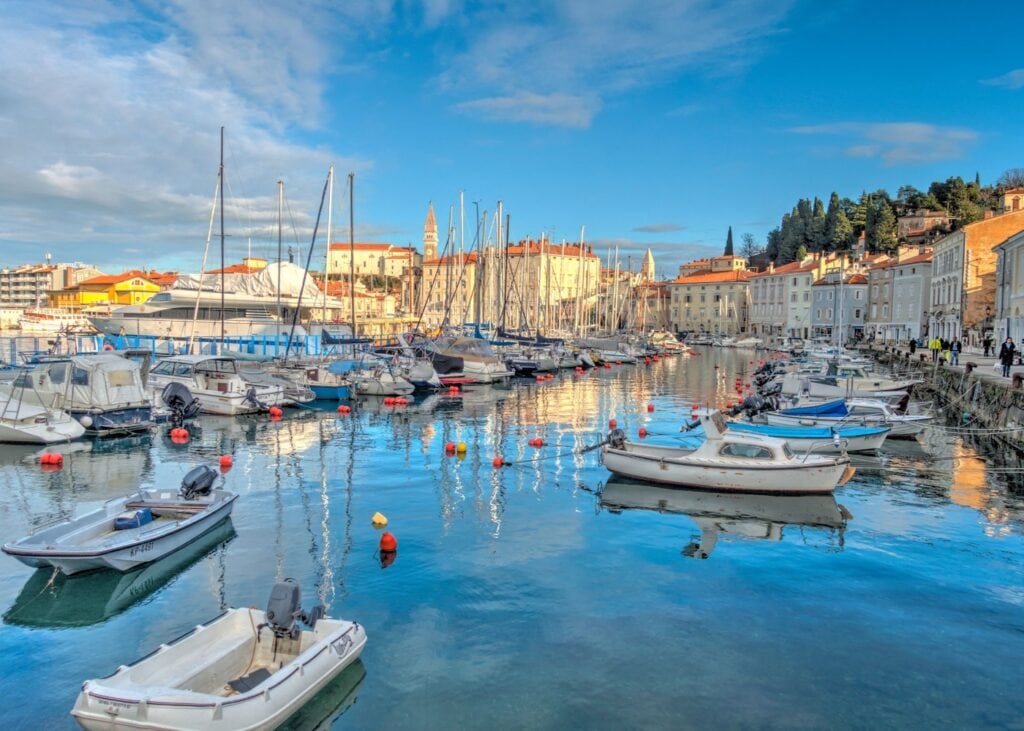
Piran is a medieval town on a tiny peninsula that sticks out into the Adriatic, and it looks like a small, quieter version of a Venetian city, which makes complete sense because it was under Venetian rule for centuries. The narrow stone streets, the harbor, the architecture, the red rooftops, the seafood, all of it has a warmth and a charm that feels genuinely different from everything else you’ll see in Slovenia. Sitting on the city walls at sunset watching the light change over the water is one of those simple travel moments that ends up being a core memory. One night here is worth every bit of the drive, and September is an especially lovely time to be on this coast when the summer crowds have thinned and the sea is still warm.
Slovenia has mountains and caves and a capital city that surprises everyone and a coastline that punches well above its weight, all in a country you can drive across in a few hours. It has all the ingredients of a trip you talk about for years, and it still feels like a discovery in a way that most of Europe simply doesn’t anymore. Western Europe has mostly lost that. Slovenia still has it, and honestly that might be the most compelling thing about it. Before you start planning, grab the Slovenia FAQ I put together to answer the questions that come up most.
If you’re ready to start planning, reach out and let’s figure out the right trip for you