
Why Sri Lanka Belongs on Your Travel List
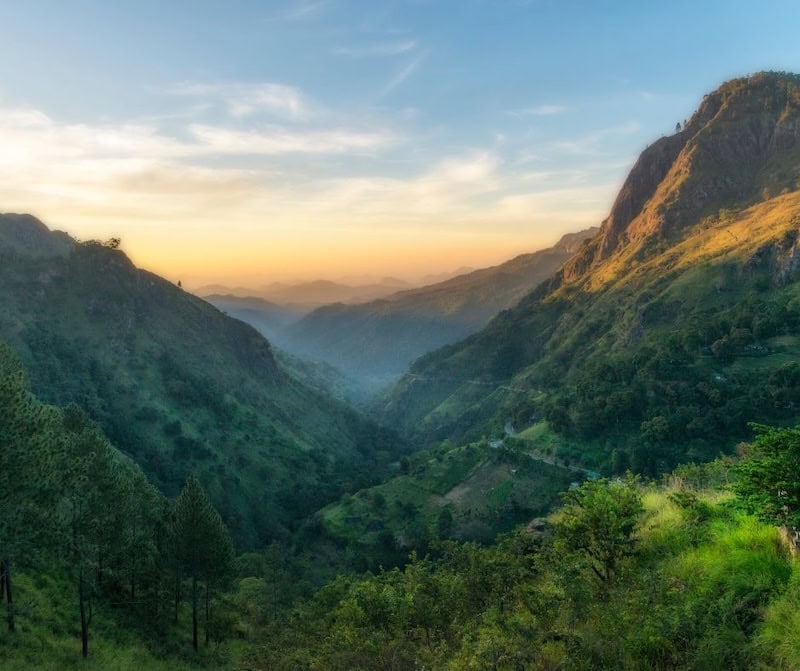
There’s a moment at the top of Sigiriya where you stop, catch your breath, and realize the jungle goes on forever in every direction. You’re standing on a 5th century rock fortress in the middle of Sri Lanka and you’re wondering why it took you this long to get here.
A lot of Americans haven’t seriously considered Sri Lanka yet, and that’s honestly a little surprising. This is a small island sitting just off the southern tip of India that somehow fits beaches, jungle, ancient temples, tea country, wildlife, and a food culture that will genuinely surprise you all into one place. Not many places pull that off, and right now it’s still under the radar for most American travelers.
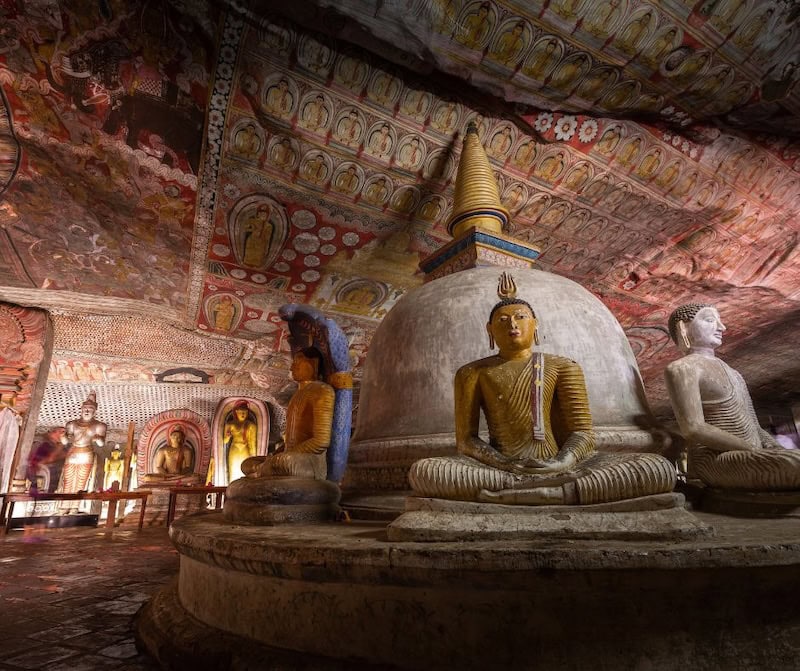
Dambulla
The Dambulla Cave Temples are a deliberate stop and one of the most memorable things you’ll do in Sri Lanka. Five caves carved into a massive granite rock, filled with over 150 Buddha statues and murals painted floor to ceiling across more than 21,000 square feet of ancient art. The colors stop you. Deep reds and golds, intricate patterns covering every surface, statues of every size arranged in poses that each carry specific meaning. This place has been an active Buddhist site for over two thousand years and it still is today. You’re not walking through a museum. People still come here to pray, to meditate, to mark important moments in their lives. You feel that the moment you step inside, and it stays with you long after you leave.
Sigiriya
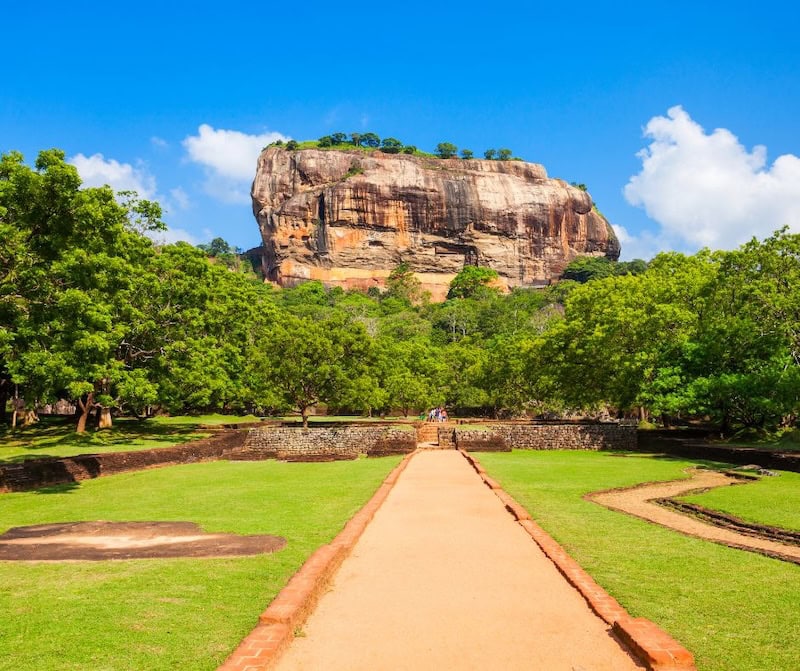
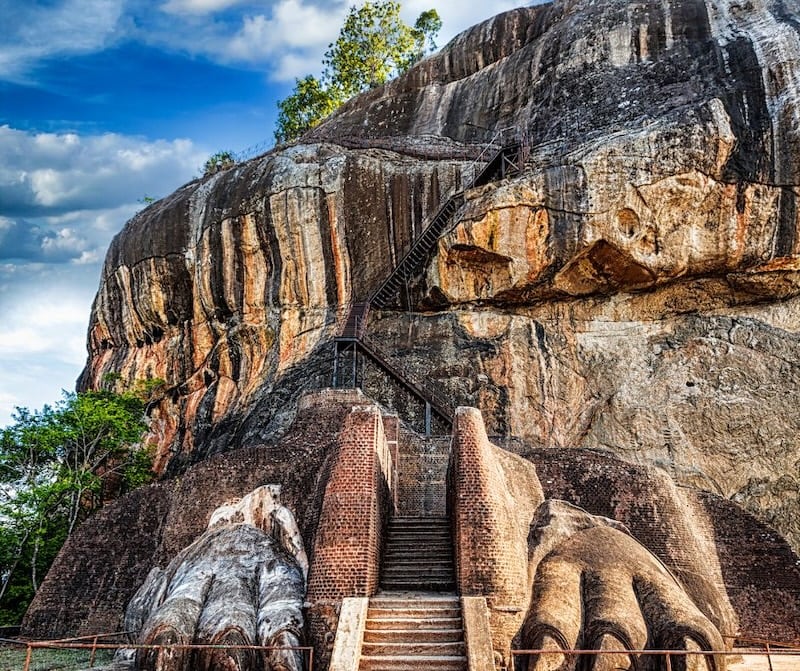
Sigiriya is one of those places that sounds impressive on paper and then somehow exceeds it in person. It’s a 5th century rock fortress built by King Kashyapa that rises out of the surrounding jungle, and you can see it clearly from the water, this massive column of ancient orange rock with ruins at the summit and jungle pressed up against every side. If you do climb it, know that the roughly 1,200 steps across three distinct levels are tiny. Your foot barely fits on them. You’re essentially taking millions of minuscule steps up the side of an ancient rock in the Sri Lankan heat, and it is genuinely hard. Do it anyway. Midway up you hit the Lion’s Paw Terrace, where two enormous stone paws flank the staircase, all that remains of a colossal lion whose mouth was once the entrance to the palace above. The head and body collapsed long ago, but those paws stop you cold. The summit is flat, surprisingly large, and the ruins of the palace stretch across more than a hectare. Jungle in every direction, mist in the valleys below. It’s one of the most spectacular things I’ve ever done.
Kandy
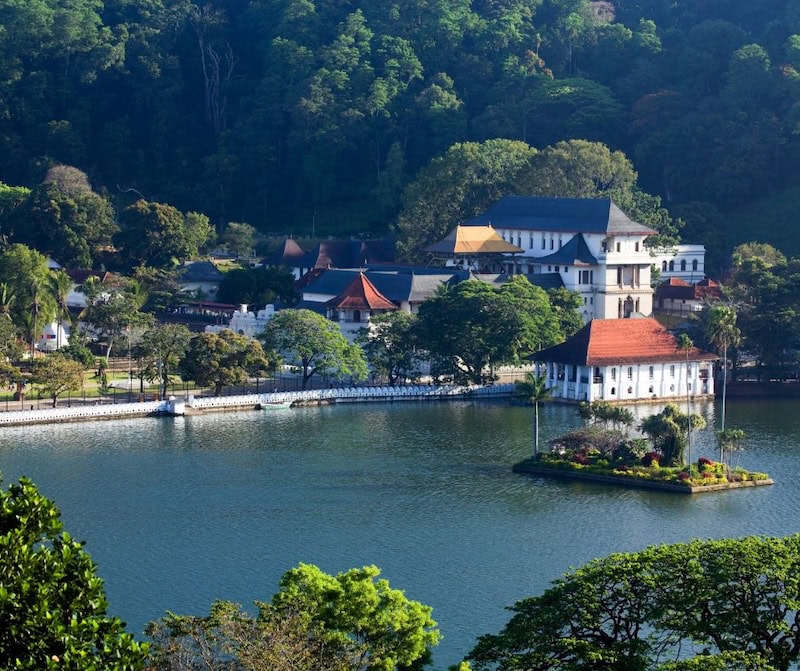
Kandy sits in the highlands surrounded by green hills, cooler air, and a calm lake right in the heart of the city, and it has a completely different feel from the rest of Sri Lanka. The Royal Botanical Garden here is one of the finest in Asia, with orchids, giant bamboo, a collection of palm trees that seems to go on forever, and avenues of towering trees that make you feel very small in the best possible way. The tea plantations visible from the surrounding hillsides remind you that you’re in a completely different part of the island, cooler and greener and quieter than the coast.
The Temple of the Sacred Tooth Relic is one of the most important Buddhist sites in the world, housing a tooth relic of the Buddha that has been venerated and protected for centuries. If you can time your visit for one of the daily ceremonies, do it. The drumming starts before you even get inside, and the atmosphere within that temple, the incense, the offerings, the crowd of worshippers who have come from across the country and around the world, is the kind of thing you simply can’t replicate anywhere else. The complex sits right beside Kandy Lake, and walking the lakeside path in the evening with the hills around you and the lights of the temple reflected on the water is one of those moments that keeps showing up in Sri Lanka when you least expect it.
Trincomalee
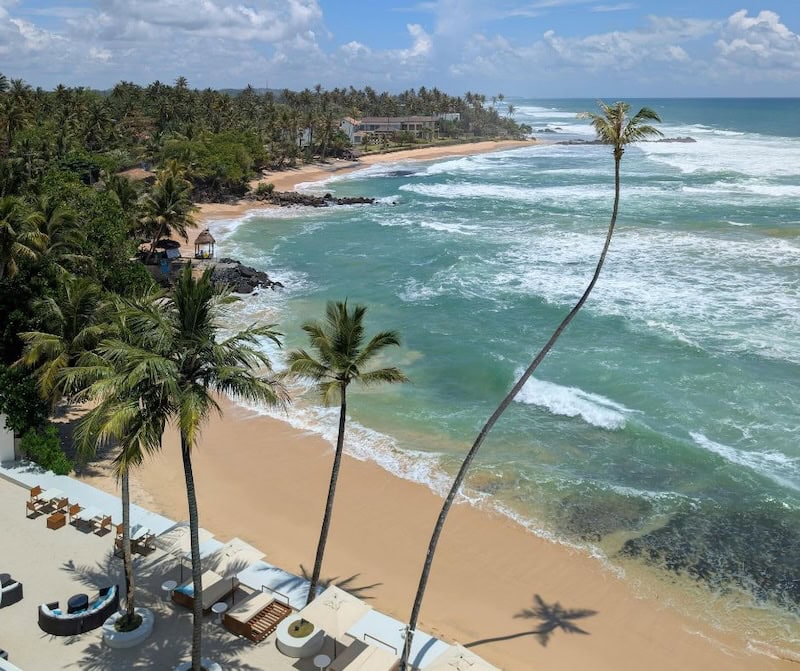
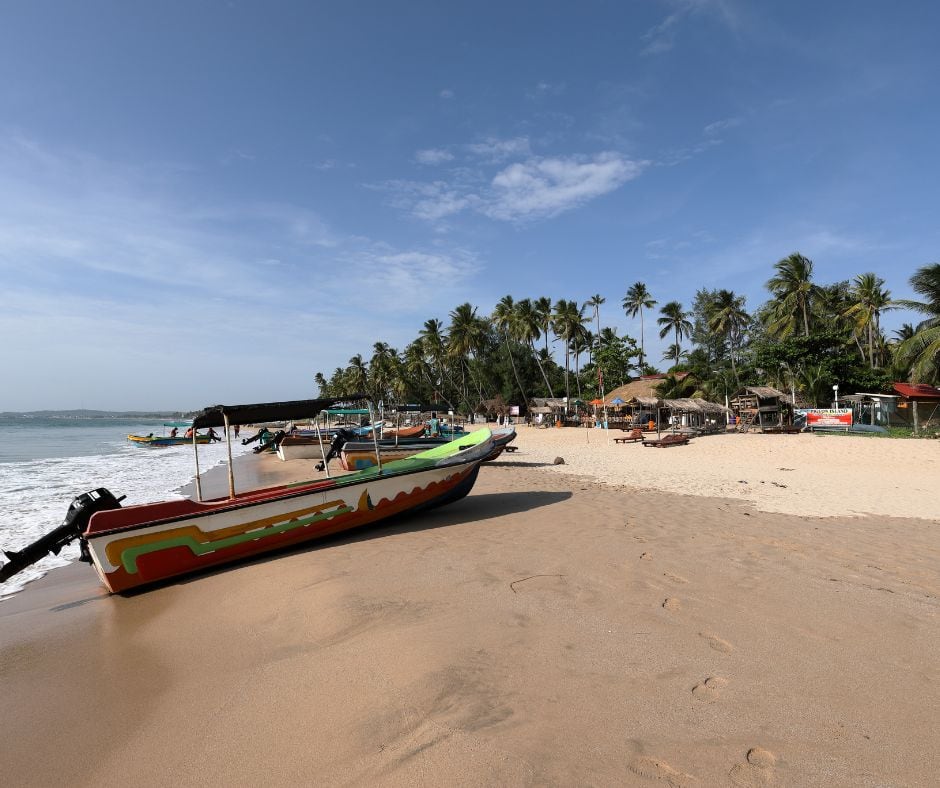
Trincomalee, on the northeast coast is the less discovered side of Sri Lanka, and that’s a good thing. The beaches here, particularly Nilaveli and Uppuveli, are long stretches of white sand with calm clear water and almost no crowds compared to the south. There’s a quietness to this part of the island that feels earned. You can actually sit on a beach here without feeling like you’re sharing it with half the world. The town itself has a strong Tamil Hindu culture and a history going back thousands of years. The Koneswaram Temple perches dramatically on Swami Rock high above the Indian Ocean, visible from the water, and the views from up there stretch out across the bay in a way that’s hard to forget.
What makes Trincomalee especially interesting for wildlife lovers is the deep natural harbor. The waters here plunge quickly into submarine canyons, and that depth brings blue whales, sperm whales, and dolphins unusually close to shore. Whale watching trips out of Trincomalee are short on travel time and long on opportunity, with the season running roughly from May through September. Worth knowing before you go: whale watching in Sri Lanka is still a developing industry and standards vary widely among operators. Some boats are overcrowded, some get far too close to the animals, and regulation enforcement is inconsistent. It matters which operator you choose, and it’s worth asking the right questions before you book.
Galle
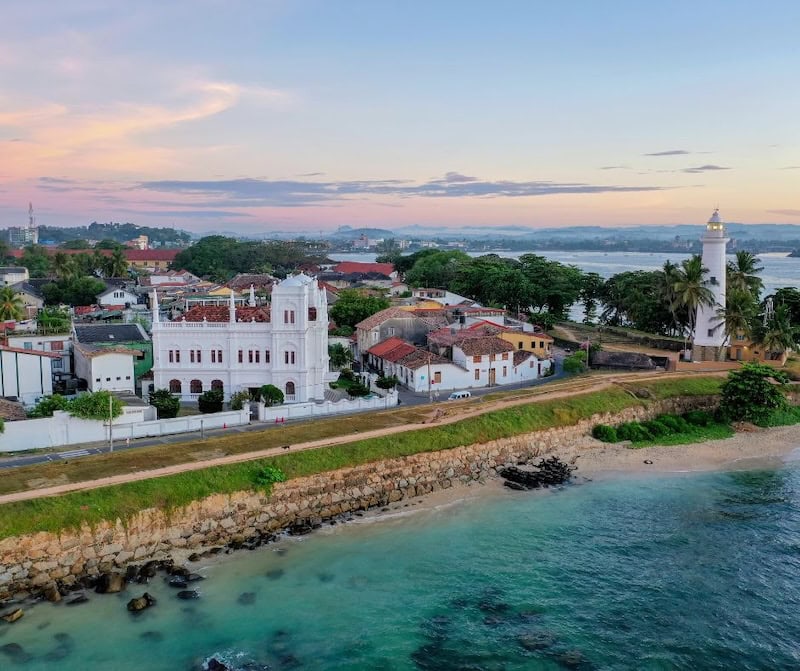
I loved Galle. It’s a Dutch colonial fort town on the southwest coast and the whole old town sits inside 17th century ramparts with the Indian Ocean on one side and rooftops on the other. The streets inside are narrow and shaded and genuinely easy to get lost in, lined with boutique hotels, cafes, jewelry shops, art galleries, and restaurants that would hold their own anywhere in the world. It has an energy that’s relaxed without being sleepy, and the mix of colonial architecture, Sri Lankan daily life, and international travelers wandering the same cobblestone streets gives it a character you don’t find in a lot of places. Its history with the 2004 tsunami gives Galle a weight you don’t expect. The natural harbor is still being rebuilt. Walking around knowing what this place survived and watching it come back is something you feel in a way that’s hard to put into words.
Minneriya
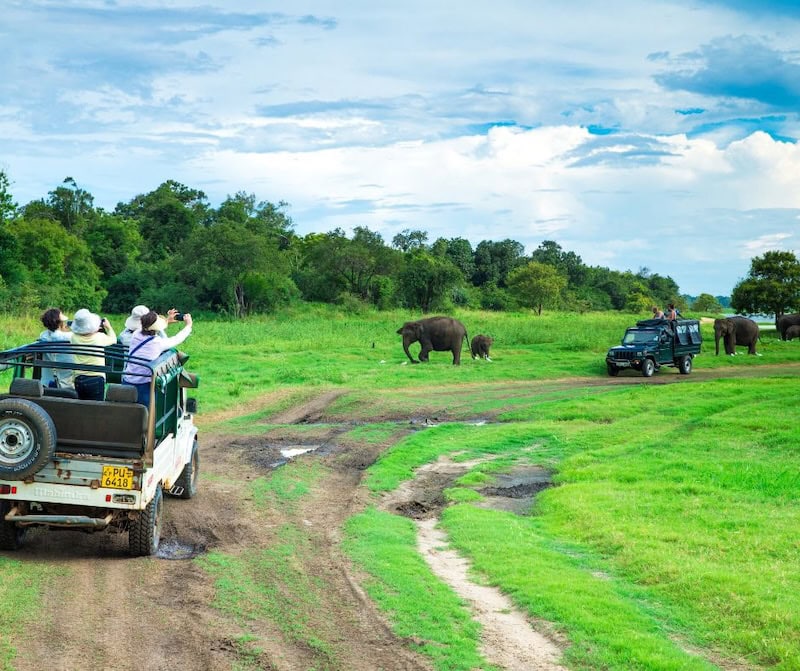
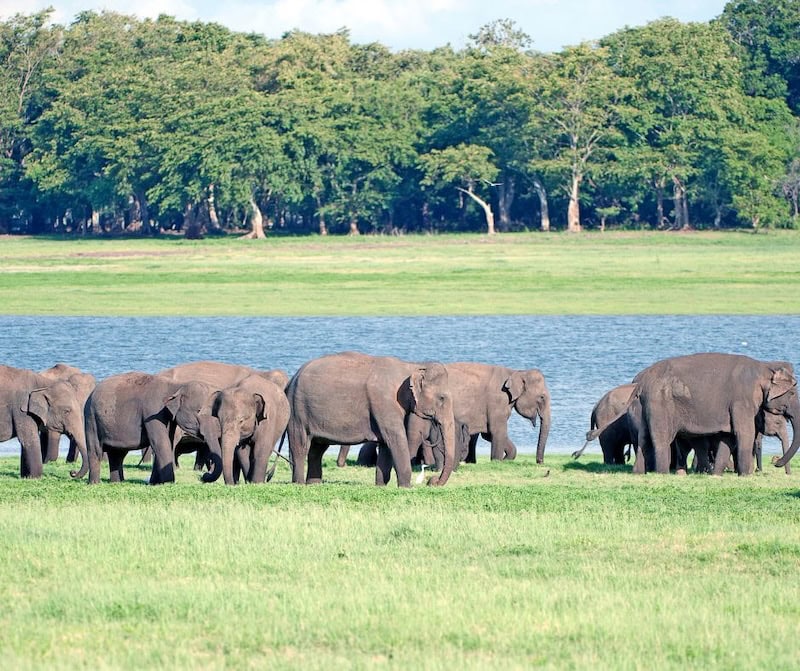
If elephants are on your list, Minneriya National Park is where you want to be. During the dry season, large herds gather near the reservoir in what’s considered one of the great wildlife spectacles in Asia. Hundreds of elephants moving freely through the landscape, drinking, playing, going about their lives completely on their own terms. You watch from a jeep at a respectful distance, and there’s something about seeing animals that large in that much space that genuinely changes how you think about wildlife travel. If seeing animals the right way matters to you, this is what ethical wildlife travel looks like in practice.
The Ayurvedic Treatment and the Food
At some point in the middle of all of this I found myself lying in an open-air room deep in the jungle having an Ayurvedic treatment, which turned out to be one of the more memorable things I did the entire trip. The massage uses warm oils specific to your body type, but what I won’t forget is the steam. Enormous palm fronds and leaves laid on the ground, heated somehow until the steam rising off them was so thick and humid you could barely breathe. Primal and intense and genuinely unlike anything I’d experienced before. Ayurvedic medicine has been practiced in Sri Lanka for thousands of years, and what you find there is nothing like the spa version you might encounter back home. Even a single day of it is worth building in.
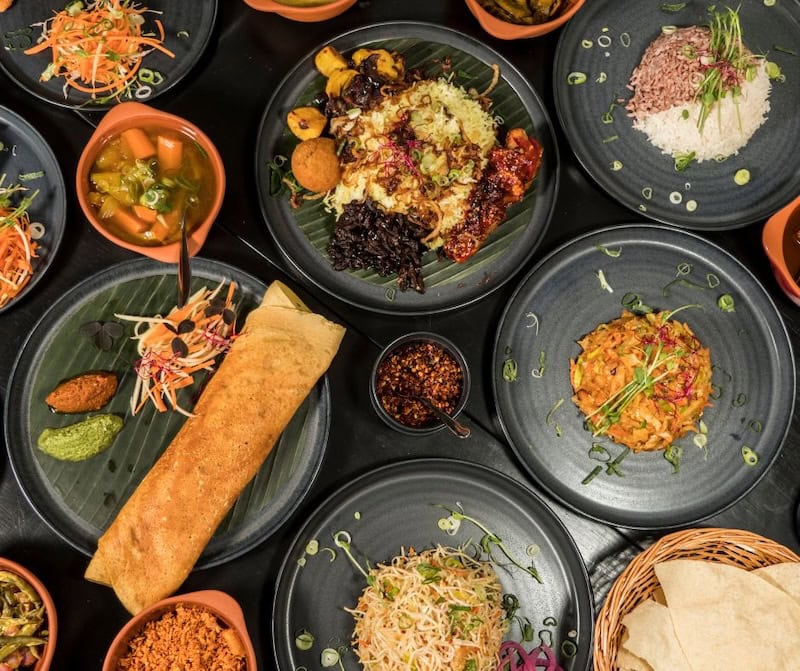
The food has that same quality of being better than you were expecting. Rice and curry is the foundation of most meals, but that description doesn’t prepare you for what actually arrives, which is multiple curries at once, each one different, with sambal and chutney and papadum alongside. Kottu roti, chopped flatbread stir-fried with vegetables and meat, is one of the most satisfying things I’ve eaten anywhere. Coconut is in everything, from the cooking to the sweets to the fresh drinks you find at roadside stands all over the island.
Planning the Trip
Sri Lanka is genuinely affordable, English is widely spoken, and the visa process is straightforward for Americans. Flights connect through the Middle East or South Asia. The west and south coasts are best from November through April, while the east coast including Trincomalee is better from May through September, which also lines up with whale watching season.
What matters most with this destination is how you put it together. Sri Lanka really benefits from thoughtful routing. The distances between regions aren’t huge but the roads are slow, and getting the sequence right, knowing where to spend time and where to keep moving, makes an enormous difference in how the whole trip feels.
I’m already thinking about going back.
If you want to put together a custom, well-researched itinerary for Sri Lanka, reach out and let’s figure it out together.