
Beyond Santorini and Mykonos: The Dodecanese Islands of Greece
Most people planning a Greece trip already have their shortlist decided before they’ve even looked at a map. Santorini, Mykonos, maybe the Ionian Islands or Crete if they’ve branched out already. The Dodecanese rarely make that first cut, which has always struck me as a little backwards, because this corner of Greece has more history packed into it than almost anywhere else in the Aegean, and a lot more room to actually enjoy it.
They’re tucked into the southeastern corner, close enough to Turkey that you can see the coastline from a few of them. The name means twelve islands, but there are closer to fifteen once you start counting, and I’m not going to try to cover all of them. These are the five that work best together on a first trip, the ones that make you want to come back for the rest. Rhodes, with its medieval walled city. Kos, where the ancient agora sits right in the middle of town and hot springs run straight into the sea. Symi, which might be the prettiest harbor I’ve come across in Greece. Patmos, for a kind of quiet that’s hard to find anywhere else in the Aegean. And Halki, for when even that quiet feels like too much.
Rhodes
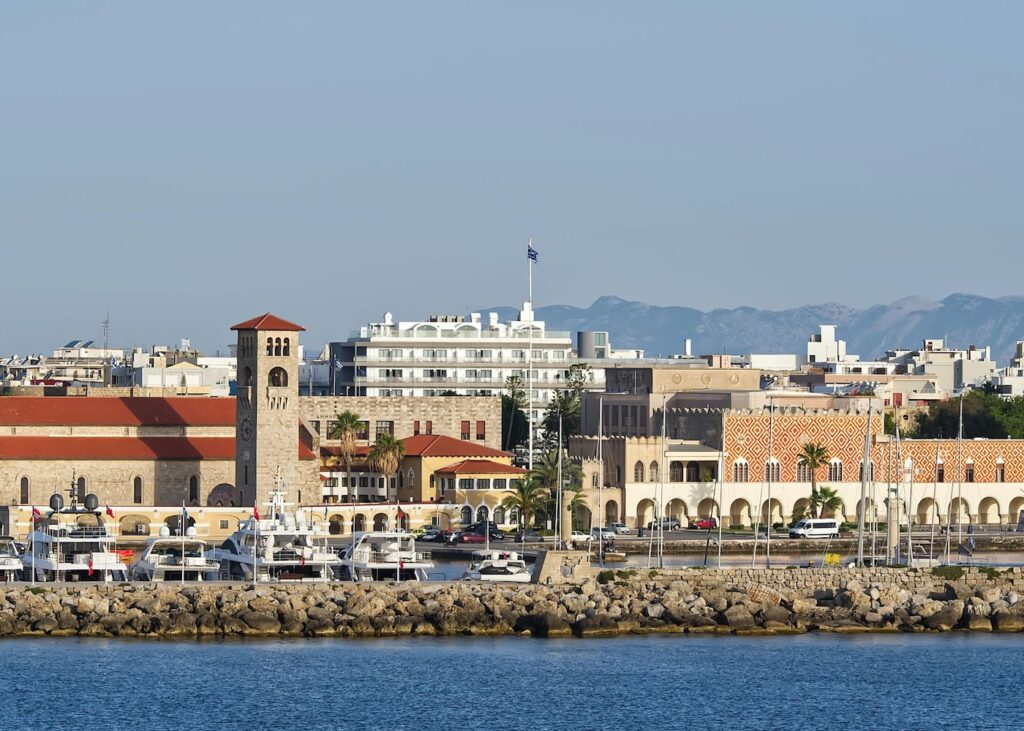
Rhodes is where I’d tell you to start. The Old Town alone could fill two full days. But the island has real range beyond that. Beaches, mountain villages you can disappear into, and a town like Lindos that somehow lives up to its own photos. It works as a complete trip on its own if that’s all the time you have, and the international airport makes it an easy first landing too.
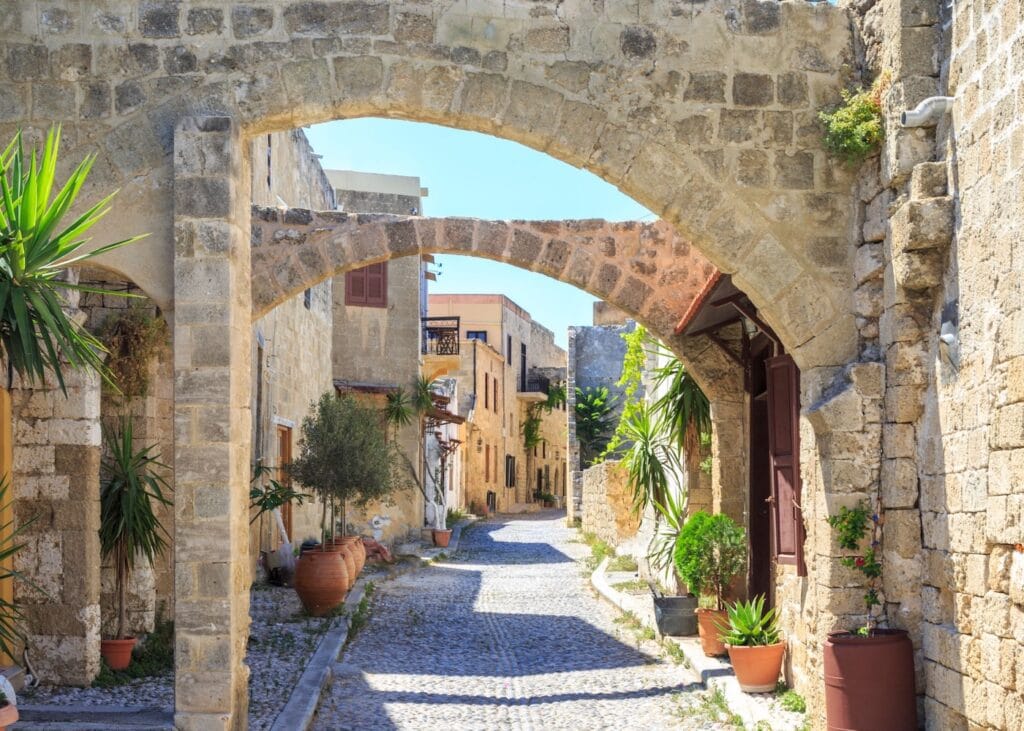
The Old Town is the real draw, and it earns that. It’s one of the best preserved medieval cities in Europe, built by the Knights of St. John over the two centuries they held the island, and walking it doesn’t feel like a reenactment the way some of these places do. You end up on the Street of the Knights without planning to, you poke into the Palace of the Grand Master, and then you just keep wandering past tavernas and little shops until you’ve lost track of where you started. Go at midday and you’re sharing it with whatever cruise ship pulled in that morning. Go early or after dinner and it’s a different place, quieter, the stone walls lit up and the streets mostly yours.
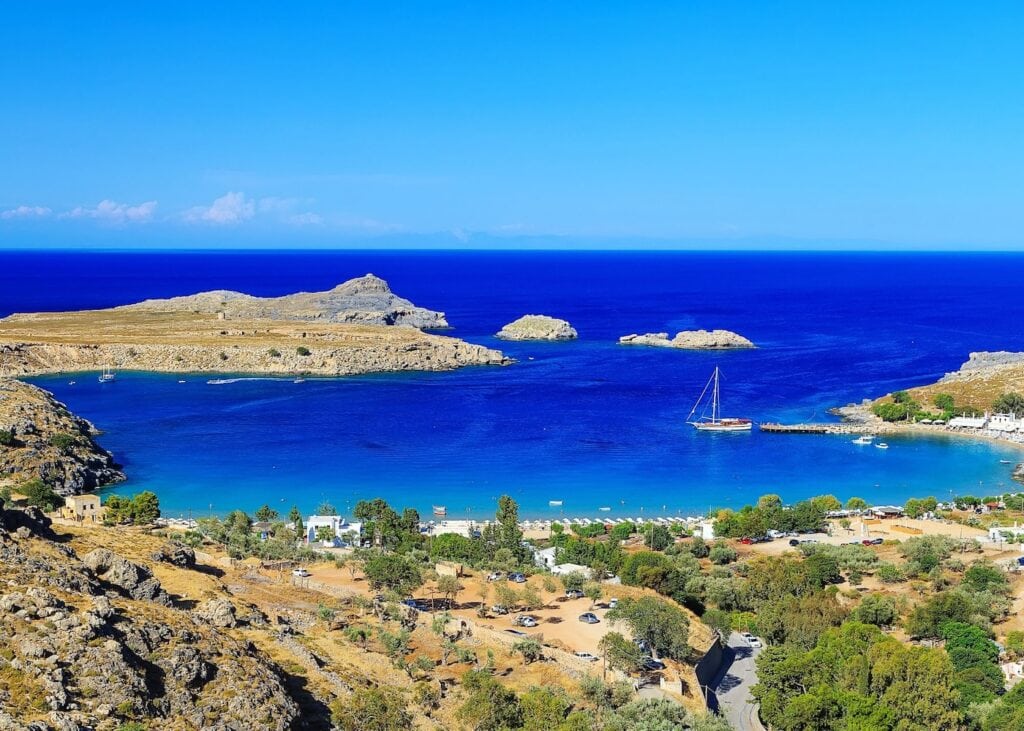
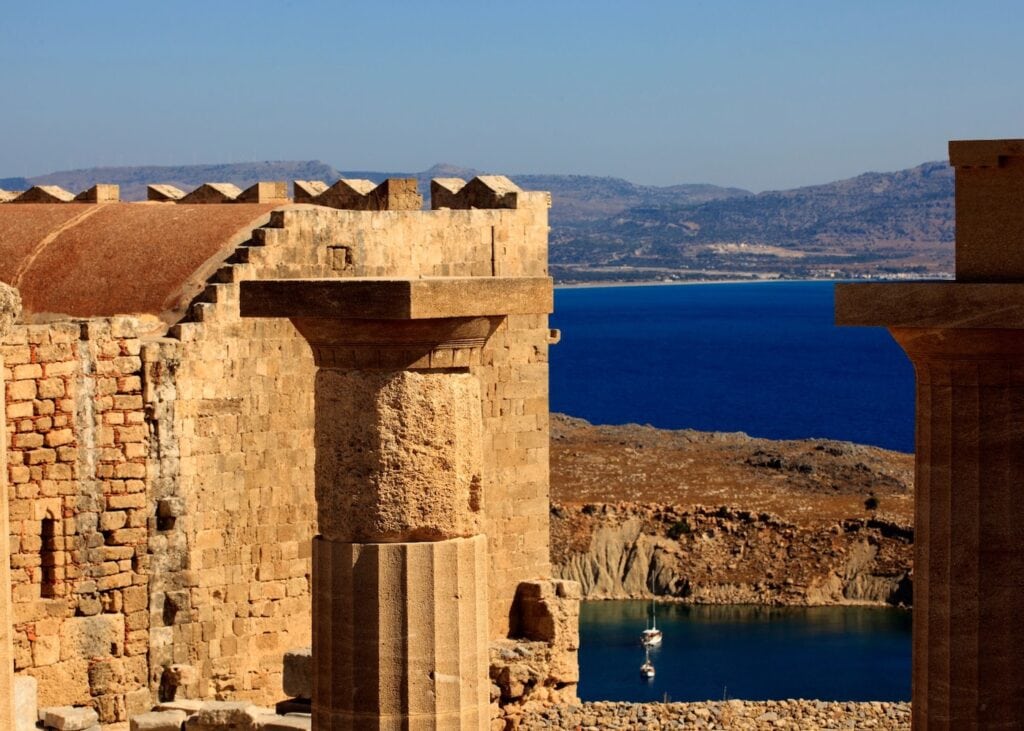
Lindos is worth the drive down the coast. Whitewashed houses climb up toward an ancient acropolis, the Temple of Athena Lindia sits at the top, and the bay below is that improbable shade of blue that shows up in every photo of the place and somehow still looks better in person. Past Lindos, there’s the Valley of the Butterflies, the Kallithea springs, long stretches of beach if that’s what you came for. Rent a car for a couple of days and get out to the west coast and up into the mountain villages. Most people don’t bother, which is exactly why it’s worth bothering.
Kos
Kos is the island for people who want Rhodes without quite as much walking. It’s flat, genuinely flat, which is rare for a Greek island, and there are real bike paths running through Kos Town instead of the usual improvised arrangement with traffic. You can cover a lot of ground here without trying very hard.
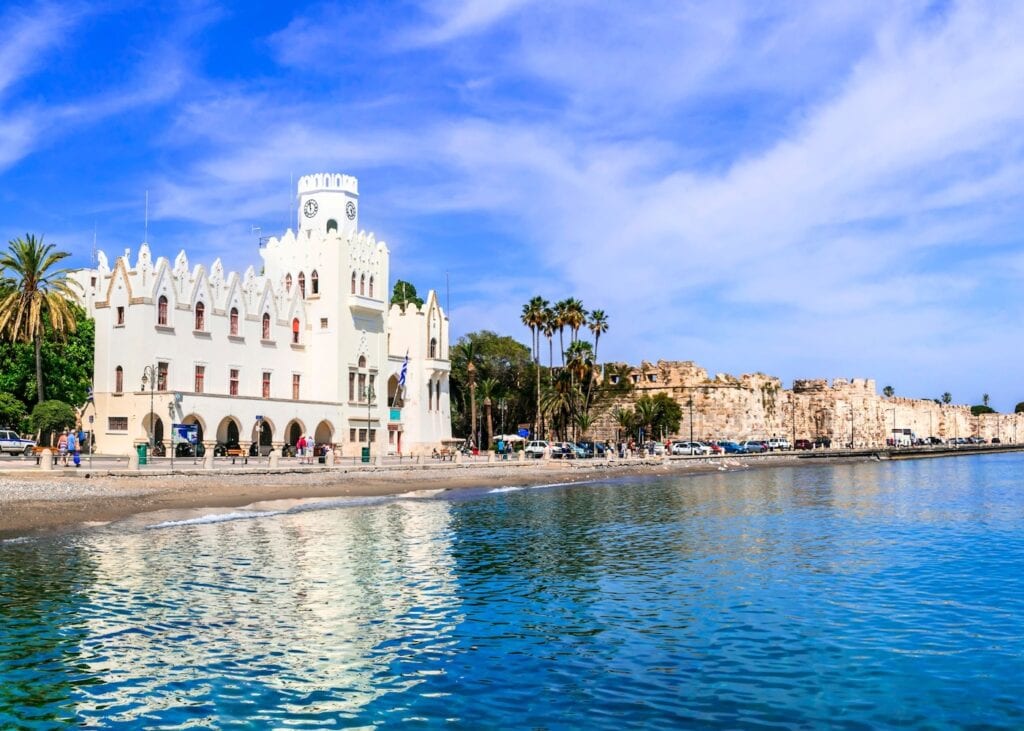
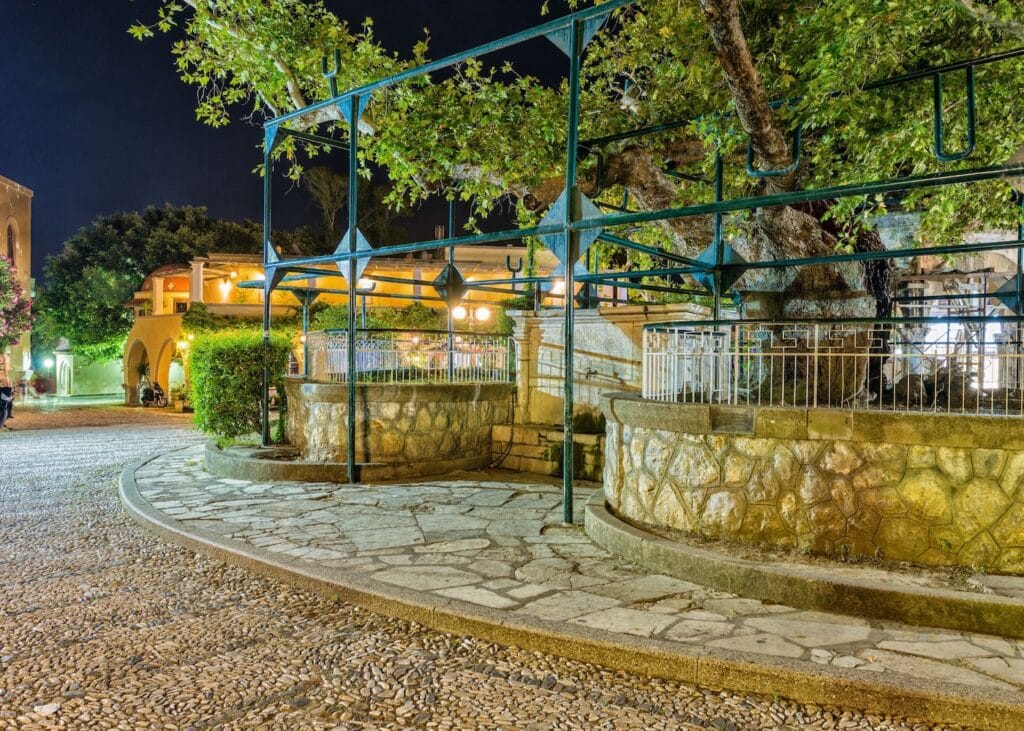
What catches people off guard is how much history is just sitting out in the open. The Asklepieion is up on a hillside outside town, an ancient healing sanctuary tied to Hippocrates, who’s said to have been born on the island, and there’s something genuinely strange about standing where medicine supposedly got its start. Closer in, the Castle of the Knights guards the harbor, and the ancient agora takes up a chunk of the town center. You don’t have to seek any of it out. It’s just there, between the restaurant you’re walking to and the beach you were headed toward.
Thermes beach, on the east coast, has natural hot springs running straight into the sea, warm water pooling right where it meets the cold. It’s the kind of thing that sounds like a gimmick until you’re actually in it.
Kos leans more resort than its neighbors, more restaurants, more hotels, an easier time of it if you’ve got kids or just want a beach day without much planning. It also sits well as a jumping off point if Kalymnos or Leros are next on the list.
Symi
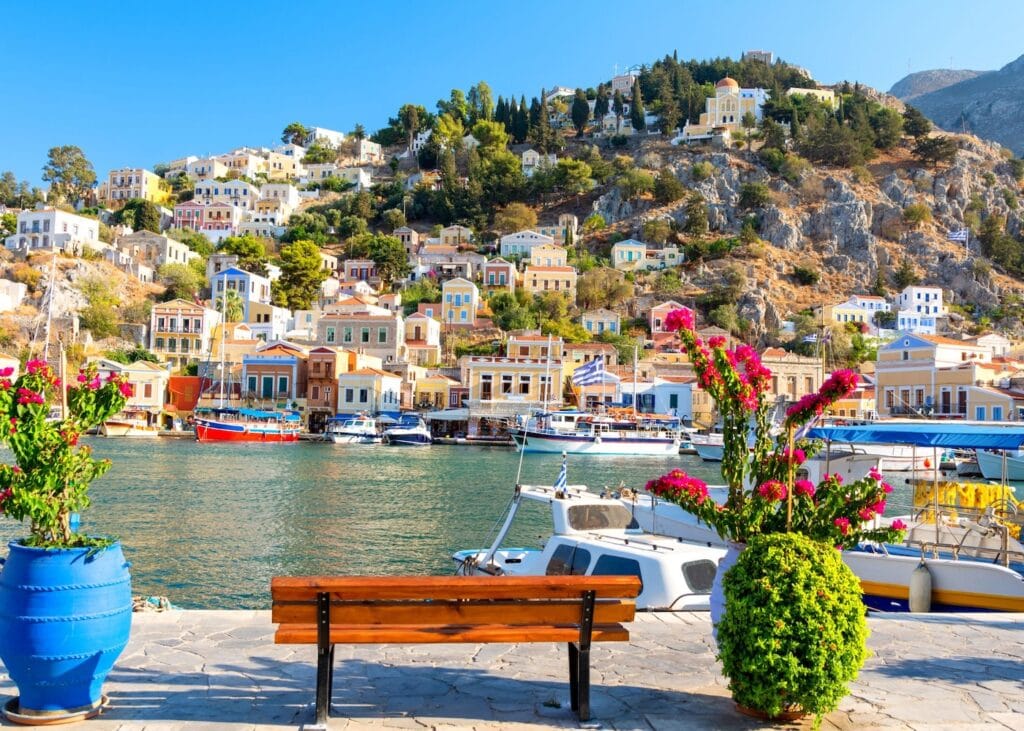
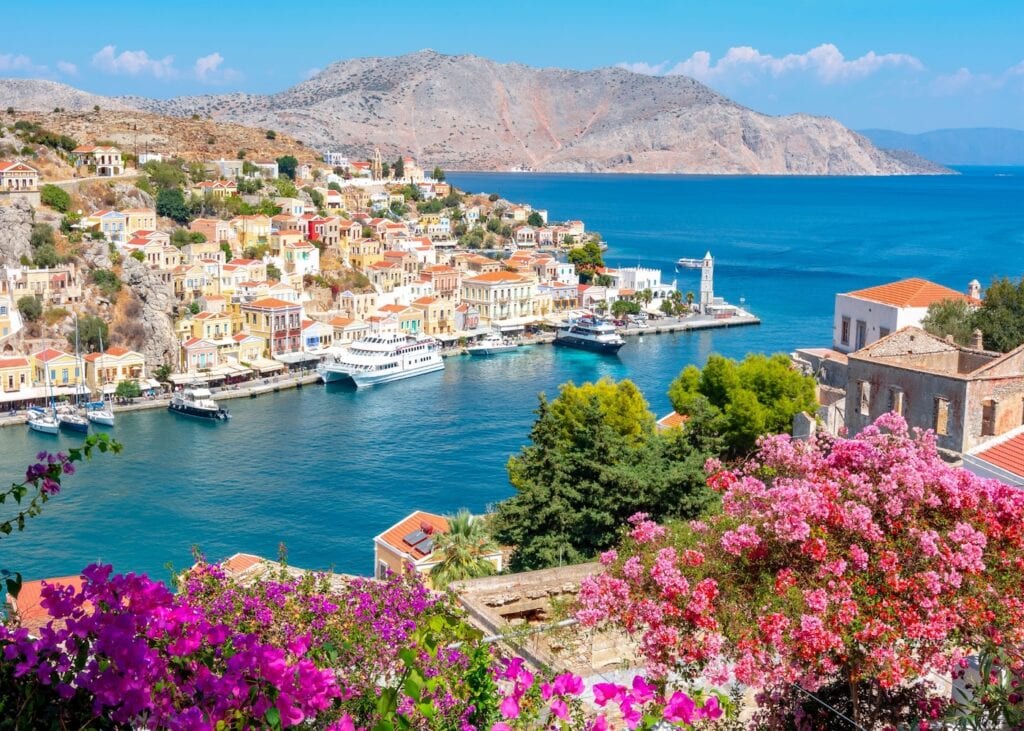
Symi might be the best looking harbor in Greece. I don’t say that lightly, and I know Greece has a lot of good harbors competing for that title. Gialos curves around the water in a horseshoe of neoclassical mansions, ochre and salmon and pale blue stacked up the hillside, a look the island picked up during its years as a serious shipbuilding town in the 1800s. None of it was built for a postcard. It’s just what’s left from when the island actually had money.
There isn’t much of a beach scene here, and it doesn’t need one. Swimming happens off small pebble coves, or from a boat that putters you between a few of them, which is honestly a better afternoon than most beaches offer anyway. Panormitis Monastery sits down at the southern tip if you want a reason to get out of the harbor for a few hours.
Ferries from Rhodes take somewhere between an hour and an hour and a half depending on the boat, which makes Symi an easy day trip, and a lot of people treat it that way. They’re missing the better version. Once the last afternoon ferry pulls out and the day crowd clears off, the harbor settles into something slower, locals back out on their stoops, and that’s the Symi worth staying a night or two for.
Patmos
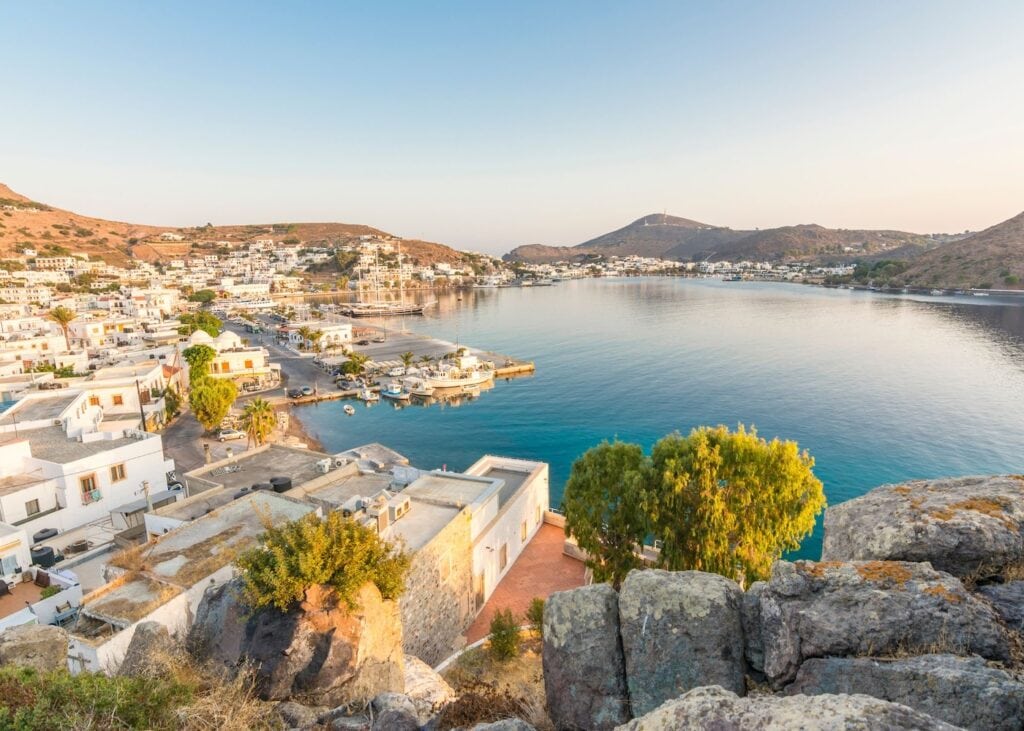
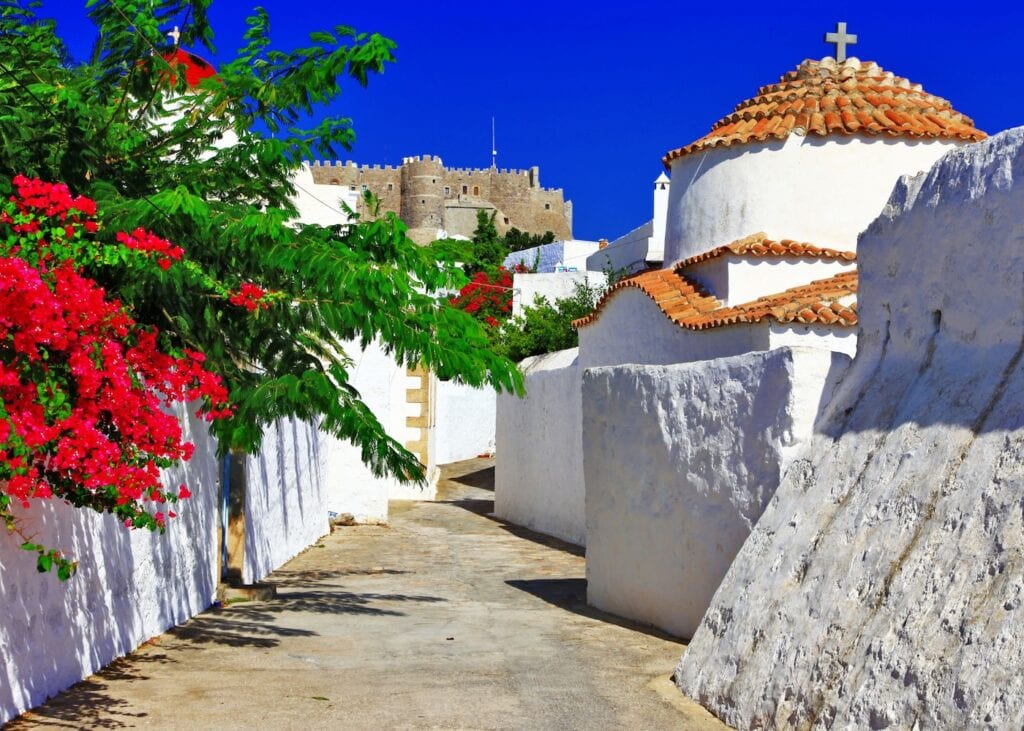
Patmos is the spiritual center of the Dodecanese, and it feels like it the moment you arrive, even if you’re not someone who goes looking for that sort of thing. Tradition holds that John wrote the Book of Revelation here while in exile, and the Cave of the Apocalypse and the fortress-like Monastery of St. John the Theologian are both part of a UNESCO World Heritage Site that still draws pilgrims from well beyond Greece. Chora, the hilltop town built up around the monastery, is a tangle of whitewashed lanes and old merchant houses, and it’s worth timing your visit for the last light before sunset, when the whole town goes gold.
Down at the port of Skala, there are cafes and restaurants strung along the water, and the island carries this reputation for staying apart from the rest of the Aegean, a little slower, a little more serious. It holds up. Cruise ships do stop here, so Chora gets crowded midday, which is reason enough to go early or wait until evening. You get to Patmos by ferry only, and that’s probably a good part of why it’s stayed this way.
Halki
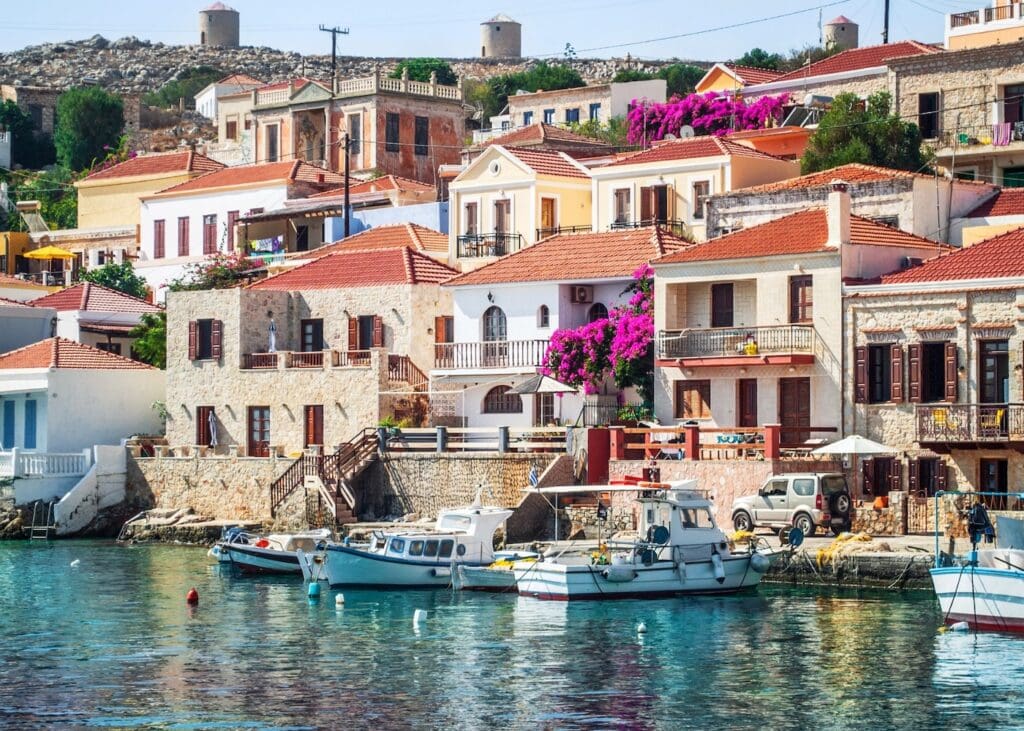
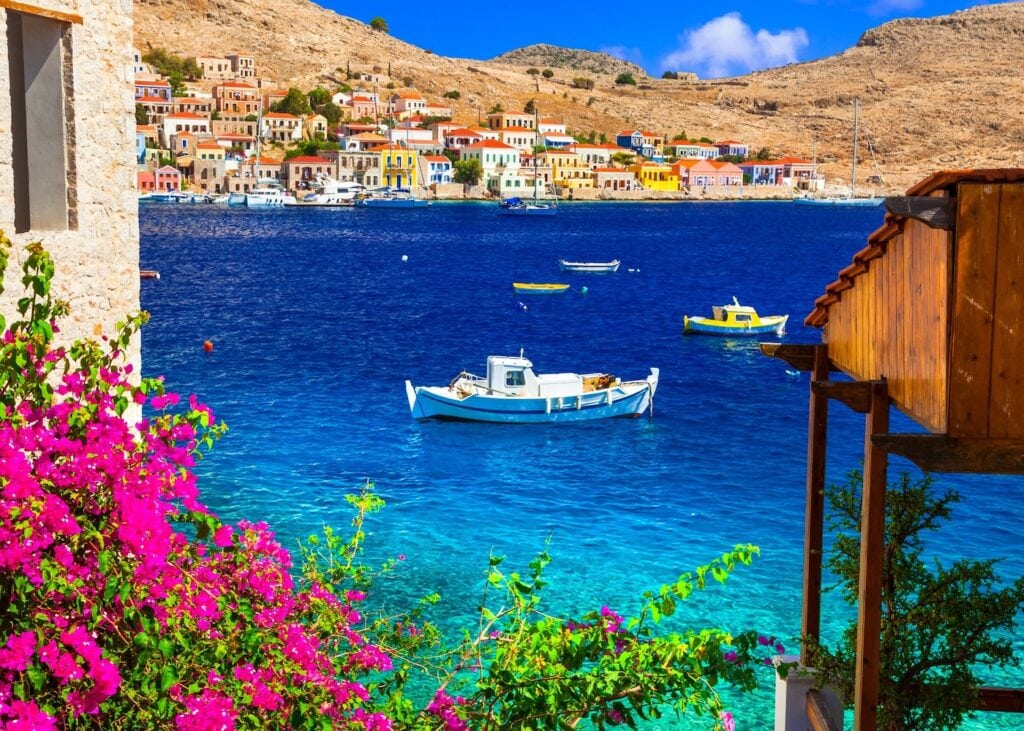
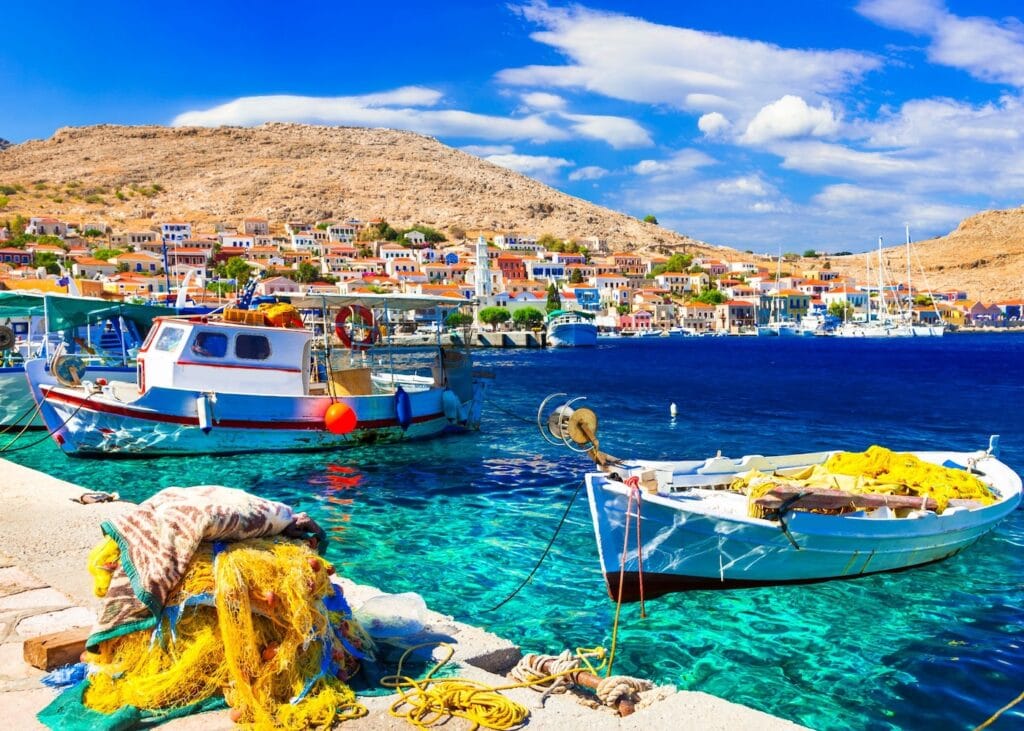
Halki, sometimes spelled Chalki, is the island for when even Symi feels like a lot. It’s small, a short boat ride west of Rhodes, with barely any population and only a handful of places to stay. There’s one real village, Emporio, where pastel houses wrap around a little harbor, and not much else going on. That’s not a knock. It’s the whole reason to come.
You swim, you eat grilled fish at a table close enough to the water that you could probably reach in and touch it, and if the weather’s cooperating you walk up toward the old castle for the view. Then you head back down and watch the boats come in, which somehow fills more of an afternoon than it sounds like it should.
Two nights after Rhodes is about the right amount of time. It’s the island for people who got to Symi and thought, this is nice, but I want it quieter.
Other Islands Worth Knowing
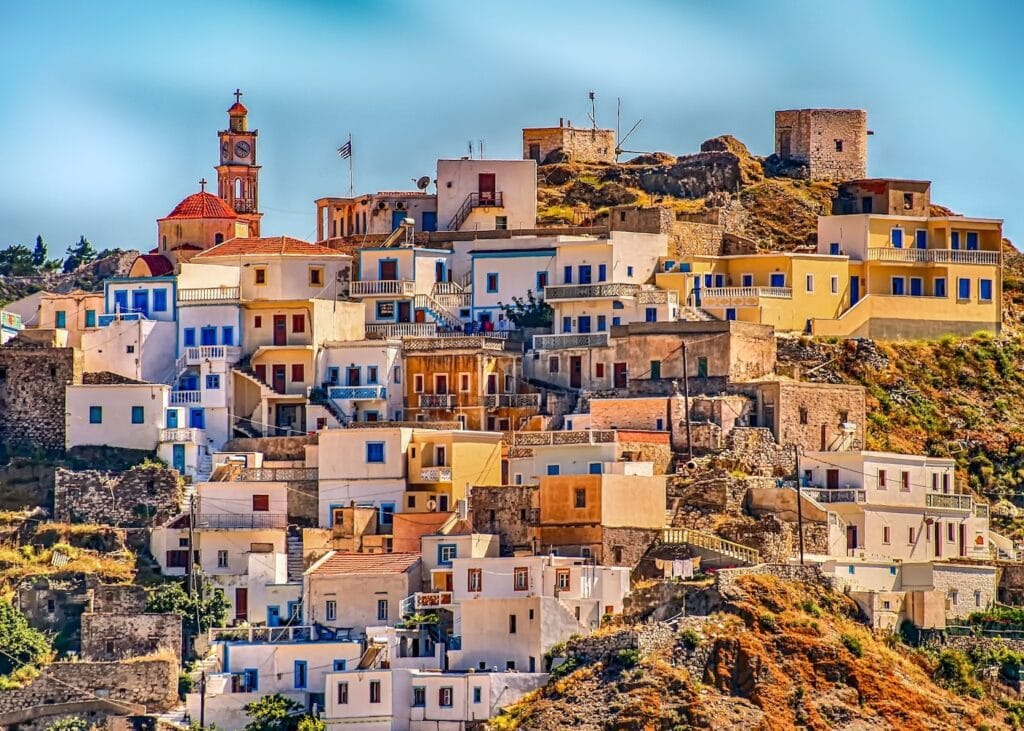
These five only scratch the surface. Karpathos has its own following, wilder and more mountainous than anything on this list, with villages like Olympos that still hold onto traditions you won’t find elsewhere in Greece. Kalymnos has become a serious rock climbing destination. Leros draws people in for diving and has a quieter, more residential feel than its neighbors. Nisyros is a volcano you can walk into. Astypalaia sits further out and gets fewer visitors than almost anywhere else in the group. None of them made this list because none of them cluster easily with Rhodes, Symi, and Halki in a single week, but once this corner of Greece has its hooks in you, they’re worth going back for.
Planning the Trip
September is the sweet spot here. Warm water, long days, and noticeably fewer people than July brings. May can still run cool in the water if that matters to you, and early October means more variable ferry schedules as the season winds down, so build in some flexibility if you’re traveling at either edge of that window. July and August are hot and crowded, especially on Rhodes and Kos, and that’s also when the meltemi winds pick up and start messing with ferry schedules across the Aegean, though the Dodecanese handle it better than the Cyclades do.
Pick your gateway first. Rhodes is the better base if Symi and Halki are on your list. Kos works better if Kalymnos or Leros are next. Flights from Athens to either are quick, and several European cities fly in directly during summer. Rent a car on Rhodes and Kos, since the best beaches and villages are spread out rather than close together. On Symi, Halki, and Patmos, you won’t need one. A local boat or an occasional taxi covers it.
Two islands make an easy week. Three can work too, but only if they cluster the way Rhodes, Symi, and Halki do. Rhodes, Kos, and Patmos looks fine on paper and then eats up enough ferry time that it stops feeling like a trip and starts feeling like a schedule to manage.
Santorini and Mykonos will always be on the list, and they should be if they’re genuinely calling to you. But if what you want is medieval streets, the prettiest harbor you’ve maybe ever seen, a holy island, and a stretch of real quiet where nobody’s elbowing you for a sunset spot, the Dodecanese deliver all of it in one small corner of the Aegean. Pick a gateway, add a boat ride or two, and the rest falls into place.
Figuring out how Rhodes, Symi, and Halki fit into one trip, or whether Kos or Patmos makes more sense depending on where you’re flying from, is a lot easier with someone who’s already mapped out these ferry routes. Let’s build something intentional and immersive together. Reach out here.